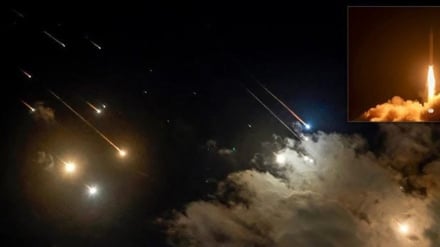
Al Jazeera: Future balance shifted in Tehran’s favor after 12-day war
-
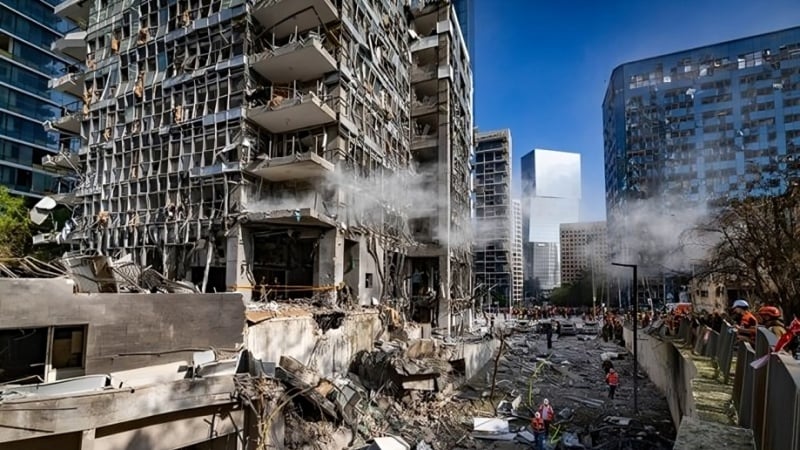
Areas targeted by Iranian missiles in Tel Aviv
Pars Today – In an analytical report, Al Jazeera examined the 12-day war between Iran and the Zionist regime, concluding that despite initial surprises and full U.S. support, the future balance of deterrence is shifting in Iran’s favor.
According to Pars Today, Al Jazeera stressed that by outlining the scale of Iran’s missile strikes and the vulnerabilities of the Zionist regime, any potential future conflict without the U.S. defensive umbrella would result in devastating damage to Tel Aviv.
The report, which was prepared by examining the details of Operations “True Promise 1 and 2” and their climax during the 12-day war (June 2025), identifies the initiator of the direct confrontation as the Zionist regime’s large-scale attacks on dozens of targets inside Iran, including nuclear facilities and air defense centers. In response, Iran carried out its largest and most concentrated ballistic missile campaign, launching dozens of projectiles daily and hundreds of ballistic missiles over the course of 12 days.
Targets and consequences of the attacks
Al Jazeera examined the objectives of both sides’ attacks in three categories: military–security, economic–infrastructure, and residential. According to the report, Iranian missiles struck vital targets, including Rabin Camp (the Zionist regime’s general staff headquarters), Tel Nof Air Base, the Glilot intelligence center, the Weizmann institute of science, and the Haifa refinery, causing heavy financial and operational damage. On the other hand, the Zionist regime’s attacks, in addition to military sites, also targeted hospitals and residential areas in Iran, resulting in the martyrdom of hundreds of civilians.
Iran’s missile composition and the role of the U.S. military
The report emphasizes that in this conflict, Iran primarily used older-generation liquid-fueled ballistic missiles (such as the Qadr and Emad families), while retaining most of its more advanced solid-fueled missiles (such as Kheibar Shekan and Haj Qassem) for potential subsequent phases. This approach reflects strategic considerations and a deliberate preservation of deterrence capabilities.
In contrast, the Zionist regime’s missile defense network was strengthened with unprecedented U.S. support. Estimates indicate that over 230 U.S.-supplied anti-ballistic interceptors—including more than 150 THAAD missiles and around 80 Standard-3 missiles—were fired to protect the Occupied Territories. However, even with this support, Hebrew sources have admitted that only about 200 missiles were intercepted out of approximately 574 ballistic missiles launched by Iran.
Future balance shifting in Iran’s favor
Al Jazeera, analyzing the costs for both sides, concludes that the medium-term balance of deterrence is shifting in Iran’s favor. The report notes that replenishing Iran’s advanced missile stockpiles—thanks to their dispersal and underground infrastructure—will be faster and less costly than repairing the Zionist regime’s missile defense shield and replacing the expensive, limited U.S. interceptor missiles. It also points out that the operational stockpiles of key U.S. interceptors have been severely depleted, and their restoration will take years.
Finally, Al Jazeera emphasizes that the 12-day war not only showcased Iran’s missile capability to strike strategic targets deep within the Occupied Territories despite all defensive barriers, but also revealed the Zionist regime’s absolute dependence on direct and technical U.S. support for its security. In any potential future conflict scenario, the weakening or absence of this defensive umbrella could have unimaginable consequences for the regime.