Iran hits back at Persian Gulf states over ‘destructive’ PGCC statement
The Persian Gulf Cooperation Council (PGCC) released the statement in Saudi Arabia’s capital Riyadh on Tuesday at the end of its 40th summit, urging a united front against the Islamic Republic, calling for global action targeting the country’s nuclear energy program, and disputing the Iranian sovereignty over a threesome group of islands in the strategic body of water.
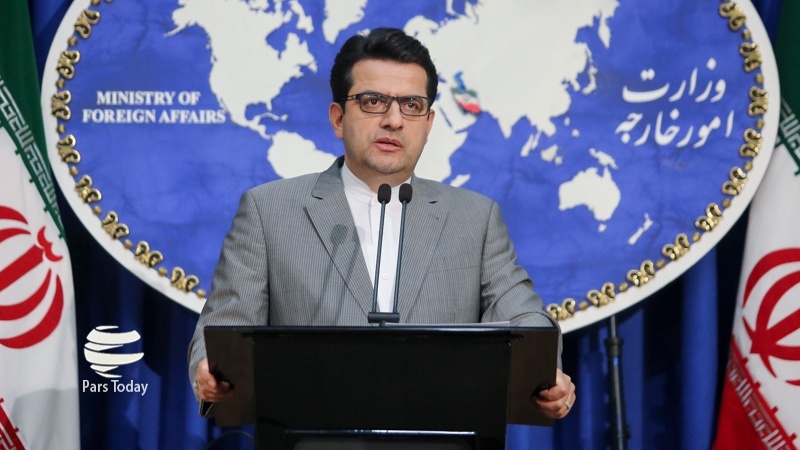
According to Press TV, Foreign Ministry Spokesman Abbas Mousavi said many of the “vain and rehashed” accusations featured in the statement do not even warrant a response, the Ministry reported on Wednesday.
He called on the six-member body to reverse course and choose cooperation “instead of [making] such provocative comments, which will lead to nothing other than sustaining the current ruinous [regional] trend and driving the region towards an unforeseeable future.”
The littoral states’ adversarial attitude only represents blatant support for the United States’ campaign of economic terrorism targeting the Iranian nation, Mousavi added.
Mousavi said Iran has come under criticism over its nuclear countermeasures by some of the Persian Gulf states, which invested all they could to sabotage the nuclear deal. He also said backing Washington against Tehran ran counter to the policy of good-neighborliness.
The raft of baseless claims, he stated, had made their way into the statement under pressure from a handful of the regional council’s members, which had expended all their efforts to prevent development of multilateral cooperation in the region.
The “short-sightedness” has not only led to the plundering of the region’s wealth, but also created or fortified terrorist and Takfiri outfits and paved the way for further foreign intervention there, Mousavi said.
The spokesperson cited the cases of Syria, Iraq, and Yemen, which had been flooded with foreign-backed terror outfits, and come under considerable direct or indirect foreign intervention.
By playing the blame game, however, these littoral states are trying to escape the repercussions of their actions and prosecution at international tribunals for their “blatant human rights violations and war crimes.”
The Islamic Republic, however, has chosen to act responsibility in between, Moussavi said, citing the country’s past proposals for a regional non-aggression pact, a regional dialog platform, and a regional conciliatory mechanism, dubbed the Hormuz Peace Initiative.
The official finally called the Persian Gulf islands — named Abu Musa, Greater Tunb, and Lesser Tunb — an integral part of the country’s territory.
Tehran treats any foreign claim over the islands as an instance of intervention in its domestic affairs and sovereign territory, the official said.
SS