Kabul, Islamabad call for new era of relations

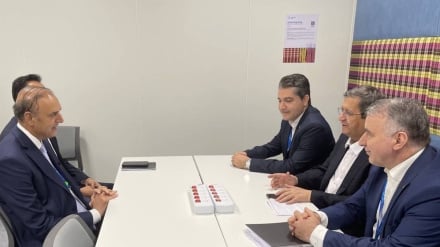
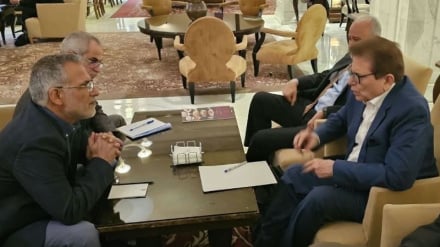
Pakistan and Afghanistan have called for a new era of relations as the chairman of Afghanistan’s High Council for National Reconciliation, Abdullah Abdullah, continues a tour of the neighboring country.
Speaking at an event in the Pakistani capital, Islamabad, on Tuesday, Abdullah emphasized his country’s appreciation of Pakistan’s help in the ongoing talks with the Taliban and the need for that new era.
“After many troubling years, we now need to go beyond the usual stale rhetoric and shadowy conspiracy theories that have held us back,” Abdullah said. “We cannot afford to pursue business as usual. We need fresh approaches and our people demand it of us.”
Abdullah, who also served until March as the Chief Executive in the National Unity Government led by President Ashraf Ghani, in the past had often accused Pakistan of supporting the Taliban and its allied militant groups operating across the troubled region.
On Tuesday, however, those accusations were not repeated, with Abdullah choosing instead to display his country’s commitment to not allowing its territory to be used against any other state.
“We do not want a terrorist footprint in our country or to allow any entity to pose a threat to any other nation.”
Striking a markedly conciliatory tone, Pakistani Foreign Minister Shah Mahmood Qureshi in a statement echoed Abdullah’s sentiment.
“[We need to have] recognition of the mistakes of the past,” said Qureshi.
“Unless we recognize that, how do we move forward? Let’s not shy away from reality. Let’s accept reality and add a new chapter to our bilateral relations and build a common future for ourselves.”
The bilateral relations have traditionally been mired in distrust.
The two neighbors accuse one another of doing too little to prevent the Taliban activities.
Over the past few years, dozens of people have been killed in a series of cross-border clashes between the armed forces of the two countries.
Kabul blames elements inside the Pakistani Inter-Services Intelligence (ISI) for supporting the Taliban militants, while Islamabad blames the Afghan government for giving refuge to militants on its side of the border.
Elsewhere in his remarks, Abdullah said the talks with the Taliban negotiators were ongoing after facing several hurdles at the outset.
“A new future, a peaceful future, is on the horizon,” he said. “As we are speaking here, delegations from both sides in Doha, they are sitting around a table, discussing the ways and means of ending decades of conflict through a political settlement in Afghanistan.”
Qureshi also repeated Pakistan’s stated position of not taking sides in the Afghan talks.
SS