U.S. pressure on Baghdad and selecting Iraqi PM challenge
-
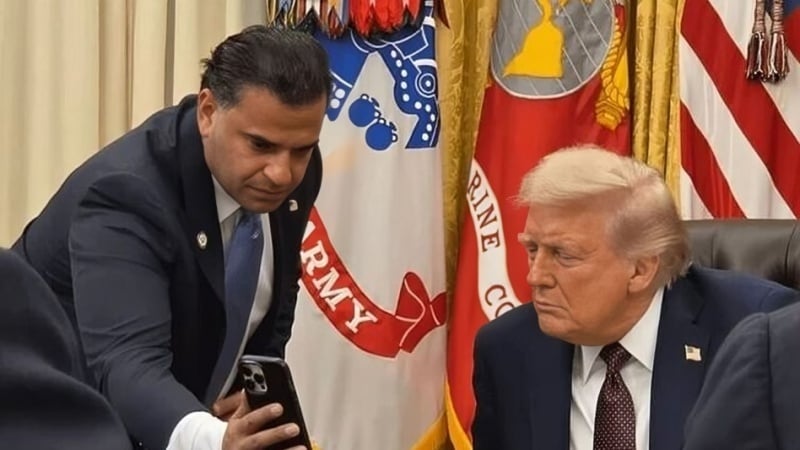
Trump and Mark Savaya, the U.S. Special Envoy for Iraq
Pars Today – Increasing political and diplomatic pressure from the United States on Iraq’s future government has complicated the process of forming a new cabinet and prompted strong reactions from resistance groups.
On the eve of the new government’s formation, rising U.S. diplomatic and security pressures have thrown Baghdad’s political calculations into confusion. Harsh statements by Mark Savaya, the U.S. Special Envoy for Iraq, targeting resistance groups and describing their presence as a “factor undermining sovereignty,” have triggered sharp responses from these groups and heightened tensions within the Shia “Coordination Framework” coalition.
According to Pars Today, Washington is linking international support to the nature of Iraq’s future government, emphasizing the monopoly of arms by the state and the reduction of resistance groups’ influence. In response, the resistance groups, highlighting their control of at least 97 parliamentary seats, have asserted that they are an inseparable part of Iraq’s political equation and have threatened to respond “immediately” to any threats.
In this context, the Shia Coordination Framework faces a difficult task in selecting a prime minister who can both alleviate U.S. concerns and preserve national sovereignty and its domestic political base. Political sources consider a “tension management” scenario more likely, as all parties are aware of the high costs of direct confrontation.
Iraq appears to be in a sensitive period, where the balance between internal demands and external pressures will determine the country’s future stability.