Why has Grossi acknowledged Iran’s right to enrich uranium?
-
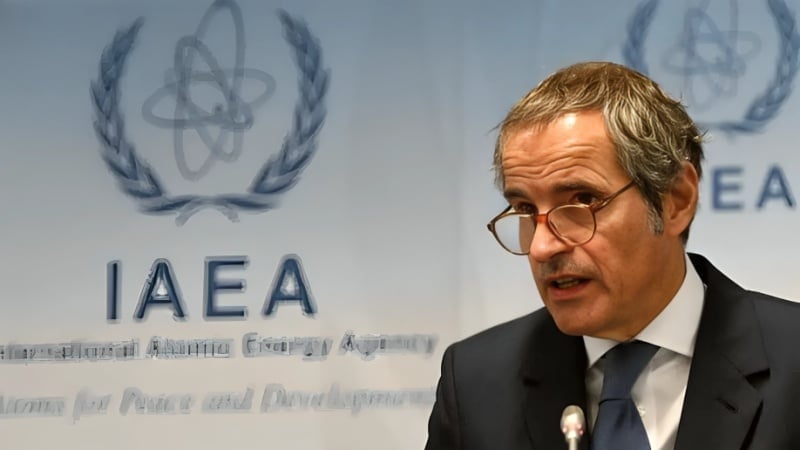
Rafael Grossi
Pars Today – Grossi Acknowledges Iran's Right to Enrich Uranium as NPT Member.
According to Pars Today, Rafael Grossi, Director General of the International Atomic Energy Agency (IAEA), acknowledged that Iran, as a signatory to the Nuclear Non-Proliferation Treaty (NPT), has the right to enrich uranium.
He stated that "the quid pro quo within the (NPT) framework is that you can do this, but you give me access so that I can verify, down to the last gram, that it is sealed and has not been diverted to something else."
These remarks are significant given that in June 2025, the United States—under the pretext of Iran's refusal to accept a demand for the complete cessation of enrichment during nuclear talks—first gave a green light to the illegal aggression by the Israeli regime, and subsequently joined this unlawful campaign by bombing Iran's nuclear facilities.
The Islamic Republic of Iran has repeatedly emphasized that, as an NPT member, it possesses the right to enrichment and will not forfeit this right.
During the aggressive act by the Israeli regime and the United States, three of Iran's nuclear facilities, which were under the IAEA's safeguards system, were targeted. Grossi, in his capacity as head of the UN nuclear watchdog, has yet to condemn this illegal action and has merely requested access to inspect the facilities.
In his interview with the Financial Times, he claimed that IAEA inspectors have been waiting for months to gain access to three key enrichment sites in Iran. He suggested that if Iran, amid sensitive and critical negotiations, were to change its approach, it would signal that "Iran is willing to accept transparency, has nothing to hide, and in that case, at the very least, any justification for new attacks would be cast into doubt."
This comes while Iran has facilitated visits to other facilities undamaged in the attacks and has declared that until the IAEA clarifies its position regarding the Israeli regime and the United States, and defines a framework for post-conflict conditions of facilities under the agency's monitoring, it will not permit inspections of damaged sites. The Islamic Republic of Iran emphasizes that the basis for cooperation and interaction with the IAEA is the law ratified by the Islamic Consultative Assembly (Majlis), which has designated the Supreme National Security Council as the authority responsible for this matter.
Rafael Grossi's remarks recognizing Iran's right to enrichment, despite his simultaneous calls for access to Iran's nuclear facilities, have drawn significant attention. This stance should be viewed within the context of international law, the technical realities of Iran's nuclear program, and diplomatic efforts to reduce tensions.
One of the most important reasons for these statements lies in the legal foundation of the NPT. Under this treaty, member states—including Iran—have the right to use nuclear energy for peaceful purposes. Uranium enrichment at the civilian level, when conducted under international monitoring and inspections, is recognized as part of this right. From this perspective, Grossi's words can be seen as an affirmation of the existing legal framework that distinguishes between peaceful use and military activities.
Another factor is technical and political realism. Over the past years, Iran's nuclear program has reached a stage where indigenous enrichment capabilities have become well-established. Under such circumstances, ignoring this reality or its outright denial by international bodies could impede progress in negotiations and cooperation. Acknowledging the right to enrichment is, in effect, an attempt to establish a rational foundation for dialogue and to focus on transparency and monitoring rather than confrontation.
Furthermore, this position may reflect the IAEA's effort to maintain its so-called neutral stance. Although the IAEA is tasked with distinguishing between technical matters and political pressures, it has repeatedly adopted negative positions and measures regarding Iran's peaceful nuclear activities under pressure from Western states and the Israeli regime.
At the same time, Grossi's remarks can be interpreted as part of a broader diplomatic strategy to de-escalate tensions. This becomes particularly meaningful in light of reports indicating that Washington has accepted a certain level of enrichment by Iran in recent negotiations. In other words, Grossi's new position should be assessed within the framework of the recent U.S. stance. A principled acknowledgment of Iran's nuclear rights could help build confidence and pave the way for new agreements or the strengthening of monitoring mechanisms. Indeed, this approach emphasizes management and oversight rather than an exclusive focus on restriction.