Why NATO Secretary General insist on Europe’s defense dependence on U.S.
-
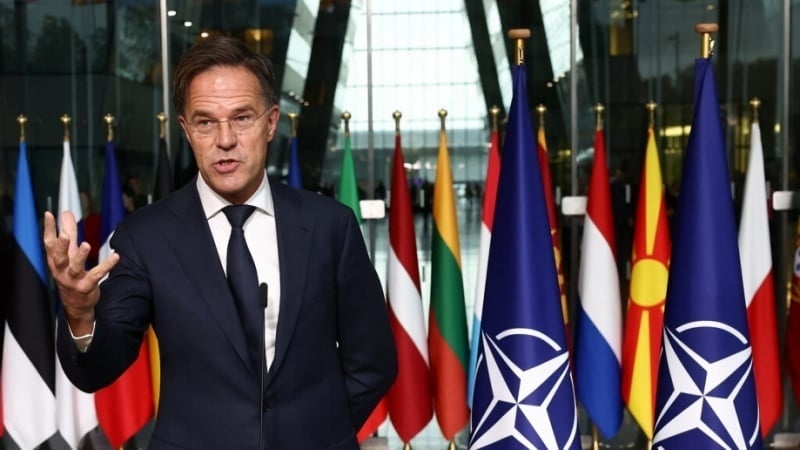
Mark Rutte, Secretary General of the North Atlantic Treaty Organization (NATO)
Pars Today – The NATO Secretary General has reiterated Europe’s continued defense dependence on the United States.
According to Pars Today, Mark Rutte, Secretary General of the North Atlantic Treaty Organization (NATO), stated that NATO member states can still rely on the United States, stressing that Europe’s defense system should not be independent of American defense.
Speaking on Friday in an interview with the German news agency DPA, Rutte said that Europe must spend more on its own security, but in cooperation with the United States.
He added: “I am confident that the United States fully supports NATO. There is no doubt about that.”
The NATO Secretary General has rejected Donald Trump’s idea that Europe should assume full responsibility for its own defense. Mark Rutte claims that Washington will remain committed to the continent, despite the withdrawal—without replacement—of a U.S. combat brigade from Romania back to the United States in October 2025. Nevertheless, this move is seen as the first concrete step toward reducing the U.S. military presence in Europe.
His remarks also come as European allies await U.S. decisions that are expected to shift resources from Europe to the Indo-Pacific region. In addition, the United States suspended its military support for Ukraine in March 2025, forcing Europeans to step in and fill the gaps.
This comes as the U.S. National Security Strategy document, published in December 2025, explicitly calls on European countries to pay for their own defense. This, combined with speculation about a reduction in the United States’ commitments to NATO, has turned the acceleration of building an independent European defense system into a necessity for the continent.
U.S. President Donald Trump has repeatedly urged Washington’s European allies to “share the defense burden” and assume the “primary responsibility” for the security of the continent.
At the NATO leaders’ summit held in The Hague in June 2025, member states pledged to raise their military spending to 3.5 percent of GDP and increase other defense-related expenditures to 1.5 percent. To date, only Poland and Lithuania have exceeded the 4 percent threshold. According to NATO estimates, more than half of the member countries remain at around 2 percent.
Since its founding in 1949, NATO has been built on cooperation between the United States and European countries. With its military power, advanced technology, and massive defense budget, the United States has consistently served as the backbone of the Western military alliance.
It appears that NATO Secretary General Mark Rutte’s recent stance—that Europe should not become fully independent from the United States in the defense sphere—is based on several reasons.
First, U.S. military capabilities far exceed those of European countries combined. Around 75 percent of the GDP of NATO countries lies outside the European Union, with the bulk of it belonging to the United States. This economic and military superiority means that Europe continues to need U.S. support to confront threats such as Russia or global terrorism.
Second, NATO’s strategic structure is built around the U.S. presence. Washington is not only the largest supplier of military equipment and technology, but also possesses extensive intelligence and logistics networks that Europe cannot replace on its own. The NATO Secretary General believes that Europe’s security must be ensured alongside the United States, not separately from it.
Third, U.S. pressure on Europe to increase defense spending is another key factor. Washington expects European countries to shoulder a larger share of military costs, while still reserving the leadership role for itself. This dynamic keeps Europe effectively dependent on the United States, even if it increases its defense budgets.
The consequences of this dependence are multifaceted. Supporters of Europe’s security dependence on the United States, such as Mark Rutte, argue that Europe’s security is thereby guaranteed, since the U.S., at least rhetorically, remains committed to collective defense within the NATO framework. They believe this allows European countries to allocate their resources to other areas, such as economic development or social welfare. In addition, the U.S. presence in Europe is seen as a deterrent to the expansion of influence by Russia and other rival powers.
Overall, the NATO Secretary General’s insistence on Europe’s defense dependence on the United States stems from the realities of military and economic power. From his perspective, Europe cannot fully withstand global threats without the United States. However, this dependence carries consequences that may limit Europe’s strategic autonomy and leave it vulnerable to shifts in U.S. foreign policy. Therefore, the future of Europe’s security will continue to depend on the level of U.S. commitment to NATO and Europe’s ability to increase its share of collective defense.
On the other hand, this dependence creates limitations on Europe’s strategic autonomy. Many European politicians believe that excessive reliance on the United States can leave Europe vulnerable to political shifts in Washington. An example is the adoption of the “America First” policy by Trump in recent years, which demonstrated that the United States in practice prioritizes its own interests over those of its allies. These concerns have led some European leaders to call for the creation of an independent European army, although the NATO Secretary General considers this idea unnecessary.