Opportunities Riyadh should not miss
-
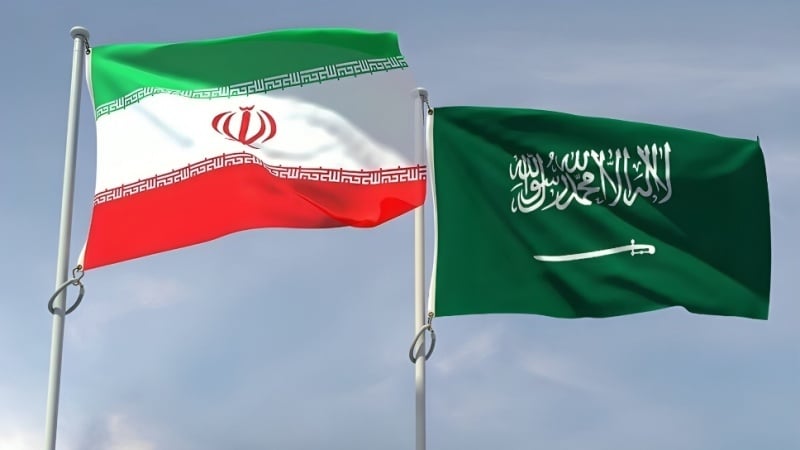
De-escalation between Iran and Saudi Arabia
Pars Today – The website of the Middle East Council on Global Affairs (MECouncil) published an article on February 19, 2026, titled “De-escalation Between Iran and Saudi Arabia: A Strategic Necessity,” examining the state of relations between Tehran and Riyadh amid efforts to reduce tensions.
According to Pars Today, regarding the article, several points were highlighted. First, the author claimed that de-escalation is a strategic priority for Tehran. The possibility of snapback sanctions has increased economic uncertainty facing Iran, while the threat of potential future military strikes by Israel and the United States remains. This situation is pushing Iran to seek reconciliation and accommodation with its neighboring countries to reduce risks.
In response, it should be said that the de-escalation in relations between Iran and Saudi Arabia has been shaped in recent years by mutual interests.
For Riyadh, easing tensions with Tehran has become more than a tactical option; it is a strategic necessity. Saudi Arabia has realized that true security cannot be imported from outside and that relying solely on Western military guarantees is not sustainable. As a result, the kingdom has concluded that regional stability depends on engagement with Iran.
The experience of the 2025 conflict demonstrated that Saudi Arabia does not wish to become a theater of proxy or direct confrontation with Iran.
Therefore, diplomacy with Iran is viewed as a smart approach to managing competition, reducing security costs, and focusing on the goals of Saudi Vision 2030 amid regional instability.
At the same time, Iran’s emphasis on brotherly relations among Islamic countries and the creation of a unified front to advance common objectives in the Islamic world—particularly on issues such as Palestine and broader Islamic unity—may help steer relations between Iran and Saudi Arabia toward de-escalation and expanded bilateral cooperation.
The article’s second argument is that the expansion of trade relations has largely remained on paper. Bilateral agreements on technical cooperation have promised higher annual trade volumes centered on industrial development, increased investment, and tourism, but risks continue to act as obstacles to deeper economic ties.
In response to this issue, Saudi Arabia’s interest in expanding trade and economic cooperation with Iran goes beyond simple commercial exchange and is aligned with the kingdom’s broader strategic objectives.
At the domestic level, such engagement can directly support Saudi Vision 2030. Cooperation with Iran may contribute to Saudi Arabia’s digital transformation and sustainable development by attracting Iranian specialists in fields such as information technology, artificial intelligence, and nanotechnology.
Moreover, Iran’s capabilities in exporting petrochemical, pharmaceutical, metal, and agricultural products could help meet market demand in Saudi Arabia and contribute to building a more integrated regional production chain.
At the regional level, the stability resulting from economic engagement with Iran could create a foundation for joint investment in infrastructure and energy projects, particularly in countries undergoing reconstruction such as Iraq and Yemen. This cooperation may also contribute to oil market management and price stability.
Ultimately, from a future-oriented perspective, Saudi Arabia could benefit from Iran’s geopolitical position to access the markets of northwestern Asian countries and even parts of Africa via Iran.
The article’s third argument is that the response of the Persian Gulf Cooperation Council to the 12-day war helped strengthen de-escalation efforts. The condemnation of military actions by Israel against Iran by Gulf states, along with their clear indications that they would not allow their territories to be used as launch pads for such attacks, has supported reconciliation efforts.
In response, it should be noted that although the condemnation of the attack by Israel and its support by the United States from some Persian Gulf Cooperation Council countries is a positive development, attention must be given to the increasing U.S. military deployment around Iran, particularly the American bases established in these states.
Any U.S. military action launched from bases located in Arab Persian Gulf countries against Iran could face a direct response from Tehran. Despite Tehran’s goodwill and its efforts to build friendly and good-neighborly relations, any form of collaboration or complicity with Washington in actions against Iran would render those actors legitimate targets and lead to a strong response from Iran.