-
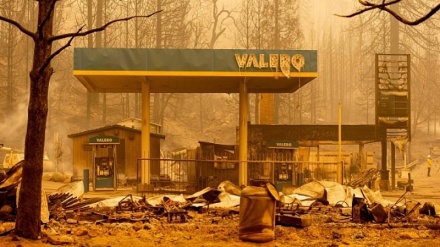
New study finds planet heading toward temperature threshold not seen in 34 million years
Sep 18, 2020 09:42A newly published study conducted by a team of climate scientists warns that—barring prompt and rigorous efforts to minimize greenhouse gas emissions—"Earth is on track for some of the strongest, fastest climate change the planet has ever experienced."
-
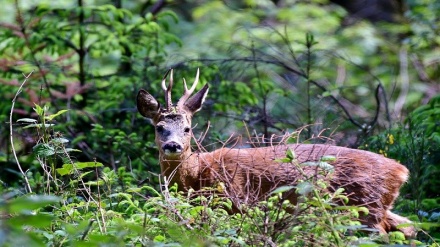
'Nature is unraveling': New WWF report reveals 'alarming' 68% plummet in wildlife populations worldwide since 1970
Sep 14, 2020 04:40In the midst of a global pandemic, it is now more important than ever to take unprecedented and coordinated global action to halt and start to reverse the loss of biodiversity.
-
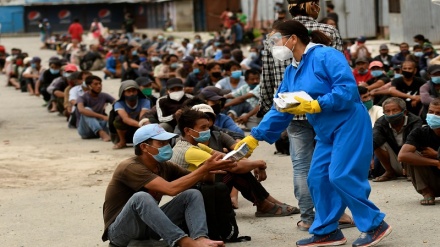
Hunger: The other way COVID will kill
Sep 14, 2020 04:33An outbreak of coronavirus pandemic-related nationalism — with countries blaming one another for the spread of the disease — has produced an escalating wave of trade barriers that has amplified the trouble on the roads. Rwanda has refused to allow Tanzanian truck drivers to haul goods into the country, forcing a time-consuming change of driver at the border.
-
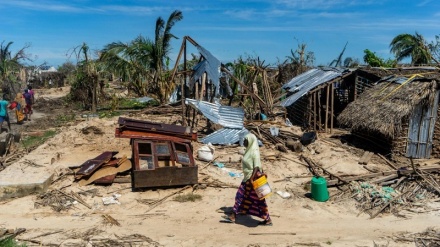
As global population grows, ecological threats and armed conflict could displace over 1 billion people by 2050
Sep 13, 2020 05:01An analysis released by an international think tank warns that as the world's population continues to climb toward and possibly surpass 10 billion by 2050, ecological disasters and armed conflict could forcibly displace roughly 10% of humanity—or about 1.2 billion people.
-
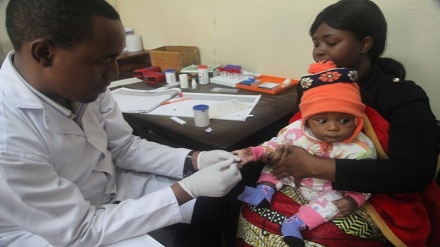
How to stop COVID-19 fuelling a resurgence of AIDS, malaria and tuberculosis
Sep 02, 2020 13:25AIDS, malaria and tuberculosis (TB), three of the deadliest infectious diseases, together kill 2.4 million people every year, with TB alone responsible for 1.5 million deaths. And deaths from these diseases could almost double over the next year, according to the Global Fund to Fight AIDS, Tuberculosis and Malaria, a consortium of donors that funds treatments. The reason: coronavirus. It’s a horrifying prospect, and calls for an urgent action plan.
-
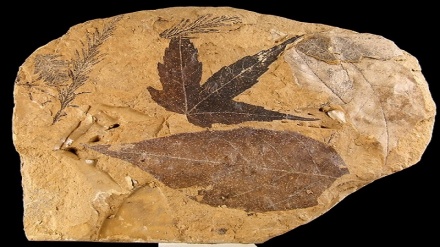
‘Mummified’ plants give glimpse of Earth’s future
Aug 24, 2020 11:27A study said fossil leaves from the remains of a 23 million-year-old forest suggest some plants may adapt to grow more quickly as CO2 levels rise. They have enabled the scientists to link for the first time the high temperatures of the period with high levels of atmospheric CO2. In their scientific paper, the team shows that some plants were able to harvest carbon dioxide more efficiently for photosynthesis — the biological process that harnesses light from the sun to produce food for the plant.
-

Why do we develop lifelong immunity to some diseases, but not others?
Aug 16, 2020 05:31Some diseases, like the measles, infect us once and usually grant us immunity for life. For others, like the flu, we have to get vaccinated year after year. So why do we develop lifelong immunity to some diseases but not others? And where does the novel coronavirus fit into all this? Whether or not we develop immunity to a disease often depends on our antibodies, which are proteins we produce in response to infection.
-
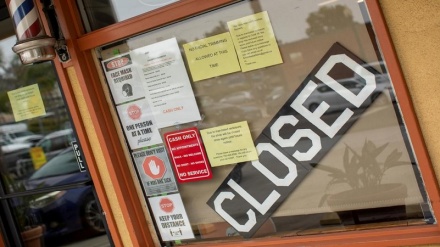
As pandemic rages on, world economic recovery looks ever shakier
Aug 05, 2020 09:12The world economic outlook has dimmed again, with still-rising coronavirus infections and the risk of renewed lockdowns increasing the chances that any rebound will reverse course. Over 17 million people have been infected worldwide by the coronavirus and more than two-thirds of a million people have died. That has forced governments to impose strict lockdown measures to curb the spread of the virus, keeping citizens at home and businesses closed and spurring recessions that aren’t over yet.
-
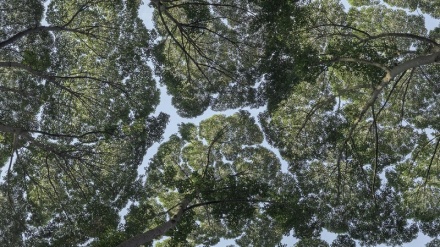
Some trees may social distance to avoid disease
Jul 10, 2020 04:27It seems wind plays a crucial role in helping many trees maintain their distance. The boundaries carved by bouts between branches may improve the plants’ access to resources, such as light. Gaps in the treetops might even curb the spread of leaf-munching insects, parasitic vines, or infectious disease.
-
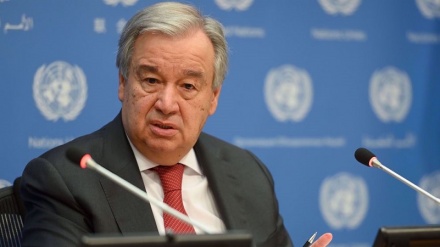
Global wake-up call
Jul 05, 2020 05:48The coronavirus pandemic, as horrible as it is, must be a wake-up call that prompts all political leaders to understand that our assumptions and approaches have to change, and that division is a danger to everyone. This understanding could lead people to recognize that the only way to address global fragilities is through much more robust mechanisms of global governance with international cooperation.