What should the UK, US do with Daesh repatriate brides?
Mar 04, 2019 12:34 UTC
As the war imposed on Syria by the US, Western Europe, Saudi Arabia and the Zionist regime nears its end, the question of repatriation of British and American citizens involved in terrorist activities becomes more critical, says London-based West Asian analyst, Catherine Shakdam in her report for Citizens for Truth, titled: “What should the UK, US do with Daesh repatriate brides?”
Last month, I wrote about the case of Shamima Begum, the 19-year old British national, who, when she was no more than a child of 15, decided to cross into Turkey and then to Syria to join the Daesh terrorists, in the hope she would share in the fanatical cultish ambition of Wahhabism, that is, to see a so-called caliphate all nations would have to bow to, and if not, face the blade of their executioners.
Shamima of South Asian origin, like hundreds, if not thousands, of militants, is waiting for her country of origin, the United Kingdom, to decide whether to allow her to come home and face the music. While many will argue that each country should bear its share of responsibility, the reality of the matter has untold ramifications. One does not simply return a terrorist home to be prosecuted at home, especially if we bear in mind how very ill-prepared that country’s respective legal systems are for radicalism.
To argue compassion and moral ethos without recognizing the danger that lies in a rushed decision to appease public opinion would not only be folly but also an act of treason. And while western regimes arguably wielded terrorism as a convenient tactical weapon to leverage their own positions and geopolitical plans in the West Asia-North Africa region, such knowledge should not distract from the risks a mass repatriation would mean.
The desire to hold state officials accountable for allowing the threat of Wahhabism, to metastasize in the pursuit of regime change in the West Asia-North Africa region needs to be looked at separately from the issue of Daesh repatriation. No one said politics was simple…
The West, especially the British, the French and US regimes must draw a strong and definite distinction between how they came to be in this situation and how they need to go about solving their present legal entanglements while preserving national security.
There is no one-size-fits-all solution for repatriation. Let’s be clear from the onset of this argument: No solution can exclude the state’s obligations to the victims of terrorism, whether at home or abroad. The greatest injustice would be to allow terrorists to have a free hand in Syria and Iraq, knowing western regimes played a part in deliberately containing Daesh to maintain both military and political leverage in the region.
That being said, guilt of the West cannot translate into an act of martyrdom by allowing European and American nationals who espoused Wahhabism, and with it the dream of the caliphate, by allowing them to breach the home society on return home. The foremost duty is to defeat terrorism by eradicating its message on an ideological level and equip the legal system to deal with these returnees.
If we consider for example that the UK has no legal means to prosecute Shamima Begum should she, in fact, return home (there are no legal provisions set in place to prosecute individuals from joining a terrorist group abroad), it is evident how very vulnerable Britain currently stands before the issue of repatriation, notwithstanding the financial resources needed to handle the crisis.
At least 1,000 foreign nationals, including at least 14 British citizens, suspected of being Daesh members are held in prisons and camps in north Syria, whom the Kurdish-led Syrian Democratic Forces (SDF) captured during the past three years. To that number, we need to add 500 battle-hardened terrorists who are believed to be defending the remains of their pseudo caliphate, the majority of whom are foreign nationals ideologically committed to terrorism, and therefore represent the gravest threat still.
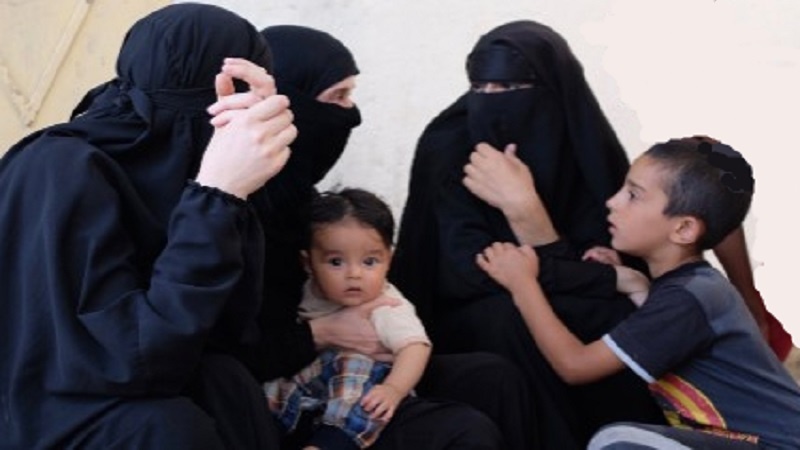
Ultimately, those men and women will need to face some kind of trial, and the country will need to discuss and provide for their return. Now, to those numbers, we need to add those individuals who hold links to Daesh by way of family affiliation, mainly women and children.
According to the Syrian authorities, there are 1,500 people. Those wishing to repatriate must know actions have consequences.
Speaking to the press in February, Ben Wallace, Britain’s Security Minister, stressed he would not put officials’ lives at risk to rescue UK citizens who joined the terrorists, saying “actions have consequences.”
His stance did little to take away from the growing controversy revolving around the fate of returning foreign militants, not least those who may have been non-combatants like Shamima Begum.
With so many ranging opinions it is difficult to imagine how we will ever come to terms with the issue of Islamic radicalization now that it rhymes with terrorism, and more to the point, the promotion of wanton terrorism.
Max Hill, formerly the UK’s independent reviewer of terrorism legislation, is of the mind we should rehabilitate rather than prosecute British citizens who were coerced to join Daesh on the basis that naivete sits at the heart of their radicalization.
Playing it nice won’t benefit anyone, least of all those we are trying to protect from terrorism. Maybe more to the point, compassion won’t address the issue of radicalization in that it does nothing to prevent or even criminalize indoctrination in the first place.
Britain’s first instinct may be to keep Daesh militants and/or sympathizers away from the country’s borders. Clearly, this is not a solution, but it may be a good place to start. Maybe there is truth in wishing to isolate such a threat.
Shamima Begum should not be allowed to come home, at least not under the current structure, especially when Britain has no real means to protect those lives that were shattered by terrorists in the first place.
The Manchester bombing comes to my mind and the many lives that were lost to those terrorists Shamima and Co. side with.
If terrorism is not a new ill, Daesh’s brand of terrorism certainly is, and the international nature of its message and its gravitational pull demands that we meet its challenges globally, by harnessing our international resources and existing international institutions, that and clearly identifying those powers in the business of manufacturing terrorism, mainly Saudi Arabia.
In her 2013 article for the New Statesman America, on Wahhabism to Daesh, titled: How Saudi Arabia exported the main source of global terrorism, Karen Armstrong makes a compelling case against the regime in Riyadh.
She writes: “… although Daesh calls itself Islamic, it is neither typical nor mired in the distant past, because its roots are in Wahhabism, the cult officially practiced in Saudi Arabia that emerged only in the 18th century. In July 2013 the European Parliament identified Wahhabism as the main source of global terrorism.’”
The US needs to make a decision too in this regard too. If President Donald Trump is adamant Daesh members or associates can’t come home, it is unlikely the US will escape the situation by denying its share of responsibility.
Faced with the same issue the UK is contending with, the United States has denied one of its own nationals, Hoda Muthana, by arguing legal technicalities. Secretary of State Mike Pompeo said in a statement, “Ms. Hoda Muthana is not a US citizen and will not be admitted into the United States. She does not have any legal basis, no valid US passport; no right to a passport nor any visa to travel to the US.”
The young woman’s lawyer, Hassan Shibly, is disputing the US claim on the basis of her being born in the US months after her father, a Yemeni diplomat ended his mandate, thus lifting all restrictions on her access to US citizenship. This back and forth may appeal to public opinion in that it gives us a sense of control and some degree of vindication, but it does little to find a solution. So what now? This dilemma is not going away, and the affected countries must find a solution and fairly quickly.
AS/ME
Tags