Unity Week Special (6)
Nov 16, 2019 12:09 UTC
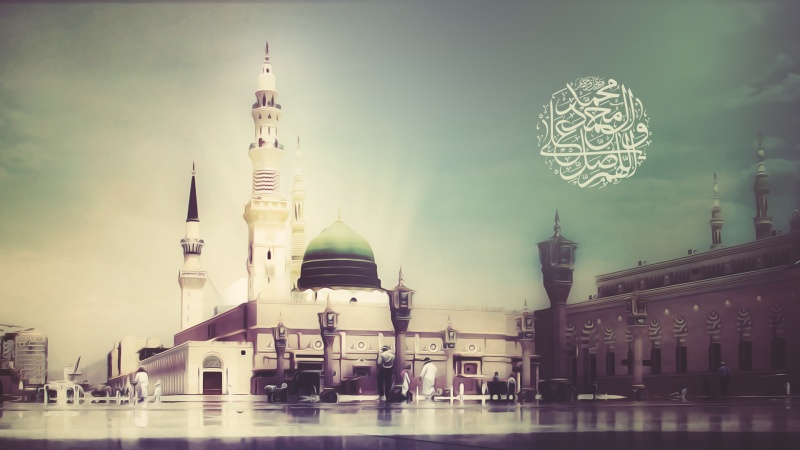
Welcome to the 6th and last episode of our series Unity Week Special on the occasion of the blessed birthday celebrations of the Almighty’s Last and Greatest Messenger, Prophet Mohammad (blessings of God upon him and his progeny).
The Prophet of Islam was the most perfect and peerless person in every sense of these terms. He performed this duty in conveying to mankind the Divine Commandments with such diligence that God Almighty has hailed him in ayah 21 of Surah Ahzaab as:
“In the Messenger of Allah there is certainly for you the Excellent Exemplar, for those who look forward to Allah and the Last Day, and remember Allah greatly.”
His lifestyle was simple, without any pomp, and with complete patience. His piety left permanent imprint on all those who came in contact with him. He did not speak or advocate the cause of some particular race or ethnic group, but stood up for all humanity irrespective of race, colour, class, language or geographical barriers. The Message he preached was universal, transgressing all obstacles whether artificial or otherwise. A Message so complete and comprehensive that it not only revolutionised the era in which it was proclaimed, but even today its timeless beauty has lost none of the original charm and continues its profound appeal to the human intellect.
The Almighty distinguished him from all and sundry by instilling in his sublime personality such fine qualities as modesty, truthfulness, kindness, patience, loyalty, honesty, courage, bravery, generosity, magnanimity, wisdom and the like. By studying his lofty character and the amazingly simple life he led with his household, companions, wives and others, we are apt to learn valuable lessons from his conduct and accordingly mould our own lifestyle.
Our society could never be an Islamic one unless we sincerely tread the footsteps of Allah's final Messenger to mankind, heed his sayings, observe his glorious actions and attitudes, and most important of all follow them, as the faithful among his companions did.
The Leader of the Islamic Revolution Ayatollah Seyyed Ali Khamenei says about the Prophet of Islam: “Nobody is able to mention the dimensions of the great Messenger completely and to display a picture that is close to this grand figure. What we have known and recognized are only glimpses of some of the outstanding characteristics of this peerless person. Yet, this much of cognizance is enough for Muslims so that it guarantees their move toward perfection. It also serves as the best example of fostering Islamic unity. Thus, we recommend all Muslims in the world to work a lot on the dimensions of the personality, life, practice and ethics of this great figure.”
All Muslims owe their existence to the Prophet of Islam, and without the least doubt the triumph of the Islamic Revolution is indebted to the revolutionizing spirit of Islam, which the Prophet breathed into the society of Arabia over a millennium and four centuries ago. This is the reason we should strive to lead the Ummah towards solidarity, so as to enlighten the people of the world with the dynamic message of Islam and the teachings of the holy Qur’an.
When the people of the city of Taef mocked at the Prophet and stoned him for preaching the message of Islam, he went to an orchard on the outskirts of the city and sat under a tree. Then he looked at the sky, and prayed to God with such words: “O Merciful God, You Who are more merciful than every merciful, You are the Lord of the weak and my Lord. Every hardship is easy in Your way. Yet, Your help is sweeter for me O my Majestic Lord. I take refuge with You as Your light destroys every darkness.”
The supplication of the Prophet in the divine court was so sweet and attractive that Otba and Shayba, the two owners of the garden, were impressed and ordered their Christian slave, Edaas, to take some grapes for the Prophet. Edaas took the grapes, and while gazing at the spiritual and tranquil face of the Prophet, he wandered as to why people the people of Taef had harassed him! Seeing the slave, the Prophet of Islam stood up and thanked him. Then he put some grapes in his mouth but before that he said, “Bismillah-irRahman-irRahim”, meaning “In the Name of God, the All-Compassionate, the All-Merciful.”
The Christian asked with astonishment, “The people of here are not familiar with the phrase you expressed. Don’t you start your work with mentioning the names of the idols Laat and Uzza?”
The Prophet answered, “Everything belongs to God who is the Lord and Kind. Where are you from?”
The slave said that he is from Nineveh, the city of Prophet Yunus (Jonah). The Prophet said, “My brother Yunus was God’s messenger; just as I am God’s Messenger and have come for guidance and salvation.” Then he recited a few ayahs of the Qur’an about Prophet Yunus. The beautiful ayahs were so impressive that Edaas kissed the Prophet’s hand. The owners of the garden were looking from a distance. They angrily shouted at the slave. Heedless of their call, he told them, “The man who is sitting under the tree is the master of all people on the earth. He is the Promised Messenger whom Prophet Jesus has given us the good news of coming. By God! Today, no religion is accepted with God except his religion. Anyone who doesn’t join him will go astray.”
The Prophet of Islam was indeed an unmatched personality who fulfilled his mission prudently and beautifully. The sincerity of this man would leave such a profound impact on people that they would be enthralled by his words and behavior. He vehemently rejected any discrimination, inequality, boasting and class gaps. It is narrated by his companions that: “We were with the Prophet in a journey. We stopped somewhere for resting. We wanted to slaughter a sheep for food. One of the companions said that he would do it. Another one said that he would prepare the meat. The third one continued that he would make the kebab.” The Prophet said, “So, I will collect sticks for the fire.”
At this point, the companions told the Prophet, “O Messenger of God, you are tired and shouldn’t trouble yourself. You’d better take repose under those trees till we prepare the food.”
The Prophet said, “You are tired, too. It is not right that everyone works while I stay idle. You do your job and I will do my duty by collecting sticks from the desert. This will satisfy God, too. Indeed God dislikes seeing a servant among other servants who deems a privilege for himself. If I sit here while you are working, then I have deemed a privilege for myself. God doesn’t like to see a servant in this situation.”
RM/AS/MG
Tags