
Larijani: Iran does not seek war but will not yield to threats
-
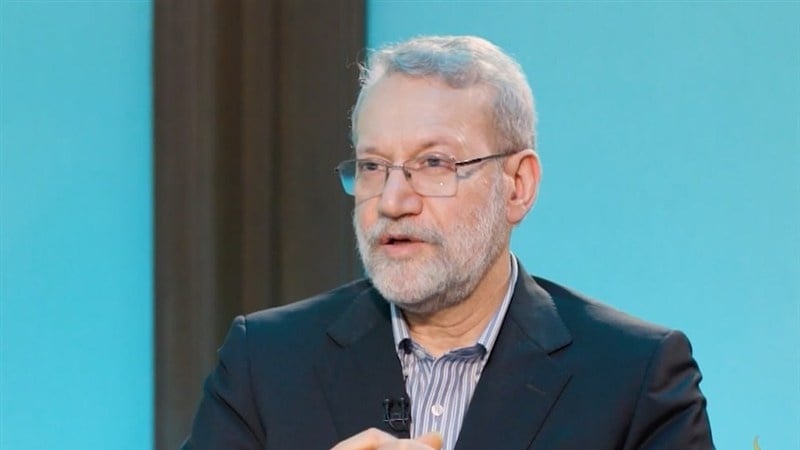
Larijani: Lack of nuclear weapons common ground for US-Iran negotiations
Pars Today – In an interview with Al Jazeera, Ali Larijani discussed Iran’s positions on nuclear negotiations, regional developments, and the state of the Resistance Axis, emphasizing that Tehran does not seek war, but is simultaneously pursuing fair negotiations and strengthening deterrence.
According to Pars Today, citing Tasnim News Agency, Larijani, Secretary of Iran’s Supreme National Security Council, stated that Tehran is ready to enter fair nuclear talks that address concerns without harming national security. He also stressed that internal breaches have been resolved and the Resistance Axis has overcome the shock of recent assassinations.
The Secretary of Iran’s Supreme National Security Council commented on the recent talks in Muscat, stating that no written response was delivered to U.S. demands and that the discussions were merely an exchange of views—a process that continues. He added that regional countries also support achieving a political solution to Iran’s nuclear issue.
Larijani emphasized that Tehran views the negotiations positively, provided they are fair and reasonable, and do not become a tool for wasting time or imposing issues beyond the nuclear framework. He noted that preventing Iran from acquiring nuclear weapons could serve as a potential common ground for reaching an agreement.
He also emphasized that Iran accepts the supervision of the International Atomic Energy Agency within the framework of the Non-Proliferation Treaty, but described talk of “zero enrichment” as unrealistic, noting that nuclear knowledge cannot be eliminated by political decision and that Iran has legitimate medical and research needs.
Larijani added that Iran’s missile program was not raised in the recent negotiations, stressing that it is part of the country’s national security and defensive deterrence system and is not open for discussion.
Referring to the influence of the Zionist regime, the Secretary of Iran’s Supreme National Security Council stated that what happened was not the result of “extraordinary infiltration,” but rather a consequence of reduced caution and vigilance in certain institutions.
He added that the government has addressed these shortcomings institutionally, disrupted espionage networks, and increased overall readiness and alertness.
Acknowledging the heavy losses suffered by Hezbollah and the death of around three thousand people in recent clashes, Larijani emphasized that the movement has regained its strength and now possesses significant capacity to confront Israel.
He noted that inflicting a single strike does not mean the war is over, as war is inherently an exchange of blows.
He stressed that Israel has also been hit by missile strikes and was forced to retreat, noting that the measure of resilience is not the number of casualties, but the ability to continue.
Larijani said that Israel has devastated the region and committed widespread crimes, yet has failed to eliminate the presence of Hamas, which continues to govern Gaza despite over two years of heavy bombardment.
He considered the likelihood of a large-scale war to be low, stating that past experience has shown that escalating tensions has not benefited the initiators. Larijani emphasized that Iran is prepared for all scenarios without seeking to fuel conflict.
He described the positions of countries such as Saudi Arabia, Turkey, and Egypt opposing military action as a sign of understanding the risks of a regional explosion, and highlighted Iran’s readiness to strengthen relations based on mutual respect. Larijani also praised Qatar's role in mediation efforts.
The Secretary of Iran’s Supreme National Security Council stated that cooperation with China and Russia is based on shared interests, and their support for Iran in the United Nations Security Council reflects a political partnership. He noted that Iran’s turn toward the East is a result of Western breaches of trust.
Larijani also reiterated that Iran does not seek war, but will not yield to threats and relies on a combination of diplomacy and deterrence.