Iran's envoy to UNSC: Silence in face of U.S. aggression is dangerous
-
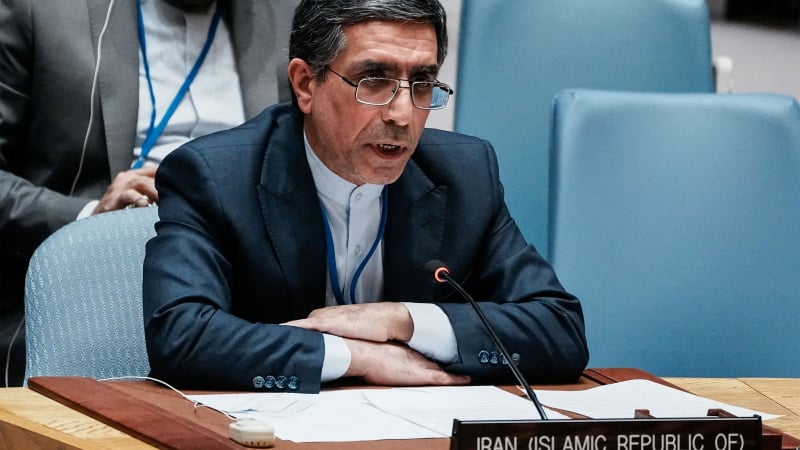
Gholamhossein Dehghani Darzi, Iran's ambassador and deputy permanent representative to the United Nations
Pars Today – Iran's deputy permanent representative to the United Nations criticized the UN Security Council's silence over U.S. acts of aggression, stressing that Iran will continue to exercise its inherent right to defend its people, sovereignty, territorial integrity, and vital national interests.
According to Pars Today, citing IRIB News, Gholamhossein Dehghani Darzi, Iran's ambassador and deputy permanent representative to the United Nations, told a UN Security Council meeting on Thursday:
"All of Iran's actions are defensive, necessary, and consistent with international law. The Islamic Republic of Iran will continue to exercise its inherent right of self-defense under Article 51 of the United Nations Charter to protect the Iranian people and defend its sovereignty, territorial integrity, and vital national interests."
The senior Iranian diplomat added:
"The most effective way to prevent conflicts is full adherence to the purposes and principles of the UN Charter, including respect for the sovereignty and territorial integrity of states, refraining from the threat or use of force, and the peaceful settlement of disputes on the basis of equality, mutual respect, and compliance with international law."
Darzi further stated:
"The Islamic Republic of Iran has always remained committed to these principles and has consistently pursued the path of dialogue and diplomacy, believing that lasting peace and security can only be achieved through respect for international law and the sovereign equality of states."
Darzi said that the overt acts of aggression carried out by the United States and Israel in June 2025 and again beginning in February 2026—including the deliberate targeting of civilians, civilian infrastructure, and critical facilities—constitute serious violations of international law, particularly international humanitarian law, and have grave consequences for regional and international peace and security.
Iran's deputy permanent representative to the United Nations added that, despite these unlawful actions, the Islamic Republic of Iran had once again demonstrated its commitment to diplomacy. He said that, through Pakistan's mediation and with the support of regional partners, the Islamabad Memorandum, signed on June 17, established a framework for de-escalation, respect for sovereignty and territorial integrity, preventing further aggression, and the peaceful settlement of disputes.
He further stated:
"Since the signing of this memorandum, the Islamic Republic of Iran has acted in good faith and fully honored its commitments. In contrast, the United States has deliberately violated its obligations while attempting to justify its non-compliance through baseless pretexts."
Iran's ambassador and deputy permanent representative to the United Nations further stated that almost immediately after the Islamabad Memorandum entered into force, the United States committed material breaches of its obligations by continuing daily military strikes against Iran, including attacks on civilian infrastructure such as bridges, reimposing a naval blockade, and attempting to establish a parallel maritime regime in the Strait of Hormuz, which was in clear violation of Article 5 of the memorandum. He added that the United States has continued to violate other key provisions of the agreement.
He also noted that in recent days, the U.S. president has continued to disregard international law and has repeatedly and publicly threatened to destroy Iran's critical infrastructure, including bridges and power plants.
The Iranian diplomat concluded:
"The continuation of the United States' unlawful attacks poses a serious threat to regional stability, freedom of navigation, and the security of the Persian Gulf and the Strait of Hormuz."