Gen. Naqdi: We must achieve deterrence so that enemy dares not attack
-
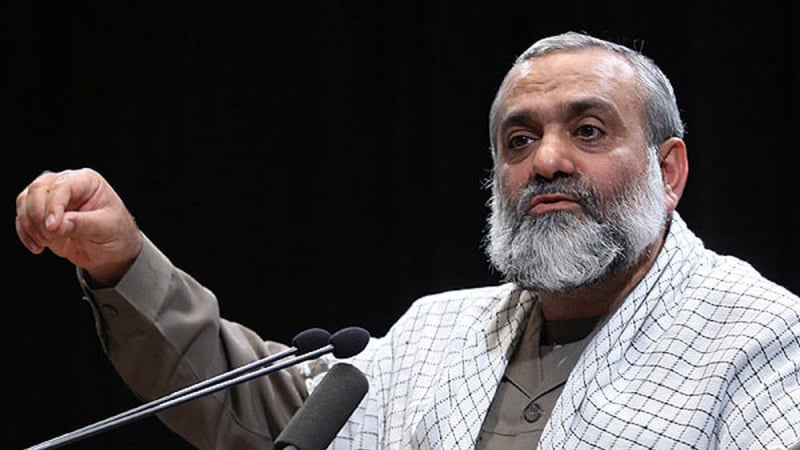
Brigadier General Mohammad Reza Naqdi, senior adviser to the Commander-in-Chief of the IRGC
Pars Today – A senior adviser to the Commander-in-Chief of the Islamic Revolutionary Guard Corps (IRGC) said that if Iran were to one day have no missiles, it would become even more dangerous, because a force determined to wage war and defend its honor would pose an even greater threat to the United States.
According to Pars Today, citing IRIB, Brigadier General Mohammad Reza Naqdi, senior adviser to the Commander-in-Chief of the IRGC, said in an interview with the US-based PBS network that, regarding the approach of Western media toward the Islamic Republic of Iran, Iran faces no restrictions when it comes to dialogue and interviews with the media and even welcomes presenting its views to Western public opinion. He said it is Western media outlets that prevent these views from being fully reflected.
Regarding the recent war and the confrontation between Iran and the United States, the IRGC commander’s adviser said: “Following the 12-day war and the third imposed war, the Islamic Revolution was not only not destroyed, but has also gained deeper roots in the hearts of the people.” He added: “We defeated the enemy in order to preserve the pillars of the system and safeguard Iran, and the fact that we were able to prevent regime change means that we are victorious.”
General Naqdi stressed: “The US objective was to partition Iran, but now, not only has Iran not been divided, but Iran’s ethnic groups are prouder than ever of being Iranian. The United States failed in all of its stated objectives in this war, while Iran emerged victorious.”
General Naqdi, describing the recent war as a real-life military exercise, said: “Over these five months, we learned how to fight the United States, and the US military has proven to be weaker than we had imagined.”
In another part of the interview, General Naqdi addressed the security situation in the region and the movement of vessels, stating: “In wartime conditions, Iran has the right to inspect and control vessels, and considers this to be its legal and undeniable right.”
Emphasizing that Iran’s defensive weapons are 100 percent domestically produced, he added: “The weapons are manufactured inside Iran and developed according to the needs of the battlefield. There is a direct link between the front lines and the technical and engineering sectors, and we are not dependent on anything from abroad that would require us to wait for its delivery.”
The senior adviser to the Commander-in-Chief of the IRGC said that the war could continue for years, adding: “Until the final day of this war, Iranian missiles will continue to be launched, and this is possible because of continuous domestic production.”
General Naqdi stressed, “If Iran were to one day have no missiles, it would become even more dangerous. In that situation, a force that has the will to fight and defend its honor would pose a far greater threat to the United States. We must achieve deterrence so that the enemy does not dare to attack.”
Regarding the presence of people in the streets, General Naqdi said: “This is the main pillar of Iran’s victory. The essence of the victory was achieved in the streets where the people turned out. The morale of our fighters, their courage, and the enemy’s fear and despair over trying to lay its hands on this country—all of these were forged here.”