Aref: Enemy will also be defeated on economic war front
-
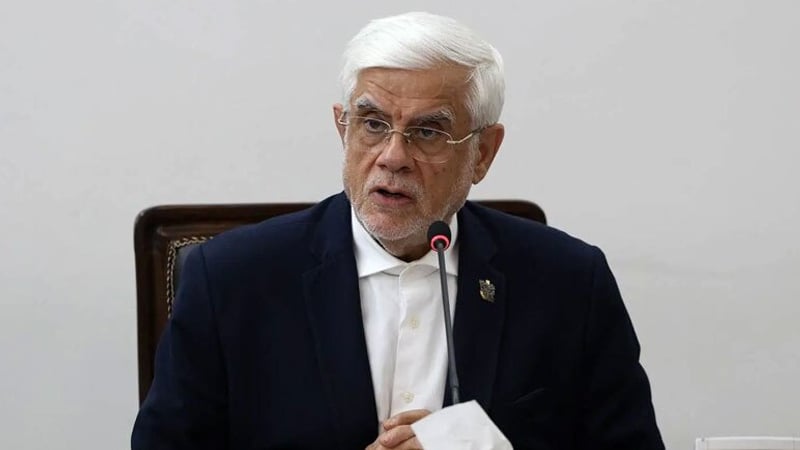
Mohammad Reza Aref, Iran’s First Vice President
Pars Today – Iran’s First Vice President said that the government has plans to implement a resistance economy, strengthen the country’s economic resilience, and safeguard people’s livelihoods under conditions of economic war, adding that Iran is confident the enemy will also be defeated on this front.
According to Pars Today, citing IRIB, Mohammad Reza Aref, Iran’s First Vice President, referred to the failure of various military, economic, social, and political plots by the system of domination, led by the United States, aimed at forcing the Islamic Republic of Iran into submission or bringing it down.
He said: “Iran’s strategy over recent decades has been based on the vision of the martyred Leader of the Revolution and on making maximum use of advanced technologies to meet the needs of the country and the peoples of the region. Today, the world has realized that the ‘nuclear stick’ was nothing more than a lie put forward by the Zionist regime, and their claims no longer carry any weight.”
He continued: “After its plots were defeated, the enemy turned to a direct military confrontation with the Islamic Republic of Iran, believing that the Iranian people would take to the streets in its favor. However, during the 12-day war, the Iranian people once again proved the West’s calculations wrong. They stood up to the enemy, and ultimately, the enemy was forced to request a ceasefire.
Aref added: “Nevertheless, the enemy did not abandon its strategy of overthrowing the Islamic Republic of Iran. Drawing on the model of the 1953 coup d’état, it sought to carry out a political-military coup. The events of Dey imposed a heavy cost on the country, with more than 3,000 young people from both sides losing their lives—both those who took to the field to defend the system and those who, without realizing it, acted on behalf of the system of domination.
“Referring to the Iranian government’s preparedness to confront an all-out war, he said: “With the martyrdom of the Islamic Revolution’s martyred leader on the first day of the Ramadan war, the system suffered its greatest blow, and the Muslim Ummah and freedom-loving people around the world suffered a major loss. However, society once again demonstrated its extraordinary resilience. Thanks to the blood of the martyrs, the ‘street front’ emerged spontaneously, and for about 190 nights now, people have been taking to the streets in support of the system and the country.”
Iranian First Vice President added: “The enemy believed that, as in the 1953 coup d’état, it could achieve its objectives by using a number of low-level thugs. But this calculation was also wrong, and valuable social capital came out in support of the system.
Aref said that the enemy, having become disappointed in achieving its objectives through military warfare, is now active on the economic and social fronts. He said: ‘We acknowledge that we are facing economic problems, but we have resisted unjust sanctions and pursued economic resilience and a resistance economy. We are aware of the problems of inflation and rising prices, and we have not been successful in controlling inflation, but we are not discouraged. We are confident that, with the support and cooperation of the people, these problems can be resolved.’
Aref continued: “We believe that we have entered an economic war. The enemy believes that through sanctions and a blockade, it can close the case of the Islamic Republic of Iran and bring the system to its knees. But we have sufficient new maritime, land and rail routes, and we are not concerned. The government has plans to implement the resistance economy and strengthen the resilience of the economy, and we are confident that the enemy will also be defeated on this front, because it has no tools at its disposal other than the harsh and unjust sanctions it has imposed before.
The Iranian First Vice President referred to the capabilities the country demonstrated during the two recent wars, saying: ‘The country’s economic capacity was also proven during these two wars. The private sector and chain stores put national interests ahead of their personal interests and passed the test in helping the government and the country. The people also cooperated with the government by controlling the amount they purchased, and the stores remained fully stocked with goods.’