Analysis | Why is Iran emphasizing need for new regional security architecture?
-
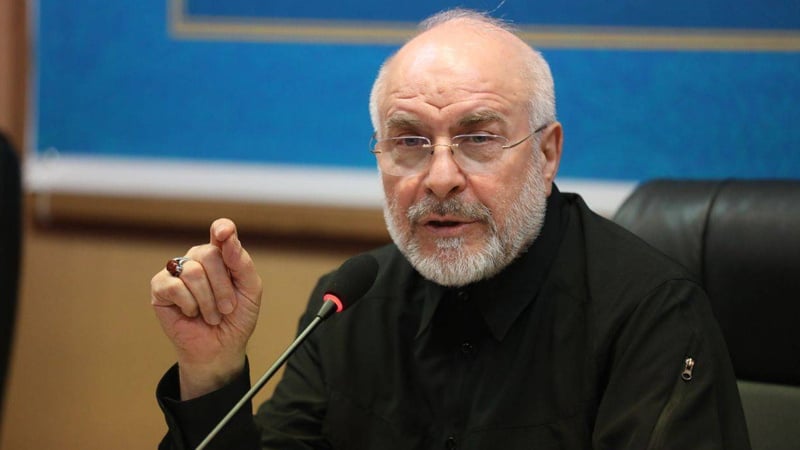
Mohammad Baqer Qalibaf, Speaker of the Iranian Parliament
Pars Today — Mohammad Baqer Qalibaf, Speaker of the Iranian Parliament and the Islamic Republic of Iran’s special representative for affairs related to China, wrote in a post on X that China’s emphasis on strengthening common security reflects a principle that Iran has also stressed for years.
According to Pars Today, Qalibaf welcomed recent remarks by Chinese President Xi Jinping, writing: “China’s emphasis on strengthening common security reflects a principle that Iran has also stressed for years. The countries of the region should shape their own future with their own hands, and genuine stability can only be achieved through the establishment of a new, indigenous security architecture in the region. Iran is ready.”
Qalibaf’s view on the need to establish a “new and indigenous security architecture” in the region goes beyond a temporary position on Iran-China relations. It should, in fact, be interpreted within the broader context of geopolitical developments in West Asia, competition among major powers, and changes in the pattern of regional security relations.
The central point of his remarks is that regional security should no longer be based on the presence and intervention of foreign powers. Instead, the countries of the region should be able to design and implement their own security mechanisms.
From the perspective of the Islamic Republic of Iran’s foreign policy, this approach represents a conceptual continuation of an idea that Iran has emphasized over the years: “endogenous security” and the direct role of regional countries in ensuring stability.
Qalibaf’s reference to China’s emphasis on “strengthening common security” is also particularly significant. In recent years, China has sought to present itself not merely as an economic power, but also as an influential actor in the world’s political and security arrangements. For Beijing, common security means that one country’s security should not be achieved at the expense of another country’s insecurity, and that regional issues should, as far as possible, be resolved through dialogue and cooperation among the actors within the region.
Therefore, the overlap between the political discourse of Iran and China on regional security provides a suitable basis for expanding strategic cooperation between the two countries, although this overlap does not necessarily mean that Tehran and Beijing have identical interests or objectives.
The concept of a “new security architecture” is, from this perspective, the most important part of Qalibaf’s remarks. A security architecture does not simply mean establishing a military pact or creating a new organization. Rather, it refers to a set of rules, arrangements, confidence-building measures and mechanisms for cooperation capable of managing disputes among regional countries.
Over the past several decades, West Asia has witnessed wars, arms races, foreign interventions, political crises and deep-rooted mistrust among governments. Under such circumstances, establishing an indigenous security architecture would require regional countries to move from the logic of “security against others” toward “security with others.”
Although this shift is theoretically appealing, in practice it will face serious obstacles, including ideological differences, geopolitical rivalries and historical mistrust.
The phrase “The countries of the region should shape their own future with their own hands” also carries a clear political message. First and foremost, it is a criticism of the region’s security dependence on extra-regional powers. The military presence of the United States and other foreign powers in West Asia has been one of the main pillars of the region’s security order over the past several decades. From Iran’s perspective, however, this presence has not only failed to create lasting stability, but in some cases has contributed to intensifying rivalries and increasing insecurity.
From this perspective, Qalibaf’s remarks can be seen as an attempt to put forward an alternative model in which regional countries, rather than relying on external security guarantees, assume primary responsibility for their own security.
However, realizing such a model requires moving beyond slogans and turning the idea of common security into practical mechanisms. Regular dialogue among regional countries, agreement on the principles of non-interference, the establishment of communication channels for crisis management, cooperation in combating terrorism, ensuring the security of energy routes and shipping lanes, and even arms-control mechanisms could all form components of such an architecture.
In this framework, Iran’s relations with the Arab countries of the region are also of decisive importance, because no comprehensive security architecture can take shape without the participation of the key actors in the Persian Gulf and an understanding among the region’s major powers.
On the other hand, Qalibaf’s concluding phrase, “Iran is ready,” indicates that Tehran intends to present itself not merely as an opponent of the existing order, but as one of the architects of an alternative order. This could create a diplomatic opportunity for Iran, but at the same time, it would require Tehran to put forward concrete initiatives that are acceptable to other countries in the region.
If the concept of indigenous security can lead to genuine cooperation, confidence-building and reduced tensions, it has the potential to become an effective framework for the future of the region.
Otherwise, it may remain merely part of the political discourse. Therefore, the main significance of Qalibaf’s remarks lies not in announcing a new pact or alliance, but in seeking to consolidate the idea that the security order in West Asia is entering a new phase — one in which the role of regional powers, particularly Iran and major Arab countries, as well as China’s role in providing political and economic support for new arrangements, could become more decisive than in the past.