Is UN’s landmark resolution the first step toward ending Israel’s occupation?
-
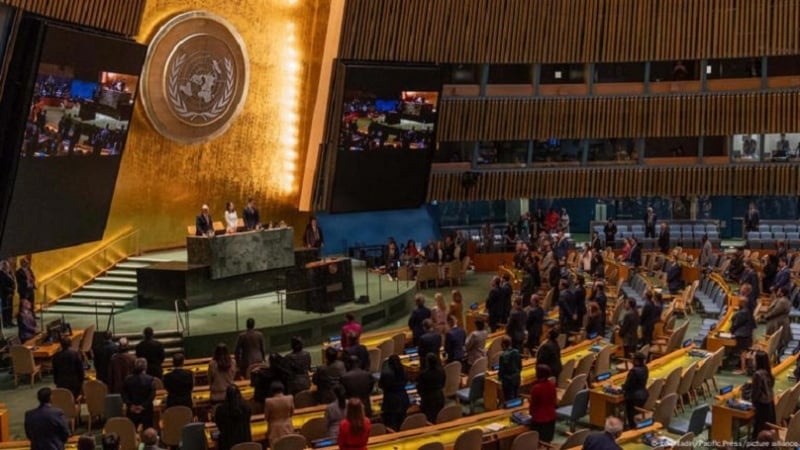
UN General Assembly
Pars Today - With the adoption of a resolution backed by 151 votes in the UN General Assembly, the international community has once again called for Israel’s full withdrawal from the territories it has occupied since 1967 — a vote that underscores Tel Aviv’s growing isolation and the urgent need to end the occupation.
The UN General Assembly passed a resolution with 151 votes in favor demanding that Israel withdraw from all Palestinian territories occupied since 1967, including Eastern al-Quds. The vote — accompanied by a separate resolution passed with 123 votes regarding Syria’s occupied Golan Heights — reflects the deepening isolation of a government long seen as operating beyond the bounds of international law.
According to observers and international-relations analysts, the vote carries layered and far-reaching messages that go well beyond the text itself, pointing to broader shifts in the region’s geopolitical landscape and the international system.
Recent reports by the UN Office of the High Commissioner for Human Rights on the “unprecedented pace of destruction in Gaza” and warnings by the Secretary-General about a “moral failure” by the world helped push more countries to adopt a clearer stance in this year’s General Assembly resolutions. Analysts writing in Al-Monitor and Foreign Policy argue that the scale of support reflects a “massive public-opinion ripple effect.”
Images of the humanitarian catastrophe in Gaza over the past two years have put intense pressure on governments, prompting many to distance themselves — at least partially — from Tel Aviv. The resolution reaffirms the Palestinian people’s right to self-determination, the necessity of establishing an independent Palestinian state, and the urgent requirement to end the occupation of Arab lands — principles that form cornerstones of international law and the UN Charter.
Legal scholars and international observers say that such a text, adopted with such overwhelming support, represents a renewed global consensus against Israel’s occupation policies and could, in the long run, pave the way for broader recognition of the State of Palestine. Outlets including Al Jazeera, the BBC, and Reuters have noted the vote as evidence of rising global political pressure on Israel to end the occupation and halt illegal settlement expansion.
According to analysts at think tanks such as the International Crisis Group and Chatham House, the outcome reflects a “depletion of legitimacy capital” for the Israeli government within the international system — a trend accelerated by the ongoing war in Gaza, the widespread destruction of civilian infrastructure, and human-rights groups’ reports of war-crimes allegations.
Experts at institutions such as the Council on Foreign Relations (CFR) argue that this level of consensus against Israeli policies is unprecedented even compared with the height of the Cold War. The numbers show that not only Arab, Islamic, and Non-Aligned Movement countries but also a significant share of Israel’s traditional Western allies either backed the resolution or abstained — a clear sign of the widening gap between Tel Aviv and global public opinion, even within Europe and Latin America. The Stockholm International Peace Research Institute (SIPRI) noted in an analysis that the vote reflects demographic and generational shifts in global governance, along with rising sensitivity to human-rights norms that can no longer overlook systematic violations.
The Brookings Institution says the vote is a serious warning for the White House: unconditional support for Israeli settlement and occupation policies not only fails to guarantee Israel’s security but also risks damaging the United States’ global standing by putting it at odds with an overwhelming majority of the international community. Analysts at the Princeton Institute for Advanced Study argue that this level of consensus carries “significant moral and political weight,” placing unprecedented pressure on the UN Security Council. The resolutions provide a firm legal basis for future actions — from targeted sanctions to referrals to the International Criminal Court.
Moreover, the resolution’s explicit affirmation of the right to self-determination, the creation of an independent Palestinian state, and the right of return for refugees (based on Resolution 194) deals a decisive blow to the “Deal of the Century” and other unilateral plans aimed at bypassing these fundamental principles. According to UN experts and independent analysts such as Richard Gowan, the overwhelming passage of these texts signals that Western governments’ attempts to prevent the internationalization of the Palestinian question have largely failed.
If you’d like, I can shorten this, make it more journalistic, or adapt it to an op-ed style.