Why majority of Americans oppose military action against Iran?
-
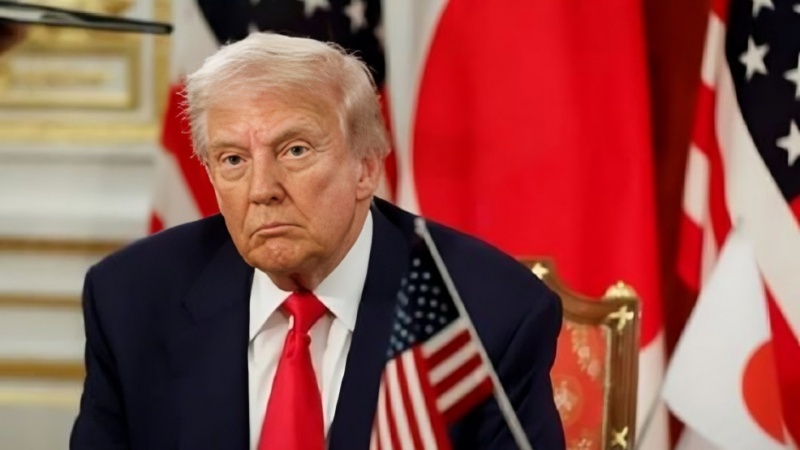
US President Donald Trump
Pars Today — Recent polls in the United States show that a large majority of citizens oppose any military action by the Trump administration against Iran.
According to a new CBS News survey, most Americans are against any U.S. military adventure targeting Iran. The majority believe that a potential conflict with Iran would be prolonged and costly. The poll results, released on Sunday, indicate that 67% of Americans oppose U.S. military action against Iran, while only 32% support such an attack.
Additionally, according to a Quinnipiac University poll, about 70% of American voters said the United States should not enter a military conflict with Iran, while only 18% supported military action.
This widespread opposition has multiple reasons. By party affiliation, 79% of Democrats, 80% of independents, and 53% of Republicans expressed their disagreement with military action. The poll also found that 70% of voters believe Trump should obtain Congressional approval before taking any military action.
One of the main factors is widespread fatigue among the American public from long-term wars in West Asia. The experience of two decades of military presence in Afghanistan and Iraq, along with the heavy financial costs and human casualties, has made a large portion of Americans skeptical of any new military intervention. Many citizens believe that entering a new war would not only fail to guarantee U.S. security interests but could also drag the country into a fresh cycle of instability and unpredictable costs. This concern is reflected in polls, which show that the public prefers U.S. foreign policy to focus on de-escalation and domestic issues.
Another factor is concern about the regional and global consequences of military action against Iran. In the surveys, many respondents indicated that such action could trigger a wider conflict in West Asia and pose a threat to global security.
Reports indicate that a significant portion of the American public believes military strikes would not increase U.S. security, but could instead expose the country to greater risks.
This concern is also reflected in responses to U.S. airstrikes on Iran’s nuclear facilities during the 12-day war initiated by the Zionist regime, referred to as Operation Midnight Hammer—or simply the Hammer Strikes in media reports—where many Americans stated that these U.S. actions did not make the country any safer.
On the other hand, partisan divides also play a role in this issue. While the majority of Democrats and independents are firmly opposed to military action, a significant number of Republicans have also expressed opposition to intervention. This indicates that opposition to war with Iran is not merely a partisan stance, but has become a national concern. Many Republican voters also believe that entering a new war could bring heavy political and economic costs to the country.
Moreover, a significant portion of the American public doubts the effectiveness of military solutions. Past experiences have shown that military strikes do not necessarily lead to changes in government behavior or improvements in political conditions. Regarding Iran, many citizens argue that diplomatic pressure, sanctions, or negotiations could be more effective than military action. This perspective is clearly reflected in polls, where the majority of Americans prefer that the U.S. refrain from direct intervention and instead rely on non-military tools.
Finally, distrust of the consequences of hasty decisions in foreign policy is also a key reason for public opposition. A portion of the American public believes that decisions about war should be made carefully, transparently, and with consideration of long-term consequences. Polls indicate that many voters feel military action against Iran could create a new crisis rather than serve as a solution.
Overall, the opposition of the majority of Americans to military action against Iran is rooted in historical experience, security concerns, economic costs, political divides, and doubts about the effectiveness of military solutions. Taken together, these factors provide a clear picture of American public opinion—a society more than ever inclined to avoid war and prioritize diplomatic solutions.
The final point is Donald Trump’s reasons for backing away from attacking Iran. Although Trump claimed that he personally convinced himself not to attack Iran, an American media outlet has cited other reasons. Axios, quoting U.S. officials, acknowledged that Trump’s decision not to strike Iran was influenced by several factors: insufficient military equipment and weaponry in the region, warnings from allies about the devastating consequences any U.S. military adventure could have on regional security and stability—including for White House allies—and the limited strategic impact an attack on Iran would have. These considerations together contributed to the U.S. abandoning this option.
Axios also reported, quoting an advisor to Netanyahu, that Netanyahu told Trump Israel was not prepared to defend itself against a possible Iranian response to any U.S. military aggression.
Ultimately, it can be concluded that the popular support for the Islamic Republic of Iran, combined with its military capability to deliver crippling strikes, played a key role in Trump’s decision to back away from attacking Iran.