Trump’s threat tops Europe’s security concerns
-
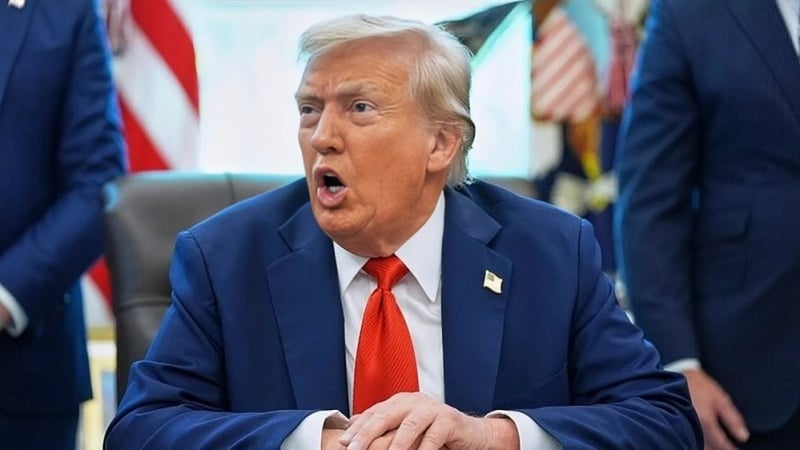
Donald Trump, the President of the United States
Pars Today – According to a recent poll, more than 60 percent of Germans consider Donald Trump, the President of the United States, a threat to their country.
The results of a survey conducted by the INSA institute for the German newspaper Bild show that over 60 percent of Germans view U.S. President Donald Trump as a threat to Germany. According to Pars Today, the poll found that 61 percent of respondents believe Trump is “likely a threat to Germany,” while only 24 percent see him as “an ally.” Meanwhile, 15 percent of those surveyed declined to express an opinion.
Fifty-two percent of participants stated that the German government should adopt a tougher stance in its relations with Trump, while 31 percent called for closer cooperation between Berlin and Washington. The survey, which involved over a thousand respondents, was conducted on January 22 and 23.
Trump in the eyes of Europeans: “Europe’s enemy”
Results from another survey indicate that nearly half of Europeans consider the U.S. President to be “Europe’s enemy.” On average, 48 percent of people across nine European countries described Trump as a clear adversary. The figure was highest in Belgium at 62 percent and in France at 57 percent, while the lowest levels were recorded in Croatia at 37 percent and in Poland at 19 percent.
Despite this negative view, Europeans still consider the relationship with the United States strategically important. In response to the question of what stance the European Union should take toward Washington, the most popular option—chosen by 48 percent—was compromise.
Concerns over war with Russia and widespread sense of vulnerability
The survey, conducted in France, Italy, Spain, Germany, Poland, Portugal, Croatia, Belgium, and the Netherlands, shows that 51 percent of respondents consider the risk of an open war with Russia in the coming years to be “high,” while 18 percent rate it as “very high.”
A widespread sense of vulnerability is also evident among the populations of these countries. Only 12 percent stated that they do not feel threatened by any sources of insecurity, ranging from technology and military issues to energy and food. Among the threats mentioned, cybersecurity and digital security ranked first at 28 percent, followed by military security at 25 percent.
Additionally, 69 percent of respondents said that the European Union should play a stronger supportive role in addressing these threats.
Broad support for EU membership
A significant majority of participants in these nine countries expressed support for their nations’ continued membership in the European Union. Overall, 74 percent favored remaining in the bloc, with support highest in Portugal at 90 percent and in Spain at 89 percent. The lowest levels of support were recorded in Poland at 68 percent and in France at 61 percent.