How Iran disrupted terrorist communications by cutting internet access
-
The existence of terrorist communication networks in Iran’s recent unrest
Pars Today – During the January 2026 unrest, Iran successfully disrupted the communication network of terrorists with foreign entities by cutting internet access.
According to Pars Today, Iran’s experience in handling unrest, along with similar measures in other countries, shows that temporarily restricting internet access in sensitive situations is a necessary, responsible, and preventive measure to control the digital space used by terrorists and sever their connections with foreign governments and intelligence agencies.
Temporary internet shutdowns in cases of severe security crises, armed uprisings, or terrorist attacks have a notable precedent worldwide. Various countries, including Western nations, have employed this as an emergency tool to maintain order and national security.
In this context, the internet shutdown in Iran during the January 2026 unrest was not merely a technical decision, but rather part of a broader security strategy aimed at disrupting organized subversive networks and armed groups that were using online communication platforms to coordinate operations, receive instructions, and transfer information abroad.
An examination of the course of events indicates that the internet shutdown at that time was not simply a reactive measure to street protests, but a targeted action designed to sever the communication lifelines of networks whose activities had gone beyond the level of public unrest and had moved closer to directed and externally guided security operations.
During the January 2026 unrest, security reports indicated that a significant portion of coordination was carried out via encrypted messaging applications, foreign-based platforms, and channels managed from outside the country. These channels functioned not only as sources of information, but also as command-and-control hubs providing on-the-ground direction.
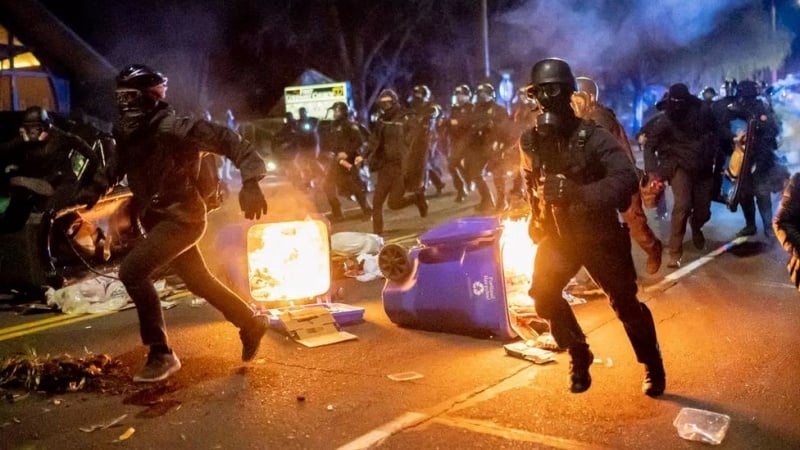
Instructions on how to make Molotov cocktails, methods for attacking government facilities, gathering routes, blind spots in surveillance systems, and even the timing of operations were disseminated through these networks. Under such circumstances, the internet had effectively become a tool linking internal elements with external operational command centers.
From a security perspective, this situation closely resembled a “cyber-terrorism network”—a network in which individuals and small, scattered domestic groups, under the guidance and support of foreign actors’ media, financial, and intelligence resources, carry out actions beyond peaceful civil protests.
In such circumstances, cutting internet access was a measure aimed at preventing the spread of violence and stopping the transfer of operational data abroad.
In Iran, the internet shutdown in January 2026 was carried out in a phased and targeted manner. Initially, restrictions were applied to the platforms that played the largest role in directing operations. As violence escalated and armed individuals and groups became involved, broader restrictions were imposed to prevent the transmission of images, locations, and real-time reports to external operational command centers.
This action severely disrupted the communication networks of organized groups. Many forms of coordination that previously occurred within seconds were completely halted, and small domestic cells dependent on external guidance lost their operational capabilities.
One of the main reasons for the success of this measure was the heavy reliance of subversive networks on online communications. Unlike traditional underground groups, which have hierarchical structures and covert communication channels, the new networks are primarily built on virtual platforms and cannot make independent decisions without real-time contact with external sources.
The internet shutdown removed this advantage, causing many operations to be left unfinished or never even initiated.
On the other hand, the internet shutdown also reduced the spread of fake news, fabricated images, and externally directed narratives. In the early days of the unrest, a large volume of false information was being disseminated to incite violence and create public fear. By restricting internet access, this flow was largely contained, allowing the domestic media space to present a more accurate account.
The January 2026 internet shutdown was also part of a broader security strategy aimed at preventing the unrest from escalating into a full-scale security crisis. While this measure created certain challenges, from a national security perspective, it succeeded in severing the subversive networks’ connections with their foreign backers and dismantling their command structure.
In conclusion, Iran’s experience in responding to the recent terrorist attack, along with similar measures taken by other countries, demonstrates that when terrorists exploit virtual and digital spaces for coordination, propaganda, and escalating violence, a temporary internet restriction can be a necessary, responsible, and preventive measure.
The ultimate goal of such an action is not to limit legitimate freedoms, but rather to thwart enemy plots, protect public property, and safeguard the lives of innocent people.