How Trump’s arch-hawk lured Britain into a dangerous trap against Iran
Jul 22, 2019 10:22 UTC
London is being misled by Washington and if it does not realize its mistake to extricate itself from American machinations, Britain will become the main loser in West Asia, especially against the Islamic Republic.
Here we present you an article in this regard by analyst Simon Tisdall for the British daily ‘Guardian’.
John Bolton, White House national security adviser and notorious Iraq-era hawk, is a man on a mission. Given broad latitude over policy by Donald Trump, he is widely held to be driving the US confrontation with Iran. And in his hysterical bid to tame Tehran, Bolton cares little who gets hurt – even if collateral damage includes a close ally such as Britain.
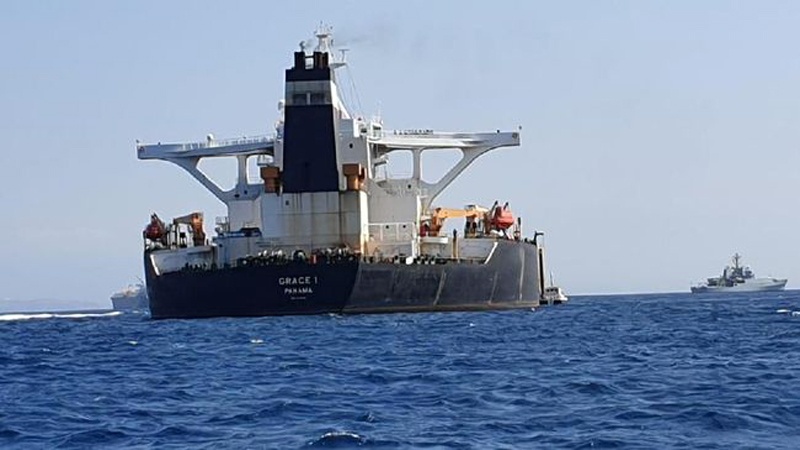
So when Bolton heard British Marines had illegally seized an Iranian oil tanker off Gibraltar on America’s Independence Day, his joy was unconfined. “Excellent news: UK has detained the supertanker Grace I laden with Iranian oil bound for Syria in violation of EU sanctions,” he exulted on Twitter.
Bolton’s delighted reaction suggested the seizure was a surprise. But accumulating evidence suggests the opposite is true, and that Bolton’s national security team was directly involved in manufacturing the Gibraltar incident. The suspicion is that Conservative politicians, distracted by picking a new prime minister, jockeying for power, and preoccupied with Brexit, stumbled into an American trap.
In short, it seems, Britain was set up.
The consequences of the Gibraltar affair are only now becoming clear. The failure of Britain to release Grace I despite diplomatic overtures followed by warnings by Iran, presented the Islamic Republic with no other choice but to take action against a British tanker, the Stena Impero, which after colliding with a fishing trawler violated international laws on navigation, and had to be detained.
As a result, Britain has been plunged into the middle of an international crisis it is ill-prepared to deal with. The timing could hardly be worse. An untested prime minister, presumably Boris Johnson, will enter Downing Street this week. Britain is on the brink of a disorderly exit from the EU, alienating its closest European partners. And its relationship with Trump’s America is uniquely strained.
Much of this angst could have been avoided. Britain opposed Trump’s decision to quit the 2015 nuclear deal with Iran, the trigger for today’s crisis. It has watched with alarm as the Trump-Bolton policy of “maximum pressure”, involving punitive sanctions and an oil embargo.
Yet even as Britain backed EU attempts to rescue the nuclear deal, Theresa May and Jeremy Hunt, foreign secretary, tried to have it both ways – to keep Trump sweet. They publicly supported Washington’s complaints about Iran’s “destabilising” regional activities and missile programme, and berated Iran when it bypassed agreed nuclear curbs – after giving ample time limit to the European Union to fulfill their part of the agreement to the JCPOA.
For Bolton, however, drawing Britain unambiguously in on America’s side was a desirable outcome. So when US spy satellites, tasked with helping block Iranian oil exports in line with Trump’s global embargo, began to track Grace I on its way, allegedly, to Syria, Bolton saw an opportunity.
The Spanish newspaper, El Pais, citing official sources, takes up the story: “The Grace 1, which flies a Panamanian flag, had been under surveillance by US satellites since April, when it was anchored off Iran. The supertanker, full to the brim with crude oil, was too big for the Suez Canal, and so it sailed around the Cape of Good Hope before heading for the Mediterranean.
The Spanish navy followed its passage through the Strait of Gibraltar. It was expected to cross via international waters, as many Iranian vessels do without being stopped.
But Bolton had already tipped off Britain. On 4 July, after Grace I cruised through international waters of the Strait of Gibraltar, the fateful order was issued in London – it is not known by whom – and 30 marines stormed aboard.
Iran’s reaction was immediate and furious. It claimed Britain had acted illegally because the EU embargo on oil supplies to Syria, which Hunt claimed to be upholding, applied only to EU states and not to third countries such as Iran. In any case, Tehran said, the ship’s destination was not Syria.
Iran’s outrage was shared, to a lesser degree, by Josep Borrell, Spain’s socialist foreign minister. Borrell resented the British incursion into Gibraltar, which Madrid does not recognise. He also appears to have been annoyed that Spain was drawn in – in Tehran, the Spanish ambassador had been summoned by the foreign ministry to explain Madrid’s role. His reaction was to distance Spain from the affair. The Iranian tanker had been seized “following a request from the United States to the United Kingdom,” he said. And even though Britain was supposedly upholding EU regulations, the External Action Service, the EU’s foreign policy arm, has remained silent throughout.
Iran’s detention of the Stena Impero for violating navigational rules, has further exposed Britain’s diplomatic isolation and its military and economic vulnerability. The government has advised British ships to avoid the Strait of Hormuz, an admission it cannot protect them. But between 15 and 30 British-flagged tankers transit the strait each day. If trade is halted, the impact on energy prices may be severe.
Hunt’s appeal for Western support for Britain has so far fallen on deaf ears, France and Germany excepted. The US plan for a multinational coalition to protect Persian Gulf shipping has few takers. Meanwhile, Trump’s promise to back Britain has scant practical value – and carries inherent dangers.
The Bolton gambit succeeded. Despite its misgivings, Britain has been co-opted on to the front line of Washington’s confrontation with Iran. The process of polarisation, on both sides, is accelerating. And by threatening Iran with “serious consequences”, without knowing what that may entail, Britain blindly dances to the beat of Bolton’s war drums.
SS/SS
Tags