Saudis stirring up strife on Iran-Pakistan border
Jan 29, 2019 05:59 UTC
The seditious Wahhabi regime in Riyadh, which slavishly serves American and Zionist interests, is not just the major stumbling block in the growth and development of relations among regional countries, but also strives to create tension and bloodshed by its funding of terrorists.
The following is a report in this regard by Pakistani journalist F.M. Shakil for Asia Times, titled: “Saudis stirring up strife on Iran-Pakistan border.”
While Pakistan is upbeat about huge Saudi investment in Gwadar port, many political observers fear it could be followed by a rise in sectarian strife with its neighbor Iran
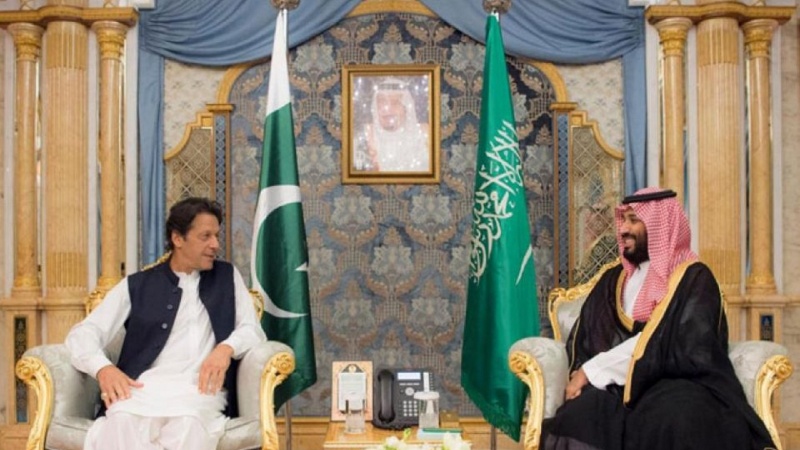
Saudi Heir Apparent, Mohamed Bin Salman (MBS) – the evil mind behind many a crisis in the region including the bloody war in Yemen and the brutal murder in Istanbul of dissident journalist Jamal Khashoqchi, is expected to arrive in Islamabad in several weeks to sign a huge Memorandum of Understanding (MoU) with Pakistani officials.
The US $10 billion MoU is for the Gwadar oil refinery – a petrochemical complex not far from the border with Iran. It holds major geostrategic importance given the turbulence in the West South Asia region.
Pakistan Minister of State and chairman of the national Board of Investment (BoI) Haroon Sharif confirmed that a 15-member Saudi delegation had already visited Gwadar as part of the investment process for the Aramco oil refinery. He also revealed that arrangements for a MoU for construction of the oil refinery had been finalized, saying a formal agreement would be signed during MBS’ visit in February.
Pakistani officials are upbeat about the Saudi investment, which they say will boost foreign direct investment in the country, but some political observers think differently.
They view the latest development in the context of Saudi sedition against Iran and fear that Riyadh’s economic focus on Gwadar will escalate tensions in the region, where anti-Shi’ite terrorist elements often abduct and kill Iranian border security forces and innocent civilians.
The Saudi venture, they say, could inflame the troubled Balochistan province of Pakistan.
Rahimullah Yousafzai, a senior Pakistani journalist and political and security analyst, told Asia Times: “It’s a very sensitive issue and Pakistan needs to carry out its homework diligently to avoid slipping into an ongoing Saudi rivaltry with the Islamic Republic of Iran.”
He also said that Pakistan and Saudi Arabia should both declare, in unequivocal terms, that the investment in Balochistan has no political intent.
Yousafzai said “India, which is a major investor in Chabahar, will use the port to bypass Islamabad in forging economic and political ties with Iran, Afghanistan and Central Asian nations.”
He added that despite India’s growing interest in the region, Islamabad preferred not to discuss New Delhi’s involvement with Tehran in Chabahar.
As Yousafzai pointed out: “As far as Saudi involvement in Gwadar port is concerned, Iran was never involved in a war with Saudi Arabia, hence its level of sensitivity will be far less than Pakistan’s sensitivity with India, with which it has fought three wars.”
In late 2017, a Saudi-backed think tank, the International Institute for Iranian Studies (IIIS), added an additional layer of complexity to the issue. It alleged that Chabahar posed a “direct threat to the Arab states in the Persian Gulf” that called for “immediate counter-measures.”
In October last year, Saudi Arabia rewarded Pakistan Prime Minister Imran Khan for attending a foreign investors’ summit in Riyadh, promising billions to help Islamabad overcome its financial crisis.
The conference was avoided by many western financial institutions, tech entrepreneurs and media magnates, plus government leaders due to the scandal raging at that time over the brutal slaying of journalist Jamal Khashoqchi in the Saudi consulate in Istanbul, Turkey.
Imran Khan returned from the summit with a $3 billion deposit in Pakistan’s central bank as a balance of payments support and a deal allowing deferred payment for $3 billion worth of oil imports – oblivious to sectarian tension stirred up by Saudi Arabia?
Reports carried by national and international media have said that anti-Shi’a Muslim and anti-Iranian seminars have been held by Takfiri outfits in Pakistan’s Balochistan and that they receive Saudi funding through official channels or via Saudi nationals of Baloch descent. They have also suggested that this may be to destabilize the Islamic Republic by stirring sedition among its Baluchi minority.
Pakistan is also worried that its diminished regional standing – in dire economic plight and minus US support – could encourage India to steer around the $45-billion China Pakistan Economic Corridor (CPEC), the flagship project of the Chinese’s Belt and Road Initiative.
Afrasiab Khattak, a political analyst, columnist, and a left-wing politician, said: “Pro-Saudi religious extremists have already penetrated Balochistan. Lashkar-e-Jhangvi (LeJ) is operative in the Brahui belt of Quetta, Kalat, Mastung and Khuzdar and the Balochi-speaking belt in Makran division in the vicinity of the Pakistan-Iran border.”
He said pro-Saudi terrorists recently abducted 14 Iranian border security personnel and their fate is still unknown.
Khattak said: “Economic cooperation between Pakistan and Saudi Arabia is fine as long as it does not undermine the interest of our neighbors, because we cannot choose our neighbors and we have to live with them.”
He added: “Chabahar and Gwadar are not a zero-sum game. Given the huge population of Western China, four Central Asian States and Afghanistan, these two ports alone, cannot handle the growing business potential of this region. We need more ports and cargo terminals to meet the mounting demands from a huge consumer market.”
Khattak believed it was not rational to construe Chabahar port as a threat to the interest of Persian Gulf states, as some Saudi newspapers have tried to claim. He maintained Chabahar port aimed to capture trade from Afghan and Central Asian markets and had absolutely nothing to do with the Persian Gulf or Saudi economy.
AS/MG
Tags