Saudi Arabia: Graveyard of Human Rights
Apr 28, 2016 15:23 UTC
The Wahhabi minority regime in Riyadh is the principal violator of human rights, and besides its brutal suppression of the people of Arabia and meddling into the affairs of other nations, it funds Takfiri terrorists throughout the region to destabilize countries such as Syria, Iraq and Yemen.
In fact, Saudi Arabia's political milieu has moved to radicalism more than ever after new authoritarian and ideological government has seized the power. The aging Salman bin Abdul-Aziz rose to power as king of Saudi Arabia on January 23, 2015, following the death of his stepbrother King Abdullah.
Within a year, the regime not only has not quitted its long-held domestic and foreign policies but also added to its aggressiveness. The inexperienced new rulers who took over administration of the country behind the scenes have not done too much to change the government’s policies at home. This is coming from the fact that Saudi Arabia’s political system is highly sensitive to any move for reform and change.
Though it is said that the late King Abdullah was a reformist who did some measures to reform the policies, the new line of Saudi rulers have done nothing for internal reforms. On the other side, the protests in Saudi Arabia have winded down almost two years ago as they lost their religious leadership.
Due to fears of spark of new popular demonstrations, the government has immersed the country in "security atmosphere", and the Saudi military forces have had massive presence in areas where rallies were likely to break out.
Developments over the past year has exposed Saudi Arabia’s negative role in the region, including aggression against Yemen, support of the terrorist groups in Syria and Iraq and the fatal stampede in Mena during the Hajj that killed over 2000 pilgrims, including 464 Iranians, have disgraced the Saudi regime across the region.
Meanwhile, the procedure of formation of the decision making system of Saudi regime has come into attention in political and on social communities, specifically at home. The Saudi political system is a tribal form of governing in which the king is picked by a council comprised of the princes and the other members of the ruling family. Hereditary rule is an established right of the older sons of Abdul-Aziz.
The transfer of princes' place in Saudi Arabian political system could take place very rarely and even if there is a change in the political system, it would happen in very superficial posts. Some believe that this form of government in Saudi Arabia could have roots in political and religious bonds between the Saudi clan and Wahhabi teachings, political suppression, and lack of constitution.
Today's world is a world of democracy where the globalization waves and fast-moving communications are persistently injecting political knowledge to the members of the society to help them determine their fate. In such a situation, how could the non-democratic regime of Saudi Arabia weather the influences of globalization? Are the people in Saudi Arabia mature politically enough to demand a key role in their country's politics and determination of their own government's form? To put it another way, how the people in this closed system of governing could accomplish their political and social roles?
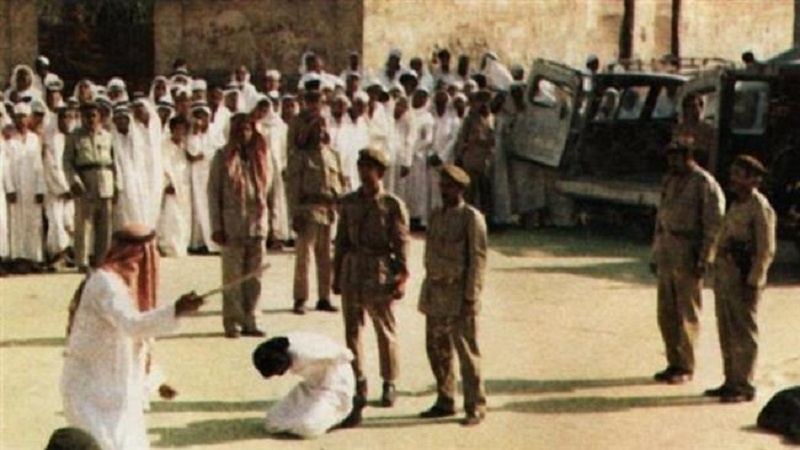
It must be admitted that Saudi regime has failed to introduce democratic principles to the country's political and social system to allow people to practice their social rights. The Saudi regime is one of the most fearsome regimes that pays not even the least attention to the people's rights and deprives the citizens of their legal freedoms.
A lot of examples could prove this, such as discrimination against the Shi’ite Muslim citizens and the execution of the outspoken scholar Sheikh Nimr Baqr an-Nimr, in addition to suppression of political opposition and limitations on women’s education and rights – female prisoners are kept in inappropriate conditions.
At the same time, the regime meddles in the affairs of neighbouring countries as is evident by the destabilization of Syria and Iraq through Takfiri terrorists, and the massacreof children, women and men in the more than a year-long Saudi aggression on Yemen.
All these are cases of violation of human rights and civil freedoms by the Saudi regime, specifically in recent years. These inhuman measures are the most obvious features of the Aal-e Saud which have directly or indirectly affected a large number of people in the country and in the region.
Studies on these features indicate that the authoritarian Saudi regime, without doubt, is a leading violator of human rights and so far has failed to present justification or response for its cruel measures.
Studies on the new line of Saudi rulers could substantiate this reality. In a time that the global tendency is moving towards valuing the human rights, the new Saudi rulers are seeking violation of human rights not only at home but also in other countries
.In such a condition it could be claimed that the emerging middle class in Saudi Arabia stands as the most significant class that could influence and challenge the current situation in the country. This class stood as a staunch back-up for the student protest movements, civil rights groups, feminist groups, environmental groups and disarmament groups in past few decades.
Actually, self-awareness of this social class could shake pillars of conservative royal regime, encouraging the class to fight against the retrogressive regime. It takes people to know how their government operates and what role they play to determine their fate. But, working on propagation of political unawareness, the Saudi rulers have reduced the country to a graveyard of human rights that in many cases the continuation of this tendency could wreak havoc on the country.
AS/SS
Tags