Saudi Arabia’s economic troubles and woes
Sep 27, 2016 05:37 UTC
The situation in the East has become quite an enigma. At the very least, let us consider the latest statement made by the Minister of Energy of Saudi Arabia, Khalid A. Al-Falih. In it, he, without batting an eyelid, bluntly announced that allegedly, Saudi Arabia would not increase its production up to the maximum output, and flood the oil market.
By the way, for the summer of 2016, oil outputs increased by 2.7% to 20.55 million of barrels per day, while domestic consumption increased due to the installation of 2 new oil refinery facilities in Jubail and Yanbu that raised oil demand to 800 thousand barrels per day. That is to say, oil output levels reached a peak, and it seems unlikely that Riyadh will be able to further increase it significantly.
Nevertheless, the already old propaganda campaign continues, and the Saudis are doing all they can to not only retain their stake on the oil market, but also actually increase their share. That is why they will continue to strive for maximum outputs of the ‘black gold’. Indeed, oil is worth quite a lot of money, one thing which is sorely lacking and needed in order to carter for all the country’s day-to-day rising expenses. Oil prices are also more likely to fall, instead of rising again to the 150 US Dollars per barrel level. Analysts expect the first decline in nearly eight years in the Saudi economy.
As the oil prices on the free market are falling, the country’s gold and forex reserves are also melting. If in 2014, gold and forex reserves exceeded $730 bn, then presently, they amount to $555 bn. Even though there is still a constant money supply, the authorities are already talking about implementing some reforms, beginning with the vague discussions on certain changes to the economy that will come up after the reduction of the country’s dependence on oil.
Simultaneously, some steps are being taken to reduce budget expenditures. However, this step by step policy that tends to disrupt the Saudis’ stable world and lifestyle has existed for the last 70 years. Political experts think that the counterweight to all this will be a real expansion in oil production, which Saudi Arabia will without doubt be controlling.
For example, there has already been alarming news from Saudi Arabia suggesting that in the first quarter of this year, the economy grew by only 1.5% as compared to the previous year. This became the lowest growth rate since 2013. Moreover, it is clear that if the oil sector expanded by 5.1%, the other sectors would have decreased by 0.7%. Economists consider these rates to be the weakest in the last five years. For example, in July, the production volume in the construction sector decreased by 1.9% as compared to the same period last year, and this trend continues to rise. Constant fluctuations on the oil market and the outflow of foreign money from the country have also had a negative impact on the financial results. Analysts expect all these factors to lead to the first decline in nearly eight years in the Saudi economy.
The Saudi government was forced to announce plans to sell Saudi Aramco shares. It is well known that for decades, this world’s largest oil company has been the country’s basis for stability and wealth. The Initial Public Offering (IPO) of its shares, selling them will inevitably cause a stir and talks about the fact that the authorities have betrayed Islam and want to hand over the nation’s wealth to Western countries.
Under the deteriorating economy, including a failing religious tourism sector, the rise of a new wave of protests that will trigger unknown political results is unavoidable. According to the experts, another way for the authorities is to devaluate the national currency, and the Saudis are unlikely going to enjoy this. Meanwhile, Saudi Arabia plans to sell its first international bonds in late October. This is expected to raise around $10 billion to plug the budget deficit. According to Bloomberg, JP Morgan Chase, HSBC and Citigroup banks were hired as coordinators for this sale.
For the moment, the Saudi government expects to reduce the budget deficit from 16.3% GDP, the 2015 result, to 13.5% GDP. The reduction of expenditures and subsidies will continue, and may even increase in 2017. This will provoke the society into a more active market behavior, via depriving it of easy money. For example, there was a sharp decline of vacancies in the public sector, which were occupied only by the Saudis. Plans to build a number of roads in remote areas were reviewed; construction rates for free accommodation for Saudis, starting with the young people who are married in view of free council flats and houses, have decreased.
It even came to the point when thousands of foreign workers became hostages of the financial crisis due to falling oil prices. Migrants have worked on construction sites and for months without receiving their salaries, while have no money for the way back home. There is lack of water and food products in the construction camps. Riyadh is ready to pay migrants for their way home. However, some are afraid that next time, their visa application may be rejected, while the majority does not want to go without salaries because for them and their families back home, this money is vital. Citizens of many Asian countries, mainly from India, Pakistan and the Philippines, have turned out to be in this difficult situation.
All these problems did not arise on the spot, but were accumulating under the very unprofessional leadership of the country, which comprises of the King personally and the ruling Saud family. At first, having accumulated huge amounts of petro-dollars, the Saudi decided that they have a right to interfere into the affairs of other countries and instruct other nations how they should live and which state system they should have.
Within this framework, Riyadh’s unprovoked rude interference into the internal affairs of the Syrian Republic is very notable. The Saudis decided to alter the governing system and President Bashar al-Assad personally, and put their henchman, fully focused on the Riyadh and preaching the ideas of Wahhabism.
It is not by chance that the Microsoft search engine translated the name of an extremist organization from ‘Islamic State’ in Arabic into ‘Saudi Arabia’ in English. When it did not work out the first time, the Saudis turned to the outbreak of the Civil war in Syria, initially having created the terrorist groups, then abundantly providing them with modern American weapons. All these required huge amounts of money that were easily sent, when the oil prices were high. But after that, the money was already taken from the State budget directly.
The first step is the one that counts. Then Saudi Arabia blatantly interfered in the neighboring, according to Saudis themselves, ‘fraternal Yemen’. In the spring of 2015, Saudi Arabia led a so-called coalition which was supposed not just to ‘force’ the Yemeni to peace, but also restore the power to the fugitive, stooge president, Abd Rabbuh Mansur Hadi, and most importantly, stop what they alleged unfoundedly to be ‘Iranian expansion’.
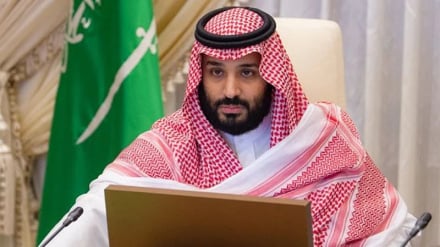
The essence of the strategy was that, by engaging in a ‘short, victorious war’ to attain a new geopolitical status as a regional power, the country would then be able to lead a broad coalition of allies and take responsibility for the stability of the region. Deputy Crown Prince, young Defense Minister, Mohammad bin Salman Aal-e Saud, who is also the King’s son, was the mover of the strategy. Many Saudis believe that he will immediately assume power after the death of his father, pushing the current Crown Prince Muhammad bin Nayef bin Abdulaziz Aal-e Saud off the throne. However, it has become clear that the defense minister’s strategy has hit a brick wall. This is demonstrated by the fact that none of the goals has been achieved.
In addition, the so-called Saudi coalition is falling apart, and even its closest ally, the UAE, has deserted it. In fact, Washington has also refused to help the Saudis, advising them to include Ansarullah into the new Yemeni government. However, Riyadh views this as a complete defeat, and all the more so for the Saudi defense minister, whose chances for the throne have deteriorated. Moreover, the difficult economic situation in which Saudi Arabia has descended under the leadership of King Salman bin Abdulaziz Aal-e Saud and his son Muhammad bin Nayef bin Abdulaziz Aal-e Saud certainly requires opting for the new approaches, both in the foreign and domestic policies. Despite Saudi Arabia’s difficult current economic realities, its leadership has decided to carry out diversification programs and profound structural reforms. Riyadh will certainly face many problems.
Falling oil prices and the ongoing assault against the Yemeni people, coupled with mismanagement in domestic and foreign policy have taken their toll on the Saudi economy. The kingdom’s leadership seeks to reduce its dependence on oil and shrink the public sector where two thirds of local workers currently work. By the way, the Saudi regime is playing with fire game in the region; a matter that may cost dear for Riyadh sooner or later.
That was from an article by Viktor Mikhin, Associate Member of the Russian Academy of Natural Sciences, under the title of Saudi Arabia’s economic troubles and woes.
EA/SS
Tags