Why Saudi-Israeli ties could be dangerous
Feb 24, 2018 06:14 UTC
The Saudi clan and the Zionists, who are behaving like newfound cousins, and indulging in all sorts of joint poisonous propaganda under US auspices against the Islamic Republic, pose a collective danger to the whole region, especially countries with independent stance.
Now we have an article titled “Why Saudi-Israeli ties could be dangerous”, written by Ibrahim Fraihatby Ibrahim Fraihat, Associate Professor of International Conflict Resolution at the Doha Institute for Graduate Studies.
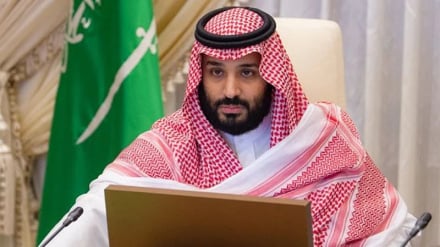
Driven by succession plans and a strategy to confront Iran's influence in the region, Saudi Heir Apparent Mohammed Bin Salman (MBS) has taken several taboo steps. These include the arrest of dozens of princes and ministers and a process of normalising relations, at least partially, with the illegal Zionist entity, Israel.
But taking concrete measures to end the Arab boycott of Israel, without reaching a just solution to the Palestinian issue, will be detrimental to both Palestine and Saudi Arabia.
Last November, the Zionist army's chief-of-staff, Gadi Eizenkot, gave the first-ever interview to a Saudi news outlet, saying that Israel is ready to share intelligence with Saudi Arabia on Iran. Also for the first time, Israel co-sponsored with Saudi Arabia a resolution against Syria in the UN Human Rights Council. Furthermore, Israeli Communications Minister Ayoub Kara extended a warm invitation to Saudi Arabia's Grand Mufti, Abdul Aziz Al Sheikh, to visit Israel for what he said were his friendly comments about the country.
To "legitimise" steps taken to normalise relations with Israel, Saudi Arabia summoned Palestinian Authority President Mahmoud Abbas to Riyadh, to convince him to accept a peace plan put forward by US President Donald Trump's special adviser, Jared Kushner, declaring the occupied Islamic city of Bayt al-Moqaddas as capital of Israel.
Saudi-Israeli collaboration is an integral part of that plan. According to the New York Times, the proposal could include, among other normalisation measures, "overflights by Israeli passenger planes, visas for business people, and telecommunication links" with Saudi Arabia, Egypt, Jordan and the UAE.
Abbas' cooperation is essential for Saudi-Israeli normalisation to proceed; without it, the Saudi move would be seen as a betrayal to the Arab and Muslim position on Palestine. Although not much has been revealed about what really happened during Abbas' visit to Riyadh, some reports talk about the Saudi leadership pressuring Abbas to accept whatever plan Kushner puts forward, or to resign.
Abbas is in an unenviable position, as pressure on him. He needs Saudi and US financial support for the Palestinian Authority (PA) to continue to function.
However, the Kushner deal will not do even minimum justice to the Palestinian national project. While the deal offers strategic gains to Israel, such as ending a Saudi Arab boycott, it offers only tactical gains for the Palestinians, such as financial assistance, prisoners' release, and a silent, partial freeze of settlement activities outside the large settlement blocs.
The Kushner deal will practically fragment the Saudi-sponsored 2002 Arab Peace Plan that offered Israel full normalisation in return for full withdrawal from Arab lands occupied in 1967. By pressuring Abbas to accept the deal, the Saudi leadership is undermining its own initiative, accepting to partially normalise relations with Israel in exchange for an alliance against Iran.
Moreover, the Saudi normalisation plan is likely to further complicate internal Palestinian reconciliation. Aiming to end Iranian influence in Gaza, Saudi Arabia's close ally, Egypt, brokered Palestinian reconciliation which proposed that Hamas surrender its power to the Palestinian Authority.
To pressure Abbas further, Saudi Arabia reportedly summoned his bitter enemy, Mohammed Dahlan, to Riyadh at the same time he was there. The purpose of the move was supposedly to have the two discuss Fatah's internal "reconciliation". In other words, Saudi Arabia brought Dahlan into the scene in case the PA president rejects the Kushner deal. In what could be interpreted as a sign of resistance to the Saudi pressure, some commentators in the West Bank and Gaza observed that upon his return to Ramallah, Abbas started cracking down on Dahlan's supporters.
Then another blow was dealt to the PA. The US administration announced that the license of the PLO office in Washington will not be renewed - this could not be a mere coincidence. In fact, it might be another strong sign that Abbas continues to resist Saudi-US pressure. In line with this argument, Mohammad Shtayyeh, Fatah Central Committee member and one of the candidates to succeed Abbas, said: "Reconciliation will not be a railway for a regional political project at the expense of the Palestinian cause."
Saudi demands have put the Palestinian president is a very difficult position, as his people would overwhelmingly reject the stipulations of the Kushner deal that includes Donald Trump’s much trumpeted announcement of moving the US embassy from Tel Aviv to Bayt al-Moqaddas, or Jerusalem as the West calls the occupied Islamic city.
The situation is reminiscent of his predecessor, Yasser Arafat's, dilemma at Camp David in 2000, when he faced US pressure to accept Ehud Barak's plan offering partial Israeli withdrawal from the West Bank and Gaza. Immediately after the Camp David Accords, Arafat was sidelined and, two years later, died mysteriously. To what extent Abbas will be able to resist US-Saudi pressure and hang on to his presidency is yet to be seen.
What is clear, however, is that Saudi Arabia will proceed with its normalisation efforts with Israel, with or without Abbas. The way MBS is managing succession at home and escalation with Iran abroad suggests that he is up for making radical decisions.
But his move on Israel might not work as well as some of his other policies have. n In fact, MBS might end up shooting himself in the foot. Pushing through with the Kushner deal would mean acting against the consensus of Arab and Muslim countries, which reject normalisation with Israel without a fair and just solution to the Palestinian cause.
Saudi Arabia might receive support from countries like the UAE, Bahrain, Egypt, and Jordan, but not from the rest of the 57 Muslim-majority member states of the Organization of Islamic Cooperation (OIC).
If MBS proceeds with the plan, he risks Saudi Arabia's leading position in the Islamic world being delegitimised. His father, King Salman, will appear to be conceding on the third holiest site for Muslims - al-Aqsa Mosque in al-Quds. If he normalises relations with Israel, MBS will be giving the Islamic Republic of Iran and other independent Muslim states the strongest hand to play against Riyadh in order to delegitimise Saudi Arabia in the Muslim world.
AS/ME
Tags