The heedless drift towards US conflict with Iran shames Britain
Jul 10, 2019 05:14 UTC
London, a mere shadow of its former colonial power, is tamely towing the American line in its foreign policy without thinking of the harm it is doing to the interests of the British people for picking up unnecessary fights with other countries and people.
Now we have an article that recently appeared in the British daily ‘Guardian’, titled: “The heedless drift towards US conflict with Iran shames Britain”.
The writer is foreign affairs commentator Simon Tisdall.
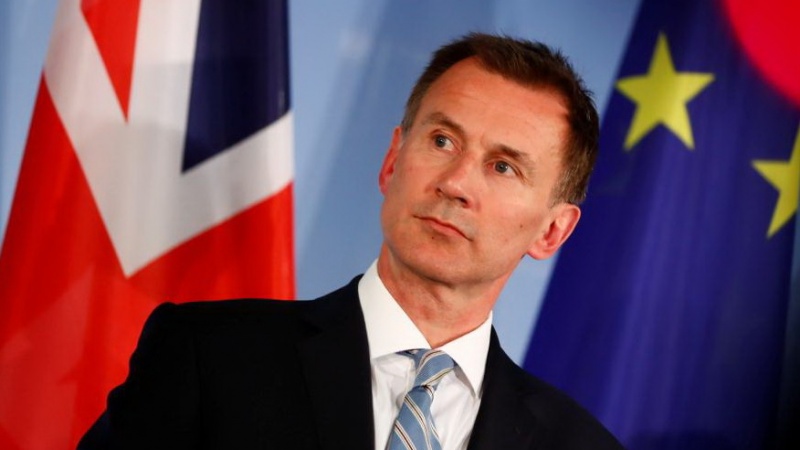
Foreign Secretary Jeremy Hunt, who is dreaming to become the next prime minister, says Britain would stand with the US in the case of military intervention. The question is: How has Iraq been forgotten so quickly?
The imperial city of Persepolis, ruined capital of Persia’s Achaemenian emperors, rises from the desert north-east of Shiraz like a rebuke to invaders, both ancient and modern. Its columns, many still standing, were erected about 500 BC when inhabitants of the British Isles were capering around in animal skins and it was Greeks who posed the biggest military threat. Donald Trump’s America was a bad idea whose time had not yet come.
Britain’s recent history with Iran is, for the most part, shaming. Nineteenth-century imperialists and traders exploited and bullied, redrawing its borders with the British Raj in the Subcontinent. British armies invaded and occupied and, in the 1920s, helped to elevate an illiterate soldier named Reza Khan as Shah to the Peacock Throne. The ensuing era of autocratic rule sowed the seeds of the Islamic Revolution that triumphed in 1979 to end western and American hegemony. At Persepolis, graffiti left by Victorian army officers still defaces its pillars.
The US has since supplanted Britain as tormentor-in-chief, but Iranians have long memories. Many would agree with Mohammad Mosaddeq who, before the 1953 Anglo-American coup that ousted him as prime minister, told the US envoy Averell Harriman: “You do not know how crafty they [the British] are. You do not know how evil they are. You do not know how they sully everything they touch.”
Given this bitter legacy, and its other regional blunderings, it might be assumed Britain would fight shy of further intervention. Not a bit of it. Recently the US slapped unprecedented sanctions on Iran’s senior leaders, suggesting diplomacy is at an end. Yet as Washington’s war drums beat ever louder, a familiar sucking noise can be heard above the din. It is the sound of Britain being inexorably drawn – again – into an avoidable, calamitous cnflict in West Asia.
What is truly astonishing is not that Trump and headbanger hawks such as John Bolton and Mike Pompeo are vilifying Tehran – they have been spoiling for a fight ever since they wrecked the 2015 international nuclear agreement – known as JCPOA (Joint Comprehensive Plan Of Action). Nor should we be shocked at the daily escalations, provocations, insults and punishments inflicted on Iran. That’s par for the course when Washington turns bellicose.
What should really chill the blood of British citizens is the way their own government – and the two men who want to be the next prime minister – are creating a situation, largely undiscussed and undebated, in which Britain will have no choice but to support Trump against Iran, and worse, will have little hope of avoiding direct military involvement.
This senseless, heedless drift into another ill-conceived, unjustifiable and illegal conflict must surely stir alarming memories in the most complacent Tory heart. Do none of these people recall a similar made-in-America catastrophe in Iraq in 2003? Don’t the Chilcot report’s damning findings – that Tony Blair failed to explore all peaceful options and deliberately exaggerated the threat – ring urgent bells now?
Foreign Secretary Jeremy Hunt, supposedly the sensible Tory choice, is clinging uncomfortably to the White House bandwagon. Hunt knows full well American and Israeli claims that Iran is building a nuclear weapon are hyperbolic and disingenuous. But, he says, Britain under his leadership would “stand by the United States” and consider military intervention in Iran “on a case-by-case basis”.
Hunt has also made clear he accepts unproven US intelligence blaming Iran for recent attacks – indeed, he disowned a British general who questioned it. And he agrees with Trump that Iran’s alleged “destabilising activity” constitutes a casus belli.
Hunt may not want war. But a British military buildup is under way on his watch, including deployments of so-called ‘special’ forces, marines, navy ships out of Bahrain and, potentially, F-35 fighter jets based in Cyprus. Trump has already demanded armed patrols to protect oil tankers in the Persian Gulf. Just where does Hunt imagine all this will lead, if and when the US starts shooting?
The other candidate for the prime minister’s post, Boris Johnson, has said less about Iran, hoping perhaps not to remind people of his mishandling of several issues when foreign secretary. Yet his likely attitude to an outbreak of hostilities is no mystery. Johnson is an unabashed Trump-world groupie. He already has the American president’s personal backing. And his Brexit strategy, such as it is, depends on swiftly cutting a comprehensive US trade deal.
If Trump turns to Britain when faced with Iranian retaliation – which would certainly have happened last month if the supposedly planned US air strikes had gone ahead – arch-sycophant Johnson, like company-man Hunt, can be expected to fall tamely, even enthusiastically, into line. Will parliament or the public be consulted in a timely fashion? Not a hope!
It’s true the US takes ever less notice of what British leaders say – reflecting a wider problem of declining national influence. But Trump still needs moral ballast. The prospect of Britain sleepwalking into a new American military conflict has been greatly increased by Tory-propagated delusions about the country’s global status and supposed ability to “punch above its weight”. Their bluff may soon be called. But it won’t be Tory blaggers who pay the price.
The Conservatives’ Brexit obsession has also distracted attention and blurred judgment. When the foreign office minister Andrew Murrison visited Tehran recently, his cold reception should not have come as a surprise. During the tough talks, Deputy Foreign Minister Seyyed Abbas Araqchi, displayed an accurate grasp of where post-imperial, post-Europe Britain was going wrong.
He said: “It appears that the British government’s entanglement with the predicament of Brexit has prevented it from having a correct understanding of the global realities.
He added that London’s collusion with “America’s bully-style measures” would only further harm the UK’s standing.
The Iranians are right. Across Egypt and West Asia, Britain is too often seen as in league with despots and murderers while its subservience to harmful American policies erodes its reputation. In Yemen, Britain is closely identified with a Trump-backed, Saudi-led war that has caused immeasurable suffering – and to what end, save further unlawful weapons sales?
When it comes to Palestine, Trump’s risibly biased “peace plan” is destroying the international consensus favouring a viable Palestinian state – a consensus consistently supported by Britain. In Syria, British humanitarian aid efforts are sabotaged by US indifference, while in Egypt a dictator receives Trump’s blessing even as he scandalises universal human rights law.
If Trump’s hawks get their war, Britain risks being sucked in on the side of an aggressive superpower whose words and deeds are increasingly inimical to this country’s interests and values.
There’s an old debt to be paid, and it is high time Britain finally did the right thing by Iran. That requires unhesitating, active opposition to the threat the Trump regime poses to Iranians, the wider region – and to us.
AS/ME
Tags