Europe may soon be swept by a new wave of migrants
May 30, 2016 04:59 UTC
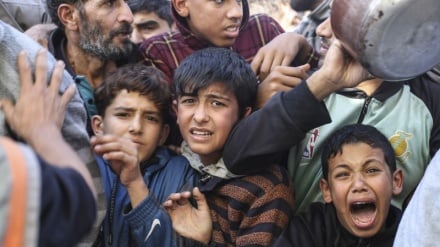
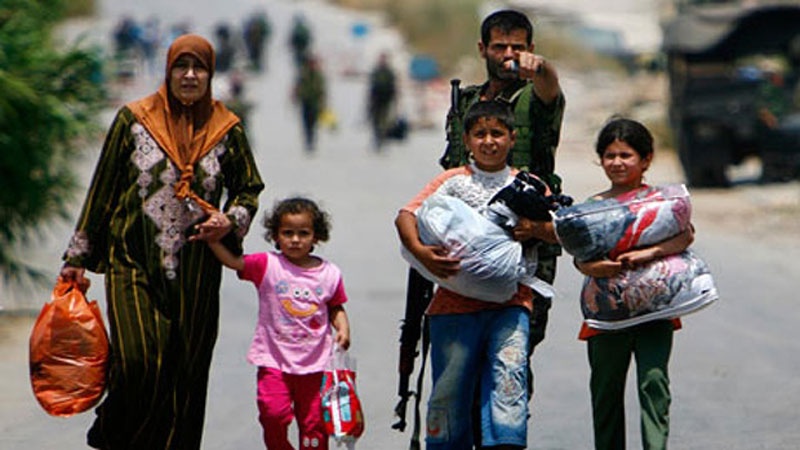
These days, as Europe is engaged in a behind the scenes fight with Turkey to put an end to the flow of illegal migrants along the “Turkish route”, European officials prefer to keep silent about yet another impressive wave of migrants coming to the EU from Africa.
For sure, this decision can be partially explained by the fact that the migrants that are getting to Europe via the Turkish Route are mostly the refugees from Syria, Iraq, and Afghanistan. Let’s listen to and read an informative article on the issue written by Martin Berger, a freelance journalist and geopolitical analyst, exclusively for the online magazine “New Eastern Outlook.”
Over decades migrants from these countries have been forming large ethnic groups in Central and Northern Europe and that is the reason why today’s refugees are trying to reach those areas. It should be noted that over 900 thousand migrant have taken the “eastern route” between Turkey and Greece back in 2015, and most of them sought refuge in Germany, the UK, and Nordic states. Germany alone may spend over 93 billion euros to accommodate all those people by 2020, says Der Spiegel while making a special reference to the German Ministry of Finance. In order to understand how grave the situation is, one may note that this sum is two times larger than the budget of Greece.
However, the northern Mediterranean countries, especially Italy, are starting to comprehend the fact that their economies would collapse should the migration waves from Africa that have largely been ignored by Germany and the UK be left unchecked. Additionally, according to health experts that spoke with the Daily Mail, a wave of refugees arriving from North Africa may raise the risk of the spread of various contagious diseases in Europe.
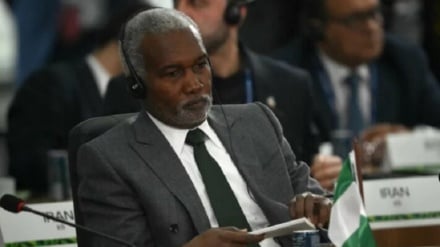
The Italian newspaper Il Giornale notes that in August-September, Italy may be swept by a migrant wave of biblical proportions, with at least half a million migrants from Libya reaching the shores of Italy. The alarm bell was rang by the Minister for Foreign Affairs of Uganda Kahamba Kutesa and his estimates were later confirmed by the study of the United Nations High Commissioner for Refugees, according to which the closure of two refugee camps in Kenya will lead to a massive wave of refugees coming to the Mediterranean states in the next few months. Those countries, especially Italy, may expect the arrival of an absolute minimum of 600 thousand people. For instance, there’s over 220 refugees living in the Kenyan camp of Kakuma alone, most of them are migrants from South Sudan. Experts are convinced that once Kenyan camps are closed thousands of their inhabitants will head north to Libya, and there will be dozens of potential terrorists among them. Kenya is well aware of this fact, but it will be happy to get rid of them.
In general, according to estimates of the International Organization for Migration (IOM) and the UN High Commissioner for Refugees (UNHCR), there’s well over 15 million refugees in Africa, and a mere drop of them – a total of 100 thousands arrived to Europe last year. The central Mediterranean migratory route is being taken by representatives of three countries: Eritrea, Sudan and Nigeria. Sudan is riddled by countless conflicts, while in Nigeria the ongoing operations of the terrorist group of Boko Haram in the north-east of the country forced over 2 million people into leaving their homes.
In the near future we can witness the growing number of refugees from the Central African Republic, Mali, Congo-Kinshasa, Gambia and other African countries, since the situation in most of these states remain tense. For the better part of those leaving these countries there is no immediate danger to their lives, still they want a better future for themselves and their families.
We must not forget that Africa, which is by no means a rich continent, has already been providing shelter to the largest number of refugees in the world. For example, Nigeria is taking care of over 2.5 million internal refugees. Another country with a considerable number of refugees is Congo-Kinshasa, where there’s 1.5 million displaced persons, while half a million Congolese are finding refuge in neighboring state. There’s also Ethiopia, Sudan and Kenya that have been hosting refugees from South Sudan. As for the conflict in Somalia it has been turning people into refugees for decades, so by now there’s over a million Somalis that have been forced to flee their homes.
To address this situation, Italian Prime Minister Matteo Renzi suggested an agreement with Africa that may reproduce in its principle the EU-Turkey agreement, when huge sums of money will be proposed in exchange for the containment of refugee flows. In the letter that Renzi sent to the European Commission he has made a number of proposals like a joint control of EU borders, repatriation of refugees who have not received asylum in Europe, detection of “economic migrants” that may pretend to be refugees, the establishment of “filtration camps” in Africa. He has also proposed to increase the financial assistance that Europe provides to certain African states. While Renzi hasn’t specified any sums, it is clear that we are talking about billions of euros that the European Union should divide among its members to address the situation. However, even now it is already clear that Renzi’s plan will encounter serious objections, since Germany is repelled by the idea of any additional costs. In addition, human rights and humanitarian organizations oppose the possible EU funding of certain regimes in Africa.
So far, everything suggests that the European Union is completely unprepared for the new migrant flow and has no idea how it could address this issue. So the coming months promise to be a serious challenge for the EU as a unit and for its states. By the way, let’s not forget that each western country, in its own way and part, has had a maximum or minimum role in causing and spreading of immigrants. The current ground reality in Iraq and Syria speaks for itself. As history shows, the seditions and inhumane acts will boomerangs against its perpetrators sooner or later, with Europe not an exception.
This should really lead Europeans to pause and reflect. Is it in the interest of Europe to keep Syria as a failed state and push it into the hands of an “American Caliphate”? Is it in the interest of Europe to have a permanent refugee crisis and security nightmare? Or suggest an initiative – over US priorities - is it not time for Europe to search for a permanent settlement of the issues?
It should be recognized that this kind of arrangement will change all the rules of this dangerous game.
EA/ME
Tags