
China-Ruble settlement and the Dollar system
Oct 29, 2017 07:21 UTC
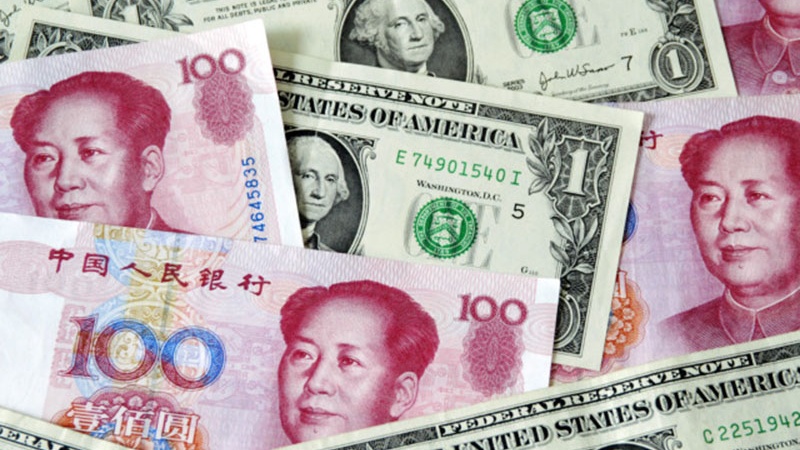
The Peoples’ Bank of China has just announced a payment-versus-payment, PVP system for Russian ruble and Chinese yuan transactions. The stated aim is to reduce currency risks in their trade.
The only conceivable risk would be from the US dollar and potential acts of US Treasury financial warfare to damage Russian-Chinese trade which is becoming very significant in volume and value. By December it should reach $80 billion, a 30% rise over 2016. Yet there is more to this seeming technical move by China and Russia than meets the eye. The official announcement, posted on the website of the China Foreign Exchange Trade System, CFETS, adds the enormously significant note that CFETS plans to introduce similar PVP systems for yuan transactions with other currencies based on China’s Belt and Road initiative. This confirms that the grand design behind China’s Belt, Road Initiative (BRI) has an integral gold-based currency component that could change the global balance of power in favor of the nations of Eurasia, from Russia and the nations of the Eurasian Economic Union to China and across all Asia. William Engdahl, who is a strategic risk consultant and lecturer, holding a degree in politics from Princeton University, has more on the downward trend of the US dollar hegemony.
Earlier termed the New Economic Silk Road, China’s Belt, Road Initiative is a vast network of high-speed rail linkages being constructed crisscrossing the countries of Eurasia including Central Asia, Mongolia, Pakistan, Kazakhstan and, of course, the Russian Federation and extending to Iran, potentially to Turkey and East Africa. Altogether at present some 67 countries are participating or have asked to join the ambitious project whose total cost could run into trillions of dollars and will transform global trade. HSBC estimates that the BRI infrastructure project, which today encompasses countries generating almost one-third of global GDP, will generate an additional $2.5 trillion worth of new trade annually. This isn’t chump change for the world economy. It’s a game-changer of the first order. This direct currency settlement move by China and Russian, however, is one of the most dynamic game-changing developments since Washington’s Treasury and Wall Street banks came up with the US Dollar system at Bretton Woods in 1944.
It’s not about reducing currency risks in trade between Russia and China. Their trade in own currencies, bypassing the dollar, is already significant since the US sanctioned Russia in 2014—a very foolish move by the US Treasury. It’s about creating a vast new alternative reserve currency zone or zones independent of the dollar. For Washington and Wall Street after 1945 there was room for only one dominant monetary power, the United States. Britain was forced to swallow its huge arrogant pride and turn to the newly-created International Monetary Fund and to, step-by-step, dismantle the colonies of the British Empire beginning with India for financial reasons.
That opened the door for the dollar hegemony over the world economy outside the communist countries. Since 1945 the power of the United States as a power has rested on two pillars—the military and the dollar as undisputed world reserve currency allowing Washington to control the world economy. In 1944 the Federal Reserve held over 70% of world monetary gold as part of its reserves. Every other currency was pegged to the dollar. The dollar alone was fixed to gold. A dollar-hungry postwar world in the 1950s desperately needed dollars to finance reconstruction. The dollar began its ascent as the currency held by world central banks as reserve currency or anchor currency, helped by the fact that OPEC countries agreed to sell their oil only for dollars. Most world trade financing was done in dollars. Under Bretton Woods, the US Federal Reserve guaranteed that other countries holding dollar reserves could exchange them for US Federal Reserve gold at any time. By the end of the 1960’s that began to break down as France and other countries demanded gold in exchange for what they saw as inflated US dollars. US industry was rusting from lack of new investment and US Federal deficits were soaring because of the Vietnam War. Other nations were no longer willing to accept that the “dollar was as good as gold.” They demanded the gold, not “as good as.”
After the “Nixon Shock” when President Nixon tore up the Bretton Woods Agreement in August 1971 to let the dollar float, free of any redemption in gold, the world had little choice but to accept inflated paper dollars, an inflation that soared with the 1973 oil price shock.
The gold-dollar convertibility suspension was a Washington reaction to the fact the central banks of France, Germany and other OECD countries demanded more and more hard gold from the Fed for their paper dollars and US gold reserves were in danger of being depleted. Here began the roots of the most extraordinary global great inflation in history. The fact that the dollar remains the most significant foreign central bank reserve currency gives the US government an extraordinary advantage; still some 64% of all world reserves at present, with the Euro at 20% the closest rival.
In effect, China and Russia in recent years finance the US military budget by buying US bonds and bills that allow the US Treasury to finance that deficit without raising interest rates. The cynical irony is that that US military budget financed by Russia and China’s need to hold dollar reserves against potential currency wars by Washington as was done against Russia after 2014, is aimed at controlling Russia and China, and ultimately at destroying their economies.
If China, Russia, and other allied countries of Eurasia, most especially countries of the Shanghai Cooperation Organization and prospective members such as Iran and Turkey turn to bilateral arrangements like China and Russia to settle trade, bypassing the US dollar, the dollar will fall, and other currencies will replace it.
The financial demands of China’s vast Belt Road Initiative reach into the trillions of dollars. Alone in Asia the Asia Development Bank estimates investment of $8 trillion is needed over the coming years to lift those economies into efficient growth. Beijing’s founding of the Asian Infrastructure Investment Bank (AIIB) last year was a major step towards securing international financing for the BRI project. What China with Russia are doing is not about attacking the US dollar to destroy it. It’s rather about creating an independent alternative reserve currency for other nations wanting to protect themselves from the ever-more frequent financial attacks by the US Treasury and Wall Street banks and hedge funds. It is about building a crucial element of national sovereignty because the dollar system today is being used to ravage the economic sovereignty of the rest of the world. As the then US Secretary of State Henry Kissinger said during the 1970’s, “If you control the money you control the entire world.”
The statement by the Chinese government now that its China-Russia direct payment-versus-payment settlement system will be extended to other countries of the BRI adds another brick in the careful building up of this alternative monetary system, a gold-backed alternative, independent of the politically-explosive US dollar system. That could insulate the nations of Eurasia from Washington and EU financial warfare in the coming years.
This is what has Washington in a dither. Their options are fading by the day. Military, financial, cyberwarfare, color revolution–all are increasingly impotent from a country that allowed its own industrial and manpower base to be destroyed in the interest of a financial oligarchy. That was how the Roman Empire collapsed in the Fourth Century, as did the British between 1914 and 1945, and as did every empire in history based on debt slavery.
EA/MG