South Khorasan: Land of hidden wealth and bright future
-
South Khorasan: Land of hidden wealth and bright future
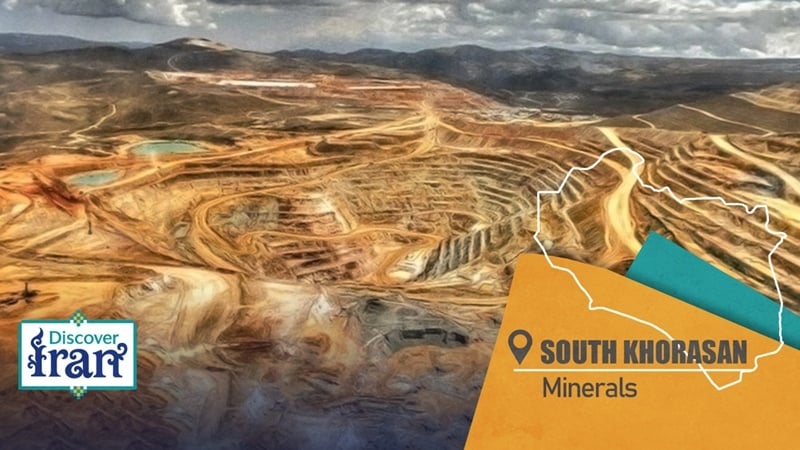
Pars Today – In the vast, sun-scorched plains of South Khorasan in eastern Iran, a quiet yet profound transformation is taking shape—one that rises from the hidden treasures beneath the desert soil.
South Khorasan, known for its saffron and historic orchards, has now become one of Iran’s most important mining hubs, with the cities of Tabas and Nehbandan leading this underground movement. According to Pars Today, citing Press TV, the extraction of resources such as barite, salt, coal, and gold in this region is not merely an industrial activity; it is a vital source of local employment, a driver of regional trade, and a powerful engine for the country’s economic growth.
Mining hubs: Tabas and Nehbandan
South Khorasan in eastern Iran has earned the nickname “Mining Paradise,” largely thanks to the vast potential of Tabas and Nehbandan. The province holds approximately 4 billion tons of mineral reserves, and its 648 active mines provide direct employment for 12,000 people while attracting significant investment. Nehbandan, in particular, is known for its exceptional variety; with 23 different types of minerals, it ranks first in the province and has become known as the “Mineral Paradise of South Khorasan.”
This county is home to rare and valuable resources such as lithium, a metal that will play a key role in the global transition to clean energy and electric vehicles. Additionally, the Hirad Gold Mine, with a confirmed reserve of 4.91 million tons and an investment exceeding 1,800 billion rials, produces 200 kilograms of gold annually and stands as a symbol of modern mining in the region.
In contrast, Tabas shines for its massive reserves and strategic importance. The county is known as the “Coal Capital of Iran,” sitting atop 1.1 billion tons of coal—the largest reserve in the country. Beyond coal, more than 100 other types of minerals have been identified in Tabas, and its 68 active mines play a significant role in the province’s economy.
The products of these two mining hubs are not limited to the domestic market; green granite, chromite, bentonite, and magnesite from the region are exported to countries such as China, Iraq, Turkey, Armenia, as well as to European and Persian Gulf markets.
This export reach demonstrates that South Khorasan’s mines are not only engines of regional trade but also drivers of the national economy, transforming the desert’s raw resources into valuable global commodities.