Architecture of Hormozgan Province: Where climatic ingenuity meets maritime heritage
-
Architecture of Hormozgan Province: Where climatic ingenuity meets maritime heritage
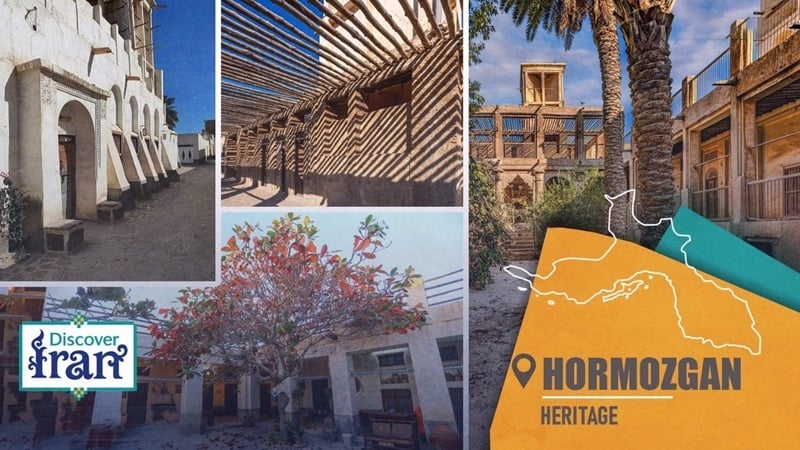
Pars Today – Located in southern Iran, where the harsh desert landscape meets the blue waters of the Persian Gulf, Hormozgan Province preserves a remarkable historical legacy not through monumental imperial structures but through architecture adapted to everyday life.
Hormozgan has long been known as one of the most important junctions of maritime and caravan trade routes. This strategic position, combined with hot and humid climatic conditions, has given rise to distinctive architectural traditions that were developed in direct response to environmental, social, and economic needs.
According to Press TV, the architectural heritage of the province can be seen as a collection of intelligent design solutions, including climate-adapted religious spaces, defensive and commercial structures for protection and communication, and advanced traditional water storage systems that ensured community survival.
This architectural ensemble, including coastal mosques, networks of fortresses and caravanserais, and extensive traditional water reservoirs, reflects the efforts of communities around Bandar Abbas to create living spaces harmonized with nature and daily life.
These structures stand as outstanding examples of vernacular architecture, demonstrating the ability of local societies to adapt to harsh climatic conditions while making efficient use of limited natural resources.
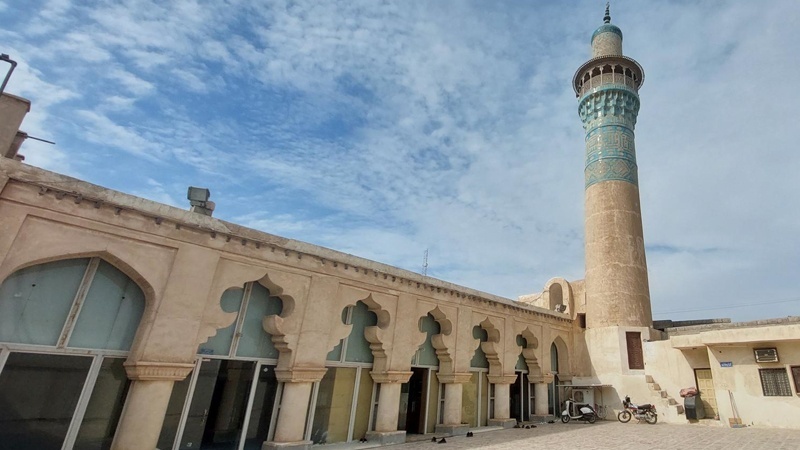
The historic mosques of Hormozgan Province, located along the shores of the Persian Gulf, are considered remarkable examples of adaptive architecture.
Unlike the grand mosques of Isfahan and Shiraz, which are known for large domes and four-iwan designs, the mosques of Hormozgan are simpler in appearance but highly functional.
Most of these structures were built over the past three centuries, and their formation resulted from direct interaction with environmental conditions, limitations in locally available building materials, and cultural influences arising from maritime trade connections.
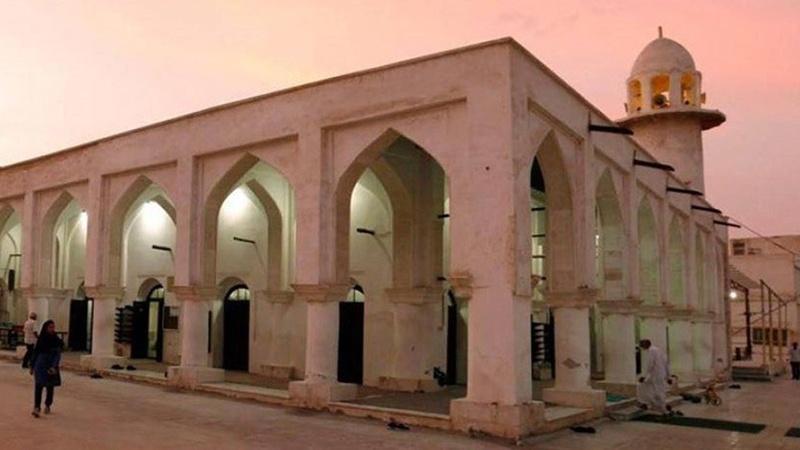
One of the most important features of these mosques is the use of the shabestan–iwan layout. The shabestan, which serves as the main prayer hall, is designed as a columned space with flat or vaulted roofs. This structure helps create shade and facilitates air circulation, producing a cooler and more comfortable environment for worship.
Unlike many traditional Iranian mosques, these buildings usually do not include domes, since flat or vaulted roofs perform better in reducing heat accumulation. Alongside the shabestan, large iwans function as semi-open spaces that play an important role in connecting interior and exterior areas while also supporting social interaction.
The spatial organization of these mosques also reflects flexibility in design. Although the central courtyard is a key element of traditional Iranian mosque architecture, in Hormozgan Province the location of courtyards varies depending on environmental conditions and wind direction.
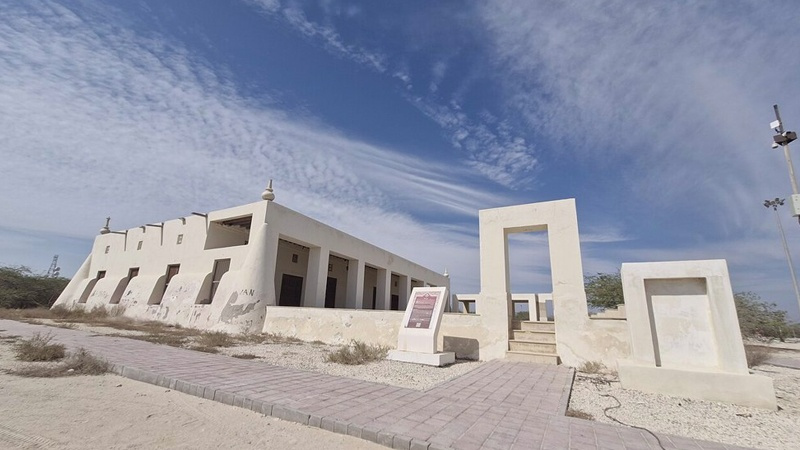
This approach demonstrates a priority placed on functional comfort and climatic adaptation rather than strict adherence to fixed architectural patterns.
The mosques also feature separate entrances for men and women, reflecting attention to social structure and privacy preservation. The circulation paths are designed so that a person gradually transitions from public space into the spiritual environment, reinforcing the sense of sacredness.
The exterior façades of these mosques are often simple, while their interiors are decorated with stucco ornaments featuring geometric and floral motifs. Despite their simplicity, these decorations reflect the skill of local artisans and the use of indigenous materials such as plaster, stone, and mud.
Examples such as the Malik bin Abbas mosque in Bandar Lengeh, Galehdari Mosque in Bandar Abbas, and Karchi Mosque illustrate the continuity of this architectural tradition across different historical periods.
Alongside mosques, the fortresses and caravanserais of Hormozgan Province also form an important part of the region’s architectural heritage. Scattered across mountainous areas, coastlines, and islands, these structures played a key role in protecting trade routes and maintaining regional security.
Among the most prominent examples are the Portuguese forts on Hormuz Island and Qeshm Island, built in the 16th century. These fortifications were constructed with thick defensive walls, watchtowers, storage facilities for equipment, and water reservoirs, serving primarily military and defensive purposes.
The Portuguese presence in the region lasted for more than a century until 1623, when Safavid forces under the command of Abbas I of Persia reclaimed the territories.
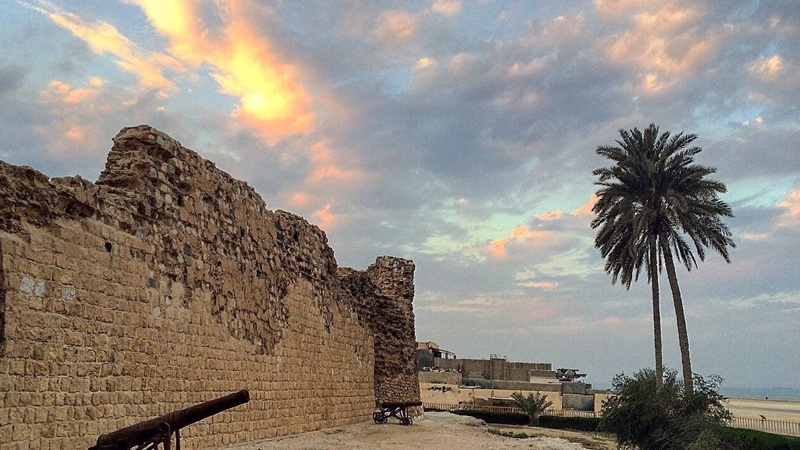
In the inland regions, fortresses such as Goharan Castle and Kamiz Castle were also constructed. In addition to their defensive role, these castles functioned as administrative and governmental centers.
The presence of moats, deep wells, and highly durable structural designs reflects the historical importance of securing essential resources and maintaining safety during periods of crisis.
Caravanserais also served as resting places, commercial hubs, and centers for the exchange of goods, playing a significant role in the development of regional trade and helping to establish the position of Hormozgan Province as one of the major gateways of global commerce.
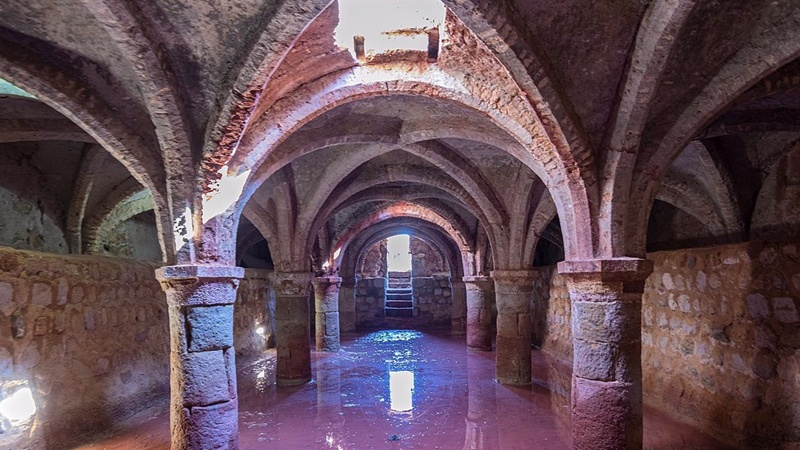
Water reservoirs are among the most important elements of vernacular architecture around Bandar Abbas, providing a direct response to the region’s water scarcity and arid climatic conditions.
These structures were typically built underground and topped with stone domes to help preserve stored water under stable temperature conditions. Beyond their vital functional role, the water reservoirs also symbolized social cooperation, as they were often constructed through collective community participation.
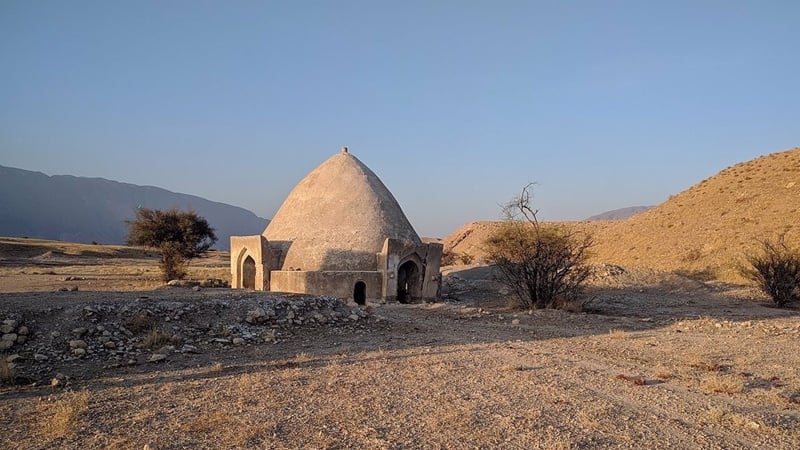
Examples such as the Darya Dowlat Water Reservoir in Bandar Kong illustrate the skill of local engineers in designing water storage and management systems.
These structures were equipped with water conveyance, filtration, and distribution mechanisms, playing an important role in meeting daily community needs. Although modern infrastructure has replaced many of these traditional systems today, water reservoirs are still regarded as symbols of indigenous knowledge, social solidarity, and environmental adaptation.
In general, the architectural heritage of Hormozgan Province reflects a smart and harmonious interaction between humans and nature.
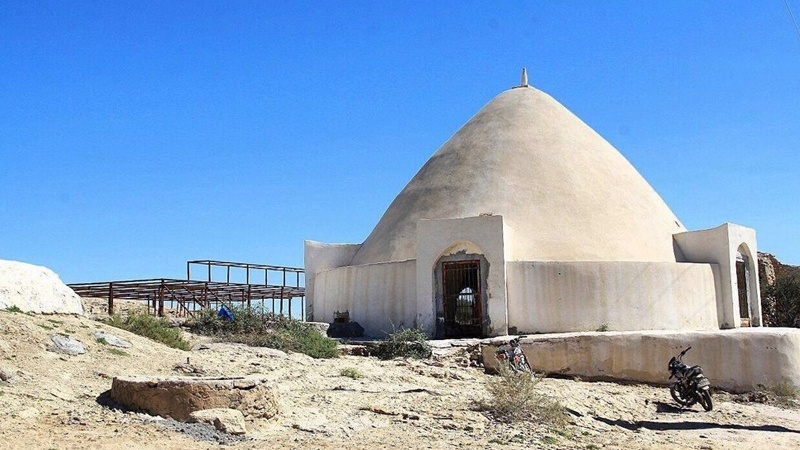
These structures demonstrate how local communities, using indigenous knowledge, were able to create sustainable environments adapted to their needs. This valuable heritage is not only a testament to the history and culture of the region but also an example of humanity’s ability to adapt to natural challenges and use architecture as a tool for survival and development.