Great Wall of Gorgan: Engineering marvel of Sassanian era
-
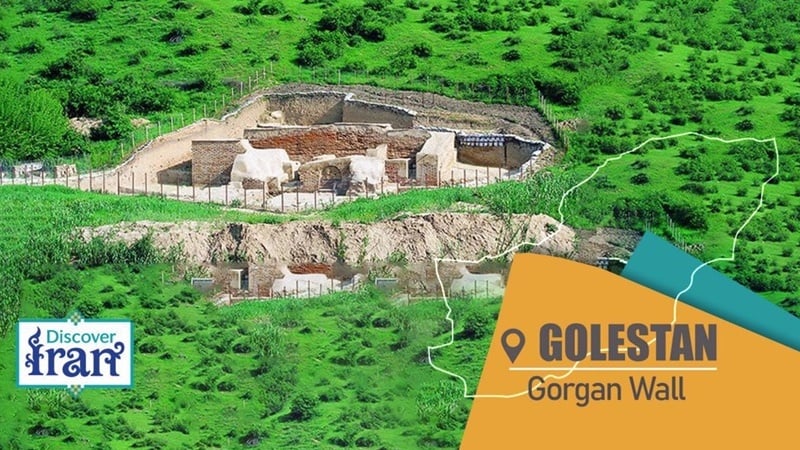
Great Wall of Gorgan: Engineering marvel of Sassanian era
Pars Today – Beneath the sun-scorched soil of northern Iran lies a royal-era structure of remarkable engineering, rivaling the most famous defensive barriers of the ancient world.
The Great Wall of Gorgan, located in Golestan Province in northeastern Iran, stretches nearly 200 kilometers from the Alborz Mountains to the Caspian Sea, standing as a testament to the power and sophistication of the Sassanian Empire. This monumental structure once protected one of history’s greatest empires from the incursions of northern steppe nomads.
According to Pars Today, citing Press TV, this massive wall—often overshadowed by its more famous Chinese and Roman counterparts—is locally known as the “Red Snake” due to its distinctive baked bricks. It represents the pinnacle of ancient military architecture, engineering, and logistical organization.
The construction techniques of the Great Wall of Gorgan were revolutionary for their time, and its silent fortresses whisper the stories of a disciplined imperial army that once defended the heart of Iran from invasion.
The wall is not merely a barrier; it is an integrated defensive system of unparalleled complexity. Its rediscovery and scientific analysis have made it essential to reassess the capabilities of the Sassanians and their critical role in the geopolitical dramas of late antiquity.
The immense physical scale of the Great Wall of Gorgan, built between the 5th and 7th centuries CE, underscores its global significance. Stretching approximately 200 kilometers, it is considered the longest ancient defensive barrier featuring forts and fortifications.
To grasp the scale of the Great Wall of Gorgan, it is longer than both Hadrian’s Wall and Antonine Wall in Britain combined, and more than three times the length of the longest Roman defensive wall, the Anastasian Wall near Constantinople.
Yet, the most remarkable aspect of the Great Wall of Gorgan is not its length, but the engineering solutions required for its construction. The treeless, stone-free steppes of the Gorgan plain offered no traditional building materials. Sassanian engineers rose to this daunting challenge with breathtaking ambition, deciding to construct the entire barrier using baked bricks.
Estimates suggest that around 200 million bricks, each weighing approximately 20 kilograms, were required. To produce this staggering quantity on-site, the builders established a fully operational industrial production line along the wall’s route.
Archaeological surveys have revealed the presence of brick kilns spaced at very close intervals—every 37 to 86 meters—totaling between 3,000 and 7,000 kilns.
However, firing these bricks presented another enormous challenge: it required a large and reliable water source. The Sassanians’ solution was a masterpiece of engineering. They dug a primary canal running along the wall, at least 5 meters deep, which was supplied by a complex system of feeder channels to ensure a continuous water supply.