Gharibabadi: Alliance of civilizations should serve as resistance against warmongering, domination
-
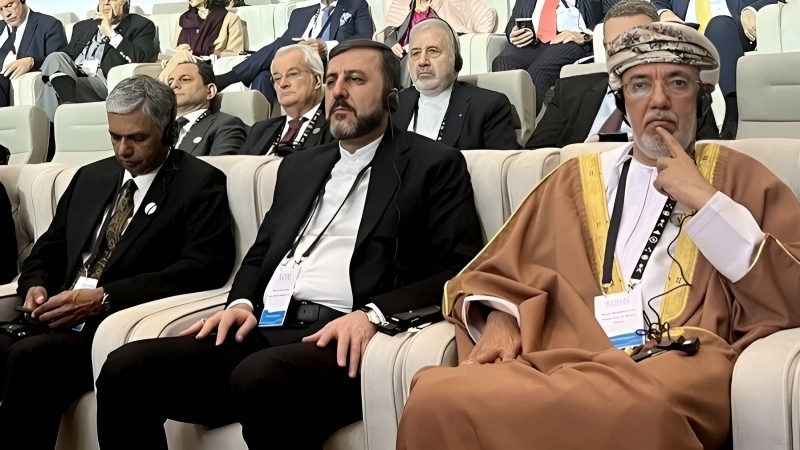
Kazem Gharibabadi at the United Nations Alliance of Civilizations Global Forum
Pars Today – The Deputy for Legal and International Affairs at Iran’s Foreign Ministry emphasized at the 11th Global Forum of the United Nations Alliance of Civilizations that the alliance of civilizations should serve as a form of resistance against warmongering and domination. He called for a serious response from the international community and the UN to the aggressions of the Israeli regime and the support it receives from the United States.
At the 11th Global Forum of the United Nations Alliance of Civilizations, held in Riyadh, Saudi Arabia, Kazem Gharibabadi, Deputy for Legal and International Affairs at Iran’s Foreign Ministry, emphasized the necessity of an alliance of civilizations in resisting aggression and domination. According to Pars Today, Gharibabadi described the alliance of civilizations in his speech as a strategic principle that can play a role in combating terrorism, establishing sustainable peace, promoting social and economic justice, and advancing joint scientific and technological development.
Referring to Iran’s 2001 initiative to designate it as the “Year of Dialogue Among Civilizations” at the United Nations, Gharibabadi emphasized that Iran, with its rich cultural and civilizational heritage, is ready to cooperate with other countries to strengthen global solidarity. He stated that Iranian culture and civilization are founded on wisdom, tolerance, and understanding, and this legacy can serve the cause of peace and sustainable global coexistence.
He went on to highlight current global challenges, including wars, poverty, unilateral sanctions, climate change, and humanitarian crises, adding that these issues require cooperation and solidarity among nations and civilizations. According to him, the United Nations Charter and the principles of international law are facing serious threats, and the effectiveness of international institutions, particularly the Security Council, has been weakened.
Gharibabadi also accused the Israeli regime and the United States of warmongering and aggression, stating that these actions have claimed the lives of thousands of innocent people and threaten global peace and security. He emphasized that the alliance of civilizations should serve as a form of resistance against such hegemonic policies, and that the international community and the United Nations must demonstrate a more serious and responsible response to human rights and global peace.
The Deputy Foreign Minister of Iran emphasized that the Iranian people will never yield to threats and aggression and will stand united and resolute against aggressors. In conclusion, he called on all countries to seek joint solutions to global challenges through dialogue and diplomacy based on mutual respect, while defending the rights of nations and global justice.
The meeting was held with the participation of foreign ministers from various countries on the occasion of the 20th anniversary of the United Nations Alliance of Civilizations, under the slogan: “Two Decades of Dialogue for Humanity: Advancing a New Era of Respect and Mutual Understanding in a Multipolar World.” Within this framework, Iran once again emphasized its role as an initiator of the dialogue among civilizations and a defender of global peace and justice.