Foreign-based media focus on Iran: What do numbers say?
-
BBC network
Pars Today – An analysis of social media content data indicates that foreign-based Persian-language media maintain a striking focus on Iran, a focus that exceeds usual demographic and media patterns.
According to Pars Today, quoting Fars News Agency, statistics on the activity of media outlets such as BBC Persian and Iran International on social networks show that the volume of content related to Iran is significantly higher than that for many other populous regional communities. This trend raises questions about the editorial priorities and communication objectives of these media outlets.
According to these data, BBC Persian’s Instagram page, with approximately 23.6 million followers, has published over 126,000 posts, whereas the main BBC page, with nearly 30 million followers, has about 26,500 posts. Meanwhile, BBC Arabic, with 2.7 million followers, has produced nearly 19,000 posts.
In the same context, Iran International, with over 17.7 million followers, has published around 158,000 posts, while content related to Afghanistan in the same space amounts to approximately 62,000 posts.
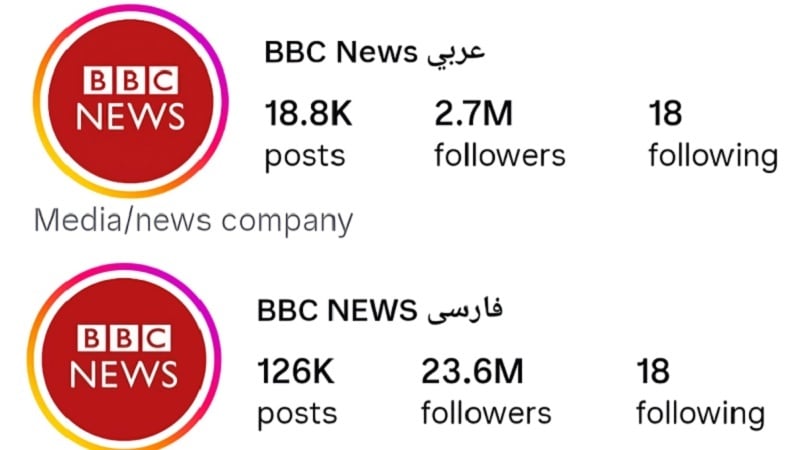
These statistics indicate that Iran, with a population of around 90 million, is at the center of attention for Persian-language media, whereas the Arab world, with a population several times larger, receives comparatively less content coverage on these platforms. Media experts suggest that this focus may stem from Iran’s geopolitical significance, the competition of narratives in the international arena, and efforts to influence Iranian public opinion.
Role of algorithms and media competition
Analysts also point to the influence of social media algorithms, which operate based on audience engagement. If users respond more actively to political and social topics, media outlets increase related content to maintain high engagement rates. Within this context, the growing volume of content about Iran can be seen as a combination of professional media considerations, competition for audience attention, and strategic communication objectives.
However, simply comparing the numbers alone is not sufficient to prove political bias, though it can be considered an indication of media prioritization. What is clear is Iran’s prominent position in the field of international narratives and the importance of strengthening domestic media capabilities to provide accurate and professional coverage of the country’s developments.