Iran’s response to UNSC meeting: “Another display of hypocrisy; Resolution 2231 has expired”
-
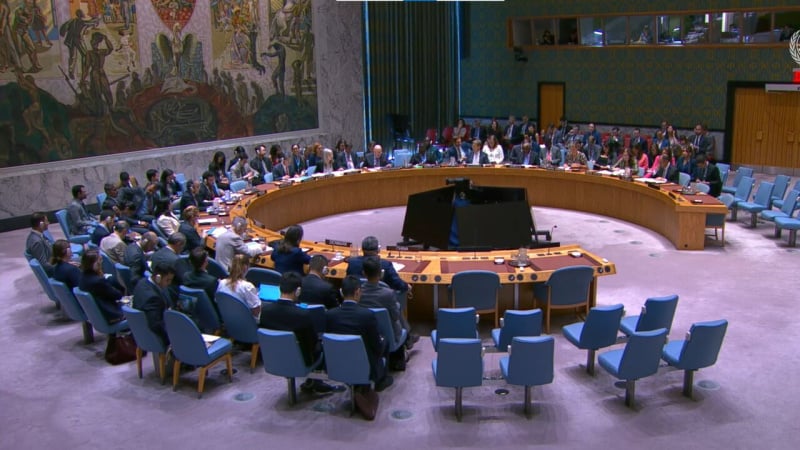
The United Nations Security Council
Pars Today – Iran’s mission to the United Nations described the recent United Nations Security Council meeting on Iran as “another display of hypocrisy,” responding to the Western attempts to reinstate sanctions against Iran, and stressing that UN Security Council Resolution 2231 expired on October 18, 2025.
According to Pars Today, citing IRIB, the Permanent Mission of the Islamic Republic of Iran to the United Nations said in a statement issued on Tuesday local time, coinciding with a Security Council session on Iran: “Once again, another display of hypocrisy and double standards at the United Nations Security Council meeting. A number of members, following instructions from the United States, repeated baseless allegations against Iran’s peaceful nuclear program and parroted the U.S. and Israeli propaganda campaign.”
The statement added that Resolution 2231 of the UN Security Council expired on October 18, 2025, bringing all related provisions and obligations to an end. It further stated that there is no legal basis for the so-called 1737 Committee, no remaining Security Council sanctions resolutions against Iran, and no justification for holding meetings under the “non-proliferation” agenda.
The Permanent Mission of the Islamic Republic of Iran to the United Nations in New York stressed that this represents an open abuse of the Security Council’s authority and a deliberate attempt to mislead the international community.
It added that for more than five decades, Iran has remained a responsible member of the Nuclear Non-Proliferation Treaty (NPT) and has never sought nuclear weapons. The mission said the real threat to the non-proliferation regime is the impunity of those who attack safeguarded peaceful nuclear facilities while claiming to uphold international law and non-proliferation principles.
The Iranian mission further emphasized that the current situation is a direct result of the United States’ withdrawal from the Joint Comprehensive Plan of Action (JCPOA), the continued failure of the three European countries to meet their obligations, and the illegal military attacks by the United States and Israel against Iran’s safeguarded peaceful nuclear facilities.
Colombia, which holds the rotating presidency of the United Nations Security Council for this month (June), under U.S. pressure and that of its Western allies, was misusing its position to convene an inconclusive meeting of the 1737 Committee, despite the expiration of Resolution 2231 (2015) and in the face of opposition from Russia and China to placing the issue on the Council’s agenda.
According to the report, despite objections from Russia and China, Colombia held a procedural vote under the so-called “non-proliferation” agenda and approved the inclusion of the Council’s agenda item related to the 1737 Committee (2006) on sanctions against Iran, enabling the meeting to take place.
In the procedural vote, Security Council members decided to proceed with the meeting by 11 votes in favor, 2 against (China and Russia), and 2 abstentions (Pakistan and Somalia). However, the session ended without any outcome, and no report was presented by any representative of the United Nations Secretary-General.