Why is Trump returning to a strategy that has failed repeatedly?
-
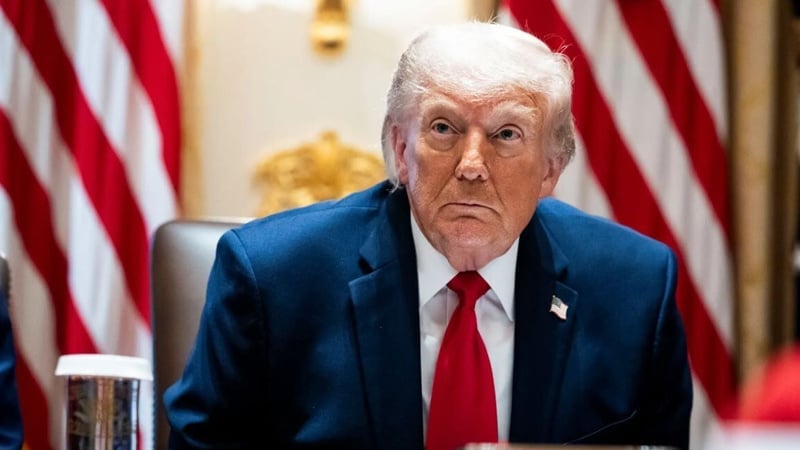
US President, Donald Trump
Pars Today – Donald Trump has once again violated the fragile ceasefire between the United States and Iran. New US attacks on targets inside Iran, including civilian infrastructure, came just days after the US president spoke of an imminent agreement.
Iran's response was swift and direct: US military bases in Bahrain, Kuwait, and Jordan were targeted by missile and drone strikes. This recurring cycle raises a fundamental question: Why does Trump, despite repeated experiences of failure, continue to resort to a military solution against Iran? The answer must be sought in a combination of political calculations, Trump's personal mindset, and the structural limitations of American power.
Trump views foreign policy less as a realm for managing geopolitical complexities and more as an arena for showcasing power. In his view, every crisis must end with a winner and a loser. Such a perspective, rooted in his business experiences and personality, has led him to see military pressure as a tool for imposing political will.
The Islamic Republic of Iran, however, has shown over the past four decades that it does not behave submissively in the face of external pressure. Forty days of war and over three months of a fragile ceasefire have produced the same result previously observed in the "maximum pressure" policy. Military attacks have not only failed to cause Iran to retreat but have also strengthened internal cohesion, social solidarity, and political will for resistance. The remarks of Amir Saeed Iravani, Iran's representative to the United Nations, reflect this very reality: that Iran does not accept negotiations under pressure and does not regard military threats as a factor in altering its calculations.
From a strategic perspective, Trump also faces a fundamental contradiction. He wants to force Iran to accept a political agreement through the application of military power, but each military attack precisely destroys the political atmosphere necessary for an agreement. Experience in recent years has shown that whenever a window for diplomacy has opened, military action by the United States or the Zionist regime has closed it. For this reason, many analysts believe the biggest obstacle to an agreement is not Tehran's positions but the instability of decision-making in Washington.
Another factor behind the repetition of the failed policy of using force against Iran relates to the real limitations of American power. Washington remains the world's greatest military power, but military power does not necessarily equate to the ability to impose political outcomes. The wars in Afghanistan, Iraq, and now the confrontation with Iran have once again revealed this truth. The US can bomb targets, but it cannot destroy the political will of a nation. Especially in the case of Iran, which over the past decades has developed diverse deterrent structures and has managed to increase the cost of any conflict for the opposing side.
In this context, Iran's geopolitical position is also particularly important. The Strait of Hormuz remains one of the world's most sensitive energy chokepoints. Any escalation of tensions in this region immediately affects global energy markets, the international economy, and even the political standing of the US administration. For this reason, many American experts warn that any new military action against Iran could lead to rising energy prices and increased economic pressure on American citizens.
Furthermore, the repetition of military attacks has damaged America's international credibility. While Washington speaks of a rules-based international order, it stands accused of violating a ceasefire and attacking civilian infrastructure. This contradiction has deepened the gap between America's moral claims and its practical behavior, eroding part of the country's soft power.
Nevertheless, Trump continues to return to this path because the alternatives carry political costs for him. Accepting the reality that military pressure cannot change Iran's behavior would mean admitting the failure of one of the most important pillars of his policy. Therefore, instead of rethinking its assumptions, the White House sometimes tries to repeat the same policy with greater intensity—an approach known in strategic literature as "escalation to compensate for failure."
But the main problem is that today's strategic environment in the region is different from the past. According to many observers, after the recent wars, Iran has not only maintained its deterrent capability but has also entered a phase where it has moved beyond a purely defensive posture and gained greater initiative in managing crises.
In such circumstances, any new American attack will lead not to a change in Tehran's behavior but to increased costs for Washington. Therefore, the main question is no longer why Iran does not surrender; rather, it is why Trump remains committed to a strategy that field evidence, historical experience, and even a segment of the American political elite consider to have failed. Until the answer to this question becomes clear, the cycle of attack, retaliation, and crisis escalation will continue—a cycle that, more than a sign of strength, reflects America's strategic deadlock in dealing with Iran.