Baghaei: Israeli regime biggest threat to regional security
-
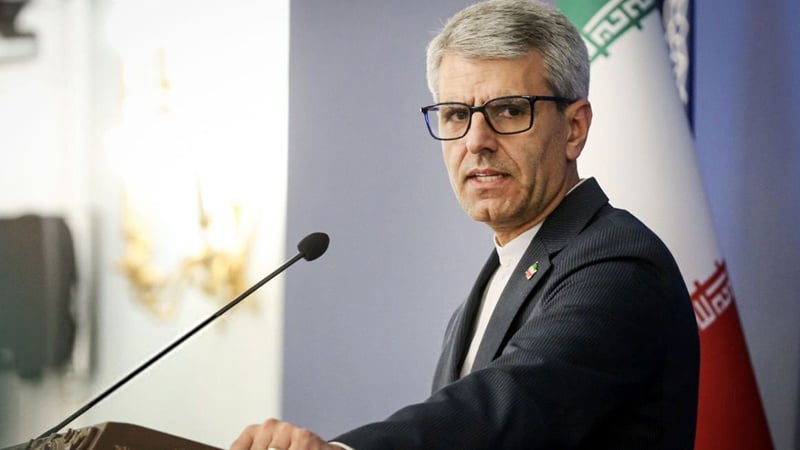
Iranian Foreign Ministry Spokesman Esmaeil Baghaei
Pars Today – Iranian Foreign Ministry Spokesman Esmaeil Baghaei said the Israeli regime is the biggest threat to the stability, security, and cooperation of countries in the region.
According to Pars Today, Baghaei made the remarks at his press conference on Monday. He said that following developments three years ago in October, the launch of a colonial plan to eradicate the occupied Palestinian territories, the genocide in Gaza, and attacks by the occupying regime on Lebanon and other countries in the region, regional states have increasingly reached the conclusion that the Israeli regime poses the greatest threat to regional stability, security, and cooperation.
He added that the purported “Greater Israel” plan, the regime’s attacks on Lebanon and Syria, and threats against numerous countries in the region—including countries involved in the Pakistan-Saudi Arabia-Turkey memorandum—have reinforced the perception that regional countries can no longer rely, as they did in the past, on US claims of providing security.
"US is part of cause of insecurity in the region"
The Iranian Foreign Ministry spokesman said the United States itself has been part of the cause of insecurity in the region.
Baghaei continued: “If it were not for the comprehensive support provided by the United States to the Israeli regime, as well as the political backing and media shield it has provided, the regime would not have been able to carry out its crimes in the region with impunity.”
Security in the region is indivisible
He stressed that security in the region is inherently indivisible, adding that any initiative based on the region’s historical and geopolitical realities and capable of identifying its enemies and threats has the potential to contribute to strengthening regional security.
Reopening of Strait of Hormuz contingent on halt to US actions
The Iranian Foreign Ministry spokesman, referring to Iran’s conditions for reopening the Strait of Hormuz, said the waterway was not closed because of a disagreement between Iran and Oman. Rather, he said, it was closed due to the US military aggression against Iran and the misuse of the Strait of Hormuz.
He continued: “Naturally, negotiations between Iran and Oman to determine the route for maritime traffic are a bilateral matter. They are bilateral talks between the two coastal states, with the specific objective of reaching an agreement on a safe shipping route through the Strait of Hormuz.”
Baghaei stressed that reopening the Strait is contingent on the conditions imposed on it. “We are still at war, and as long as the US naval blockade continues and other US violations persist, the necessary conditions will not exist for us to say that the Strait has become a safe waterway.”
He emphasized: “The United States must halt its actions, and then we can discuss the next steps.”