What Iran’s SNSC Secretary reminded Americans
-
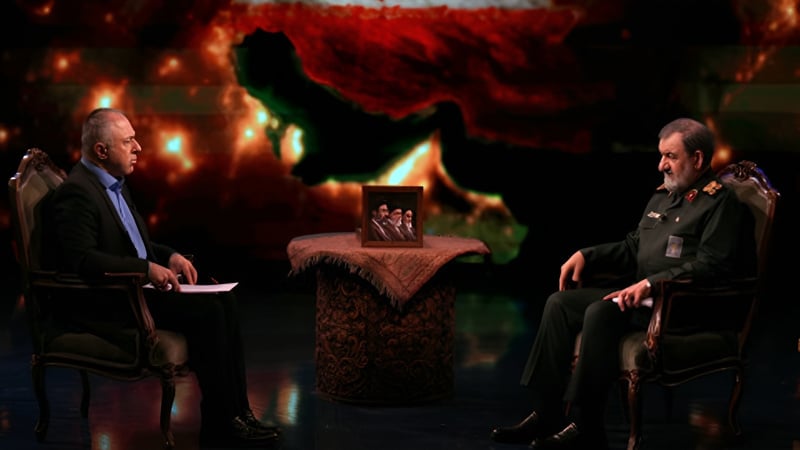
Major General Mohsen Rezaei, secretary of Iran’s Supreme National Security Council in an interview with PRESS TV
Pars Today – Iran’s secretary of the Supreme National Security Council said the enemy had been defeated in almost every new attack it had launched so far.
According to Pars Today, Major General Mohsen Rezaei, secretary of Iran’s Supreme National Security Council, said in an interview with PRESS TV that the end of the war was in the hands of the Iranian nation, which would not give up its resistance, steadfastness and defense until the enemy surrendered to its rights. He stressed that Iran’s history held many powerful lessons for its enemies and that they would once again be forced to kneel before the Iranian nation.
Asked for his assessment of the US attack on Iran and the nature of the war, Rezaei said the attack was one of the most foolish wars in human history, describing it as an unjust, malicious and inhumane war waged against Iran.
He said the Trump administration had blindly handed over the reins to Netanyahu and entered the war against Iran without a thorough assessment or careful calculations, alongside an unqualified defense secretary and a secretary of state who had confused his role with that of the FBI director.
They believed they could end the war in a short time and that Trump would go down in American history as one of its great heroes, Rezaei said. However, he added, they were now unable to extricate themselves from the war because of the same folly. He said sensible figures in the United States needed to step in, take matters out of their hands and help them end the war; otherwise, their own foolishness would prevent them from finding a proper way out.
Major General Rezaei, responding to a question about how Iran had managed the war and the current level of its defensive preparedness, said Iran had made precise calculations from the outset and managed the war properly.
He said Iran had adjusted its military posture in line with the course of the war. For example, during the 12-day war, Iran had revealed only a small part of its capabilities and had not deployed many of its assets during the first 12 days. It had sought to introduce greater capabilities as the United States escalated the war, he added.
The 40-day war was different, Rezaei said, explaining that Iran had brought more capabilities into the field and used them. He added that Iran was now fully prepared to deploy new capabilities if the war broke out again.
“The Enemy Has Been Defeated in Almost Every New Attack It Has Launched So Far”
Asked how Iran would respond in the event of another war, Major General Rezaei said the pulse of the US economy was in West Asia and that the United States had highly valuable assets in the region.
He said Iran had not yet designated these assets as targets, but if war broke out, many cables, data centers and artificial intelligence facilities worth enormous sums of money would come within its reach. He put the value of these cables, data centers and AI facilities at more than $2 trillion.
According to Rezaei, these facilities had been relocated from the United States and Europe to the region because of their enormous energy consumption. He said Iran had therefore refrained from revealing all its capabilities in the first week of the war and leaving itself with no further options. Today, he added, if hostilities resumed, Iran would confront the enemy with a much broader plan.
Referring to the enemy’s repeated defeats in recent months, Iran’s secretary of the Supreme National Security Council said the enemy had suffered a major defeat during the first 12 days of the war and another during the 40-day war. It had then imposed a naval blockade but failed to achieve its objectives, he said.
More recently, Rezaei added, the enemy had launched a blockade and an economic exclusion campaign. “Almost every new attack it has launched has ended in defeat,” he said, adding that Iran had remained firmly in place, carefully calculated the attacks and thwarted them.
He stressed that Iran was now fully prepared and ready to defend itself.
Iraqi People's Revenues Are Still Under US Control
Iran’s secretary of the Supreme National Security Council continued by saying that, recently, during the 40-day war, when the deadline for US forces to remain in Iraq had expired, the resistance front began operations against American forces, demanding to know why they were not leaving the country.
According to Rezaei, the Pentagon put the number of attacks against US forces at 600, but Iranian reports indicated that the resistance front had launched more than 1,500 projectiles against the United States.
He said American forces had moved from Baghdad to Erbil, where they came under attack again and were forced to withdraw. Following the US withdrawal from Afghanistan, this was a major victory, he said, demonstrating that the era of US military attacks on countries, stationing forces there and taking control of their political affairs had come to an end.
Explaining the significance of the withdrawal of US forces from Iraq, Rezaei said expelling American forces had become more important than ever amid the ongoing conflict with the United States, which he said had reached a deadlock.
He said the withdrawal was particularly significant because the United States had failed in Iran. Had Washington succeeded in Iran, he claimed, it would have sent another 40,000 to 50,000 troops to Baghdad, dissolved the Iraqi government and parliament, and established a dictatorship similar to Saddam Hussein’s, made up of Baathists and American-backed Daesh members.
However, because the US attack on Iran had failed and the resistance front had also stood against American forces inside Iraq, Washington had no choice but to withdraw from the country, Rezaei said. He congratulated the Iraqi people, the country's religious authority and resistance forces on what he described as this victory.
He added, however, that Iraqi people's revenues were still under US control and that the country's airspace remained under American control. The suspension of flights between Iran and Iraq, he said, showed that although US ground forces had left Iraq, American control over the Iraqi economy and its interference in the country's affairs continued.
Major General Rezaei, responding to a question from a PRESS TV presenter about remarks made by the US secretary of state in Greece regarding Iran’s history, said: “We are dealing with a group of ignorant and foolish people in the United States who have neither studied history nor know the Iranian nation.
“I tell Mr Rubio that people far greater than you have repeatedly wished to come to Iran. For nearly several thousand years, they have wanted to enter Iran, seize the country and destroy the Iranian nation. The Iranian nation defeated them all. Their names are now absent from history, while the Iranian nation has remained, and will continue to remain, in history with its head held high and its dignity intact.
“I say this plainly: the more you intensify these efforts, the only result will be that you sink deeper into the quagmire. Our history has many good stories in store for you. Once again, you will be forced to kneel before the Iranian nation, further magnifying its greatness.”
Iranian Nation Does Not Surrender but Forces Its Enemies to Surrender
He stressed: “What were you trying to achieve, and what did you do in Iran? At the beginning of the Revolution, Imam Khomeini ordered the formation of a 20-million-strong army. But following your attack on Iran, 30 million people registered as volunteers ready to take up arms and stand against you. Is this your victory? Is this the result of your actions? You do not know the Iranian nation. The Iranian nation does not surrender; it forces others to surrender before it. It will not surrender to you, and it will not leave you alone under any circumstances until it secures its rights from you.”
The secretary of Iran’s Supreme National Security Council, responding to a question about the US Treasury secretary’s boastful remarks, said: “The US Treasury secretary has become known in the United States as the lying secretary. For more than a year, he has been unable to deliver on anything he has said or promised.
“For example, he announced that he would unfreeze the US housing market, but the situation got worse. He said he would bring inflation down, but it increased. Then he said he would lower interest rates on US bonds, but they rose from one percent to five percent.
“In other words, despite being in charge of the US economy and having control over fiscal policy, he has been unable to manage the very system under his authority. Now, because he faces a budget shortfall in paying the salaries of American employees and soldiers, he keeps issuing and selling bonds to draw money from the market and pay their salaries.
“And now he has come to confront the Iranian nation and threaten its livelihoods. I am certain he will suffer a crushing defeat. Just as they were defeated in the military war, we will defeat them in the economic war, and we have prepared our plans.
“We will announce our plans for organizing the economic defense effort soon. An economic war council is also likely under discussion and consideration, and it may be established. We will show Trump and the Treasury secretary what economic warfare means and where they stand in this war.”
Our Diplomacy Has Changed, and We Will Not Return to the Past
Major General Rezaei, responding to a question from a PRESS TV presenter about the latest developments in diplomacy and negotiations, stressed: “Our diplomacy has changed, and we will not return to the diplomacy of the past. We held three rounds of negotiations, and in each round, the Americans left the talks unfinished and attacked Iran. Therefore, we will no longer return to the old diplomatic approaches.
“When someone signs a memorandum of understanding and then withdraws from it, diplomacy with that person must naturally follow a different approach. Of course, we have never abandoned diplomacy, nor will we do so, but we have changed our diplomatic approach.
“Over the past two months, the Americans have made proposals to us through three channels — Pakistan, Qatar and even Iraq — and asked us to submit our own proposals to them. We presented the Americans with seven conditions, making it clear that unless they meet these conditions, the Strait of Hormuz will not be reopened to them, and there will be no negotiations.
“The Americans have now responded. They have accepted some of our conditions, while certain ambiguities remain. So the Americans have responded to us; we are not in the process of responding to them. They have given us their answer, and we consider it insufficient. They must naturally clarify the points that remain unclear to us. We must see whether they can resolve these ambiguities so that the next stages can begin.”
Speaking about the latest situation in the Strait of Hormuz, Rezaei said: “Our management of the Strait of Hormuz is a major national asset and a great source of national wealth. We do not mean simply charging tolls; the issue goes far beyond that. We can pursue sound economic activities in the Strait of Hormuz and collect fees from passing ships to cover security, insurance and environmental costs.
“But the value of managing the Strait of Hormuz to us goes far beyond these matters. It is about controlling security. Experience has shown us that without Iran’s management of the Strait of Hormuz, the Persian Gulf cannot be secure.
“The current situation, in which the Strait of Hormuz is under management, is the result of the war, the American presence and insecurity. Otherwise, the strait was open before the war, and there were no problems. Therefore, from now on, we will continue to manage the Strait of Hormuz, and it will remain under our management to ensure peace and security in the region. We will not back down on this.”
In response to the final question, “What will be the outcome of the war?”, Major General Mohsen Rezaei said: “The end of a war is a serious issue in the theories of military strategists and thinkers around the world. Some argue that we should not focus on how wars begin, because wars will happen anyway; what matters is how they end. Therefore, they examine the theory of war from the perspective of its conclusion.”
“The Americans have tried to apply every theory on how to end a war in an effort to extricate themselves from this conflict, but they have failed. The reason is that they do not understand what the powerful force in Iran is that can bring the war to an end, or where it comes from.
“For example, Trump recently said that he did not know whom he should talk to in Iran. The answer is obvious: he should talk to the Iranian nation.
“You say you want to wipe out the Iranian nation and destroy Iran’s civilization. You are only mobilizing more Iranians against yourselves. You speak to the Iranian people disrespectfully, making them even more determined to drag you deeper into the quagmire.
“Therefore, the end of the war is in the hands of the Iranian nation. It will not stop resisting, standing firm and defending itself until it forces you to submit to its rights. The Iranian nation will remain committed to this war and continue to defend itself until it secures all its rights.”