What challenges Haredi Jews created in Occupied Territories?
-
What challenges Haredi Jews created in Occupied Territories?
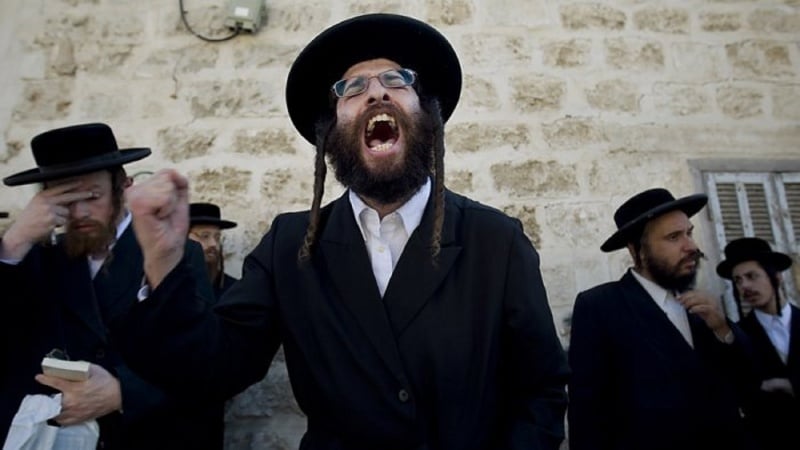
Pars Today – The Occupied Territories are once again witnessing protests by the Haredim — demonstrations that reveal the deep rift between this religious group and Israel’s political structure.
According to Pars Today, the spark behind the Haredi protests in the Occupied Territories was the Supreme Court’s decisions and the political pressure to end the extensive exemptions the Haredim have long enjoyed from military service. For the secular segment of society, this is seen as a “necessary step toward equality in matters of security,” while for the Haredim it is regarded as “a direct attack on their religious way of life.”
However, the recent Haredi protests are not merely a reaction to the removal of draft exemptions; they reflect a deeper, longstanding structural divide between the religious community and Israel’s political system.
This divide has existed since the establishment of the fake Israeli regime and has now reached a breaking point due to security pressures, demographic changes, and economic crises. After the formation of Israel, the Haredim—despite their small population—received significant privileges (military exemption, educational funding). Over time, these privileges became a central issue within the Occupied Territories and a major point of political contention.
Socially, the Haredim live in closed neighborhoods with their own media and schools. Economically, male participation in the workforce is low, and women carry most of the financial burden; this situation has led to dependence on government subsidies. Their high birth rate has caused the Haredi population to grow rapidly. They now make up about 13% of Israel’s population, and forecasts suggest that by the middle of the century they will become the largest Jewish demographic bloc.
This trend has raised serious concerns about Israel’s economic and political future, as a large but low-skilled population could put heavy pressure on the economy. The military is the backbone of Israel’s security, and from the perspective of secular Israelis, Haredi exemptions are seen as a threat to social equality. The Haredim, on the other hand, view the military as a threat to their religious faith.
Haredi parties, by focusing on the internal interests of their community, have become key players in political coalitions. Without their support, right-wing cabinets struggle to form. Militarily, the Israeli army faces a shortage of around 12,000 personnel, and the pressure from recent wars in Gaza and Lebanon has intensified this need. Secular Israeli society views Haredi exemptions as discriminatory, since their own children die in combat while the Haredim are exempt from this responsibility. Opposition parties also agree on the necessity of mandatory service for the Haredim, making this issue a central point of political conflict in the Knesset.
The Israeli cabinet is now caught between two pressures. The military and secular society demand an end to the exemptions, while on the other hand, Haredi religious parties are essential for the survival of right-wing cabinets. Right-wing governments rely on the support of these religious parties to stay in power, but the pressure from the army and public opinion to end the Haredim’s special privileges is growing stronger by the day.
The crisis has reached a stage where it can no longer be concealed. In conclusion, it should be noted that the Haredim today are not just a religious community; they have become a decisive political and demographic force. Their unique combination—high political influence, limited economic participation, and a rapidly growing population—raises fundamental questions about Israel’s future: Can the political system integrate this community, or will the religious-secular divide evolve into a structural crisis that threatens the foundations of the occupying regime?