Washington shooting fuels Trump’s push for stricter immigration policies
-
Washington shooting fuels Trump’s push for stricter immigration policies
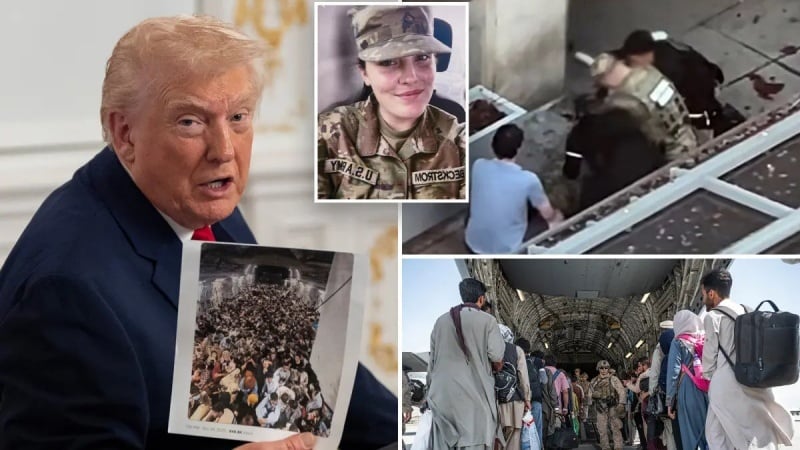
Pars Today – The shooting incident near the White House has become a pretext to revisit the U.S. withdrawal from Afghanistan and to tighten immigration restrictions.
The November 26 shooting targeting National Guard forces in Washington, carried out by Rahmanullah Lakanawal, a former CIA collaborator, quickly became a focal point for political debates in the United States. This incident has not only revived longstanding discussions about the 2021 U.S. withdrawal from Afghanistan but has also become a tool to justify the Trump administration’s strict immigration policies.
According to Pars Today, Lakanawal, who was formerly an ally of the U.S. in Afghanistan, has a complex background. He had been cooperating with U.S. security agencies since 2011 and, following the withdrawal of American forces, underwent multiple stages of security screening as one of 190,000 supported Afghan nationals. Notably, in April 2024, he was officially granted permanent U.S. residency.
Trump immediately used the incident to criticize the Biden administration, calling it the "result of lax immigration screening." Following these accusations, the current administration ordered a halt to all immigration applications from citizens of 19 countries, including Afghanistan and Venezuela.
Notably, there is a contradiction in Trump’s stance. On one hand, Lakanawal had been approved to cooperate with the U.S. during Trump’s first presidency, and on the other hand, it was this same administration that planned the U.S. withdrawal from Afghanistan. Now, Trump is using this incident to advance his immigration policies.
These decisions will have a direct impact on the United States’ relations with the countries in question, particularly those under the harshest U.S. sanctions. It appears that the Washington shooting incident, rather than being merely a security event, has become a political tool to advance the Trump administration’s immigration agenda. This approach could have far-reaching consequences for the U.S.’s international standing as well as its relations with former allies in Afghanistan.