Have Europe’s human rights values been sacrificed for geopolitical interests?
-
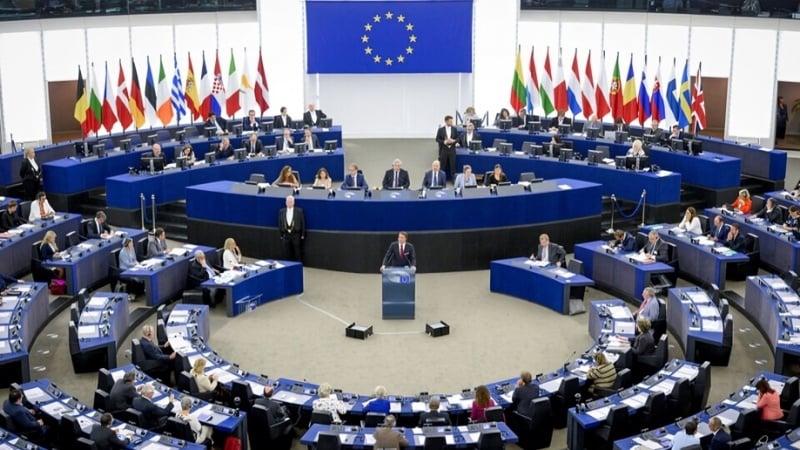
The European Parliament
Pars Today – A group of Members of the European Parliament has, in an unprecedented letter to Kaja Kallas, the EU’s High Representative for Foreign Affairs, called for an end to the EU’s complicity in the genocide of the Palestinian people.
The group of MEPs released a letter titled “EU, End Your Complicity in the Genocide Against the Palestinian People.” Addressing Kaja Kallas, the letter states: “After 789 days of genocide and 58 years of illegal occupation, we believe that the European Parliament must send a clear message: Europe cannot continue its complicity.”
This stance, taken by members of the Green, Left, and Social Democratic parties, as well as individuals including Jaume Asens, Melissa Camara, Marc Botenga, Irene Montero, and Cecilia Estrada, reflects a divide within Europe between its declared human rights values and its actual foreign policy practices. In the letter, the European legislators called for the suspension of the EU-Israel cooperation agreement, the implementation of an arms embargo, respect for the rulings of the International Court of Justice (ICJ) and the International Criminal Court (ICC), and the protection of Palestinian human rights institutions.
The letter from the Members of the European Parliament echoes the same warnings that European think tanks such as the European Council on Foreign Relations (ECFR) and Chatham House have been raising for years. These think tanks have repeatedly described the continued support of European governments for Israel as a clear violation of the EU Charter of Fundamental Rights, weakening Europe’s moral standing and geopolitical credibility on the international stage.
Meanwhile, the situation on the ground underscores the severity of the humanitarian disaster in Palestine. According to the UN Office for the Coordination of Humanitarian Affairs (OCHA), between 25 November and 1 December, four Palestinians, including a child, were martyred in the West Bank, bringing the total number of Palestinian casualties in the region this year to 227. Nearly half of these victims were martyred in the cities of Jenin and Nablus, areas that in recent months have become the main centers of military attacks and raids by criminal and murderous Israeli settlers.
Stephane Dujarric, spokesperson for the UN Secretary-General, stated at a press briefing that Israeli settlers have carried out an average of five attacks per day against Palestinians, with over 1,680 attacks recorded in more than 270 locations across the West Bank since the beginning of the year. He emphasized that, under international law, Israel is obligated to protect civilians, yet available evidence indicates that not only has it failed in this duty, but it is also systematically altering the demographic composition of the occupied areas.
A similar picture of devastation and human suffering is seen in Gaza. Although the Israeli regime and Hamas announced a ceasefire and prisoner exchange in mid-October, reports indicate that bombing and the destruction of remaining buildings in Gaza continue. Since the implementation of the ceasefire, over 774,000 new cases of displacement have been recorded, and in just the past week, more than 20,000 additional people have been forced to leave their homes due to flooding, bombing, and insecurity. According to experts at the International Crisis Group, these figures reflect the “continuation of a war structure within the ceasefire”, a situation that effectively means the war continues, albeit with more limited means but far-reaching humanitarian consequences.
Analysts from Carnegie Europe and Bruegel believe that the EU’s passive stance toward this crisis is the result of its geopolitical and economic dependencies on Israel and the United States. In a November report, the Oxford Human Rights Centre warned that through the continued export of weapons or the provision of dual-use technologies to Israel, the EU is “at risk of violating its international responsibility regarding crimes and genocide.” According to Professor Fiona de Lande of Leiden University, such positions reflect the “growing moral gap between Europe’s human rights discourse and its political actions.”
On the other hand, the humanitarian crisis in the West Bank and Gaza is not limited to human casualties. OCHA reports that as a result of recent military operations, over 95,000 Palestinians in the northern West Bank have been displaced, and at least 17,000 people have been deprived of access to drinking water. Critical infrastructure, including sewage and electricity networks, has been severely damaged, and schools in Jenin and Tubas have been closed. According to researchers at the Al-Shabaka think tank, this situation is part of Israel’s “gradual control strategy” aimed at weakening the social fabric of the Palestinian population and facilitating the informal annexation of territories.
In conclusion, the letter from European legislators can be seen as an ethical statement against the silence of European governments regarding the crimes and genocide of Palestinians by the Israeli regime—a silence that, according to Natasha Lennard in The Intercept, constitutes a form of complicity in the crime. Now, after two years of war, millions of displaced people, thousands of deaths, and widespread destruction, the central question is whether the European Union will finally choose between “values” and “interests”, or continue to operate in a dual-track policy, championing human rights in Ukraine while remaining a silent observer in Palestine.