Iran’s military capability: Deterrent to war, U.S. hegemonic decline accelerator
-
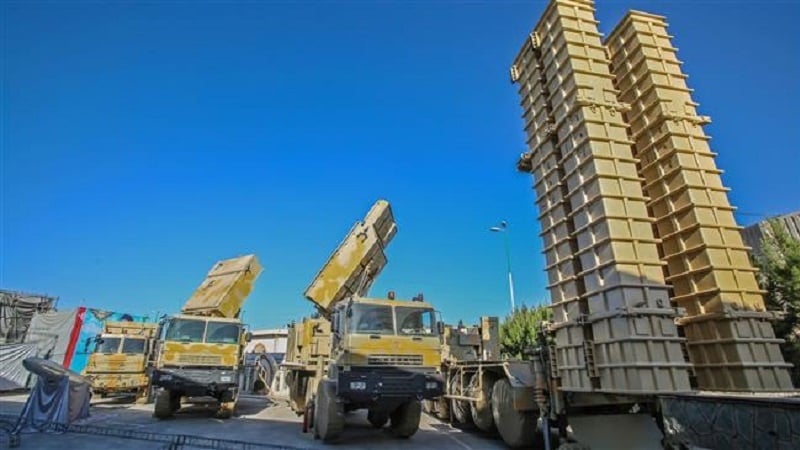
Iran’s military capability
Pars Today – An American magazine has written that Iran’s military capabilities, along with the possibility of Washington being drawn into a prolonged war of attrition, are among the main factors deterring U.S. military action and accelerating the decline of American global hegemony.
According to Pars Today, citing IRNA, the American magazine Responsible Statecraft, affiliated with the Quincy Institute, in its review of the trend of indirect negotiations between Tehran and Washington, wrote that a growing recognition within the U.S. government of the limitations of military options has strengthened the diplomatic approach.
The outlet emphasized that more than any other factor, what has restrained Washington from taking military action against Iran is Tehran’s real and considerable capacity to drag the United States and the entire region into a difficult, lengthy, and attritional war — a conflict that could accelerate the decline of U.S. global hegemony “in unimaginable ways.”
The analysis adds that if the U.S. president were confident he could defeat Iran within a timeframe and at an intensity of his own choosing, he would opt for the military path. However, realities on the ground and the regional balance of power have cast serious doubt on such a calculation.
According to Responsible Statecraft, the current stalemate is not a new development and was predictable even before the United States withdrew from the nuclear agreement. In the author’s view, the same strategic considerations that pushed the previous U.S. administration toward diplomacy are still shaping decision-making in Washington today.
The magazine also warned that the failure of Iran–U.S. nuclear negotiations could lead to a regional war whose scope would not be under Washington’s control. It acknowledged that post-recent developments, Iran would adopt a different approach in the event of a large-scale confrontation — one based on active deterrence.
Following what was described as a 12-day act of aggression by the United States and the Israeli regime against the peaceful nuclear facilities of the Islamic Republic of Iran during ongoing talks, indirect negotiations resumed with Omani mediation in Muscat and Geneva — a process observers view as an effort to prevent further escalation and preserve regional stability.