Iran’s Islamic Revolution, Unique Movement (7)
Feb 06, 2017 16:18 UTC
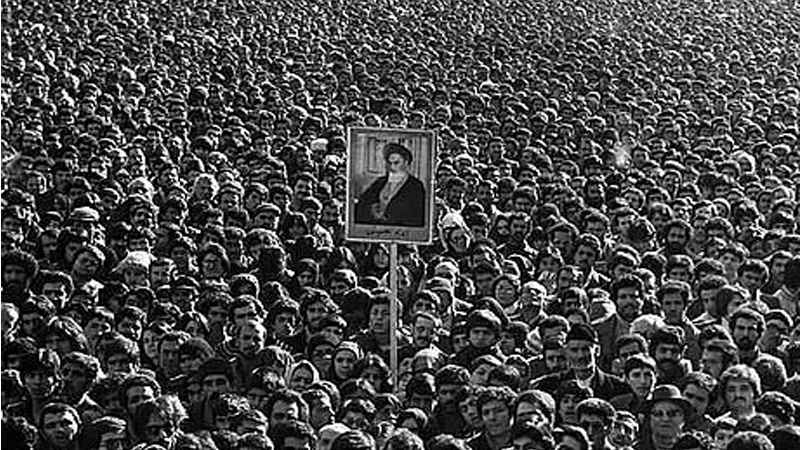
Concurrent with the developments of every country, the art and music of that country is strongly influenced. During the victory of the Islamic revolution of Iran, music had a strong role and the songs which were chanted at that time are still alive in the people’s mind.
Revolutionary songs are referred to as epic songs in Iran. During the formation, climax and victory they were chanted for supporting the revolution and opposing the despotic regime. Prior to the victory of the revolution, these songs were performed by the advocates of various political tendencies. Many of these songs were recorded in amateur forms in underground studios and then put to the public access.
But for the past years, these songs have been widely broadcast in their original form or with renewed performance for people and they are performed at schools by students as part of the celebrations of the anniversary of the revolution’s victory.
Prior to the revolution, like other aspects of culture, music was corrupt. At that time, the Iranian traditional music was performed in Qajar style. But with the victory of the Islamic Revolution in Bahman, 1357 (February 1979) this art not only continued its work but with the proper supervision and control it succeeded internationally and played an important role in Iran’s social and political events.
Mohammad Golriz, the Iranian revolutionary singer says: “One of the mysteries behind the victory of the Islamic revolution was the unity and convergence among people. Their unity and solidarity in chanting a single slogan with the single goal of overthrowing the oppressive regime led to the victory of the Islamic revolution.”
Mohammad Golriz continues, “For sure, different factors have had a determining role in the Iranian people’s convergence and unity but, in view of years of experience in art, music and anthem, I have to remind that one of the factors behind the solidarity of people and provoking them to achieve the cause and sublime goal of the Islamic Revolution was music and production of revolutionary songs and certainly the composers and producers of these pieces were aspired by the revolutionary slogans of the Iranian people.”
In fact the classical Iranian music has always been beside the people and it has been mixed with their culture. During and after the Islamic Revolution music was with people and helped them. The Islamic Revolution affected the hearts and minds of musicians and poets so that the people’s excitement was flourished in the form of poetry and music in social developments.
Composer and expert of music, Pirouz Arjmand, considers the Islamic Revolution as the cause of saving Iranian music, stressing that this great event saved music from decline. He adds: “In the Pahlavi era, Iran inclined to the cheap pop music to the extent that the genuine musicians had the concern of perishing of traditional music. The unrivaled presence of pop music and that too in the western style before the revolution was to the extent that all traditional musicians were worried about complete removal of music. However in the first years after the revolution we witness a type of epic and revolutionary music which can be termed the second historical period after Islam. In fact, the first period was the era of Constitutional Movement and the second period is the Islamic Revolution. The most important achievement of the revolution is that music was fully nationalized and considerable works were produced.”
Once we have a look at the songs of the advent of the revolution, traces of popular slogans are seen in them. This shows the thirst of the audience automatically inviting the poet and singer to such choices. The poems of some of the songs have been chosen from the prominent Iranian poets, indicating the preciseness and cleverness of the choosers. These songs have been imprinted in the minds of people forever.
Hesam-eddin Seraj the vocalist of traditional music, regarding music of the revolution period says: “In fact the revolutionary music of before and after the revolution were intermingled and very powerful works were made at that time which I do not think they will be repeated in the history of Iranian music.” Seraj considers the songs, “Iran ey Saraye Omid” (Iran, the land of hope) and “Kojaeed ey Shahidane Khodaei” (Where are you, the divine martyrs?) and the other works of Chavoosh musical center as successful example of these works.” He adds, “Chavoosh center existed both before and after the revolution and presented many revolutionary and epic works which were successful examples. This success is precisely due to the conditions of the revolution. That atmosphere was the climate which demanded full epic. The poet chanted epic poems, the composer produced it and the vocalist sang it.”
According to Seraj and many researchers, the Islamic Revolution had directly and indirectly influenced the poets and singers of those tumultuous days and the outcome of poet, composer and singer were combined reminding us of the restive times and climate of those days.
Undoubtedly, the poems of the songs should be studied in terms of content. Thus, the outstanding points of songs are: praising the leadership, giving the promise of a better tomorrow, struggle against despotism, popularity, promotion of resistance, and struggle against aristocracy, expressing the enemy’s brutality, unity and solidarity, avoiding compromise, the morale of self-sacrifice, martyrdom and rule of God.
Some songs have survived although they are from unknown origin. Most of the songs, despite all defects, continue to stimulate and excite the people.
According to history, most of the songs played a serious role in people’s campaign as they had been deeply rooted in the beliefs of people and they have been mixed with issues such as Ashura, justice and freedom. Raising the principle of Velayat (rule of the pious jurisprudent), justice-seeking and the constructive school of Islam have been among the glorious tendencies in the Islamic Revolution’s songs.
In the few months leading to the revolution, the traditional music had become the tool for expressing people’s wrath against the cruel regime. It breathed fresh life to the Islamic Revolution’s art with the presence of prominent maestros such as the late Mohammad Reza Lotfi, Parviz Meshkatiyan and other well-known musicians.
With the victory of the Islamic Revolution in 1979, poetry and music moved in a new course. The most important impact of the revolution on poetry and music was the change in the content of poems and melodies. With the outbreak of the 8 year imposed war on Iran, the revolutionary poem and music entered a new arena which at first it had a rapid pace and was based on slogans but later on it turned into honorable Iranian music.
Undoubtedly, revolutionary songs, anthems, melodies and poems were actively produced before and after the revolution and in the 8-year holy defense era to the extent that its impact can be seen in every aspect of the Iranian music.
FK/RM/SS
Tags