Burst of Light (7)
Feb 09, 2017 11:46 UTC
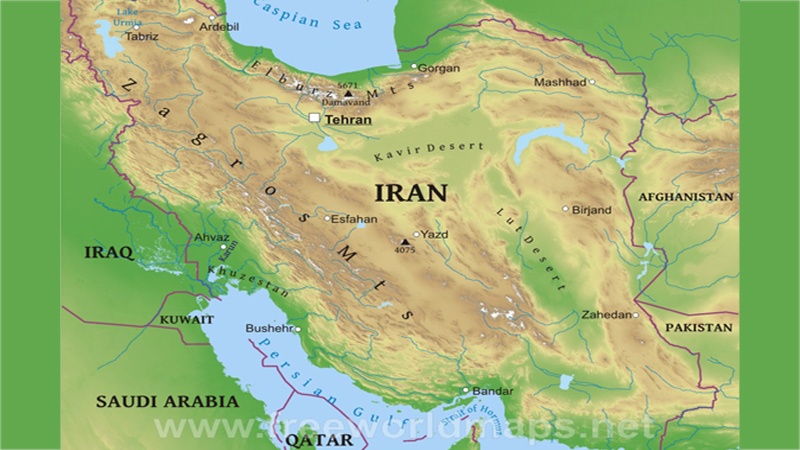
The political geography of Iran’s neighboring countries has always affected the national security of this country. The Islamic Republic of Iran has approximately 2000 kilometers littoral border on the north of the Persian Gulf and Gulf of Oman; hence its valuable geopolitical status.
The Persian Gulf has a very strategic status in West Asia. That’s why it has always been the axis of formation of security systems with trans-regional tendencies. The existence of various tensions in around Iran and the imposed presence of the US in the waters of the region and many other issues menacing the security and stability of the region indicate that the moves of the foreigners are the cause of insecurity and unrest in the region. For the past decades, many military coalitions and pacts including Sa’ad Abad Pact, Baghdad Pact, CENTO Pact, Arab Union and the Persian Gulf Cooperation Council were shaped in the circumstances of the bipolar system. Political analyst, Qasem Hafeez, says, “With respect to the security sensitivities, different defence pacts were shaped such as Sa’ad Abad, Baghdad and Arab Union with the aim of maintaining security. But these pacts suffered mostly from the lack of a cementing element of defence pacts i.e. common security threats. The United States, in the bilateral or multilateral pacts with the regional countries, in addition to providing arms, technical services and training, is pursuing to make the commandment structure of these countries monolithic to facilitate joint operation of the littoral states under its command. This goal will be ensued by no goal but dominance over the region.”
With regard to the security of the Persian Gulf, too, military pacts have mainly been based on the purchase of arms under the justification of providing security in the region. This approach, which is pursued by the Arab regimes of the Persian Gulf especially the regime in Riyadh, has caused giant arms-manufacturing companies in the US and UK to deem especial status for arms market of the region. The British daily Guardian, wrote, “Britain has been the second exporter of defence equipment in the world and has sold nearly 100 billion pounds of military equipment. The US has also sold various weapons worth 198 billion dollars to the Arab countries of the Persian Gulf.”
The United States with over 14 military bases has a wide presence in the security relations of the region. Britain is also redefining its presence to revive its military bases in the region. The International Center of Peace Research based in Stockholm has announced in a report: “The arms sale to the Arab countries of the region has increased approximately 70% for the past 5 years while the most arms export to these countries has been done by Britain.”
While for the past three decades the Persian Gulf has witnessed destructive conflicts since the 8 year Iraqi imposed war on Iran to the Iraqi occupation of Kuwait and the oil war; the foreign powers have sought their illegitimate interests via imposing all these conflicts.
For the past several years the spawning of terrorist groups has seriously affected security in West Asia. Thus, the presence of trans-regional players, especially the United States and Britain to impact the regional equations has paralyzed the trend of security convergence in the region.
The current situation in the region indicates the fact that if there is no cooperation and convergence and the dangers on the way of security are not properly understood, they will result in serious threats. Since the victory of the Islamic Revolution in Iran the powers of the Arrogance Front have never let the Islamic Republic to introduce its goals and approaches for security convergence to the regional countries. They knew well that the Islamic Republic had never been pursuing war and invasion; yet they imposed an all-out war on Iran to obliterate or weaken the nascent system in Iran. Hussein Zuka, an expert from Lebanon, says, “The Islamic Republic of Iran is located in a region which is among the most important regions of the world strategically and internationally. This region has witnessed important and varied developments, differences and mistrusts, and at times wars and conflicts in which the footprints of the trans-regional agents can well be seen. Iran has completely felt this footprint about itself. The United States and other western countries were the supporters of Saddam and his encourager for war against Iran.”
While the security strategy and approach of Iran has respect for safeguarding the geographical borders in the region, the Islamic Republic of Iran is opposed to any dismemberment of the regional countries and stresses diplomacy for resolving differences. The Islamic Republic strongly believes that common threats like terrorism can be tackled via constructive convergence. It is a matter of deep regret that some countries are supporting terrorists under the guise of coalition for fighting terrorism. The United States of America is one of these countries whose support for terrorists of Daesh grouplet has been confessed in an audio file of former secretary of state John Kerry. He says, “The United States watched the emergence of Daesh hoping that this issue will put Bashar Assad under pressure. We thought that we could manage this issue to pressure Bashar Assad. But suddenly we saw that the conditions were complicated, intensively complicated.”
Obviously, this strategy will yield no fruit but continuation of killing a number of defenceless humans; for, terrorism will not have mercy on anyone and if not confronted it will involve all. The chain of terrorist events in France, Germany, Turkey and elsewhere showed that terrorism and warmongering are the result of false measures, distortion of realities and selective view toward security and terrorism.
The positive vote of the representatives of 190 countries at the UN General Assembly on 19 December 2013 to the resolution proposed by Iran’s president proved that the Islamic Republic is strongly against war and terrorism in the world.
No doubt, the current critical situation in the region and the world and any negligence of security convergence and cooperation among the regional countries will bring about serious harms for all. The current situation especially the Syrian crisis and surge of carnage in Iraq, Afghanistan and Yemen are the outcome of such hypocritical approaches toward security and ignoring the real enemies and their nefarious plots.
The realities of the past and present in the region and the world show that the US has never been far from warmongering and, according to the figures presented by the American experts, the United States of America has been at war for over 90% of its life beginning in late 18th century. The permanent deployment of the US navy in Bahrain, the presence of the US air force in Qatar, the presence of the US ground force in Kuwait, the existence of American arsenal in the UAE and 8 military bases in Arabia and stationing of spying and radio and radar centers in the region and many other countries in the world clearly prove the US warmongering and bloodthirsty spirit.
The US illegal presence in West Asia has escalated security threats and unrest in the region. As the Iranian President Hassan Rouhani said at the UN General Assembly, “Those who speak of threatening Iran are either themselves a threat against international peace and security or foment threat. Iran not only is not a threat but, in word and practice, it has been the caller of just peace and all-out security.”
The United States has pursued policies for over a decade part of which was raised during Obama administration as the “policy of change”. Now, the Obama era has ended and there is not a clear picture of Donald Trump’s policies. However, it is clear that the security doctrine of the US and UK for the past four decades have been focused on hegemony. Iraqi expert, Hanana Sobhan Abdullah, says, “The US enmity with the Islamic Republic of Iran does not stem from issues like export of the revolution, human rights or nuclear issue. The American statesmen have trouble with the Islamic identity of the revolution and the Islamic Republic of Iran’s struggle against oppression and its non-compromise. The United States considers the Islamic Revolution as the initiator of Islamic Awakening in the world and the core of resistance against its hegemonic policies. Therefore, for the past 38 years it has not spared any effort to obliterate the Islamic Republic system of Iran. There is no doubt that the hegemonic adversity of the US against Iran will continue in the 4th decade of the Islamic Revolution, too. The upsurge of American and British military presence in the region follows this aim.”
As it is concluded from the Iraqi expert’s word, the goal of military presence by the Global Arrogance in the region is to challenge Iran as the most effective agent in safeguarding stability and security in the region; for, Iran is seeking security convergence without the presence of the uninvited foreigners.
RM/SS
Tags