Iran offers an alternative to US occupation in Afghanistan
Jan 08, 2019 06:56 UTC
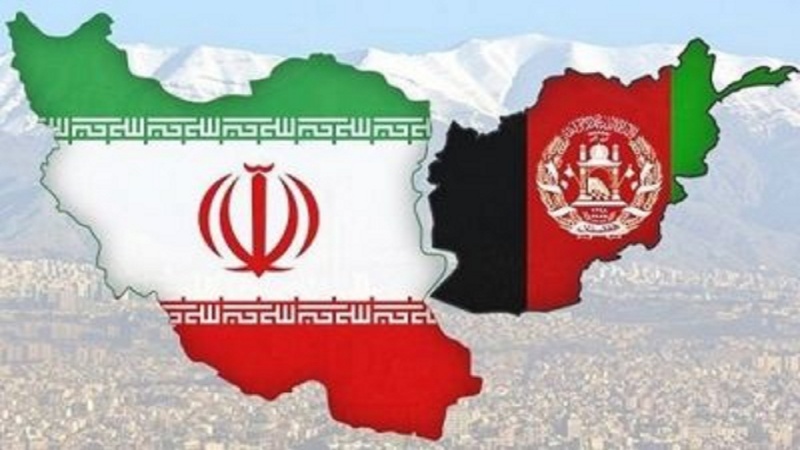
Iran is offering Afghanistan an alternative to US occupation, one based on peace, dialogue and diplomacy instead of sheer military might, says Nikolai Bobkin, a Ph.D. in military science, and an Associate Professor and Senior Researcher at the Institute for the US and Canadian Studies of the Russian Academy of Sciences, in his article for “Strategic Culture”, titled: “Iran Offers an Alternative to US Occupation in Afghanistan”.
The full-court press on Iran that President Donald Trump has put into play has not resulted in changes to Tehran’s regional strategy. As a matter of fact Iran’s influence in Syria, Lebanon, Iraq, and Yemen is growing, and now Tehran intends to outplay Trump in Afghanistan.
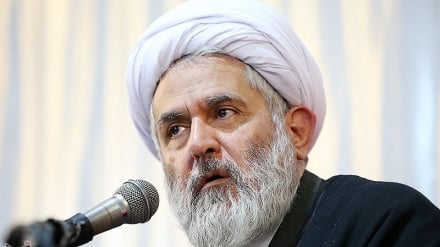
Admiral Ali Shamkhani, the secretary of the Islamic Republic of Iran’s Supreme National Security Council (SNSC), spoke in this vein during his visit to Kabul on December 26 for talks with his Afghan counterpart, Hamdullah Mohib, the Afghan president’s national security advisor.
Shamkhani was the first Iranian leader to publicly confirm the fact that Tehran is conducting negotiations with the Taliban and teaming up with Kabul to do so. According to Admiral Shamkhani, the partial pullout of American occupation troops from Afghanistan announced by President Trump opens up a “wonderful opportunity” to achieve peace, “based on internal and regional opportunities.”
Shamkhani said the US should finalize the complete withdrawal of its troops, the presence of which is not helping to end the civil war. He suggested peacefully resolving historical problems by negotiating with “those who are ready to lay down their arms and be with the people of Afghanistan” as an alternative to the American military presence.
This is the general idea behind Iran’s policy toward Afghanistan, which is aimed at expanding the inter-Afghan dialogue and constructive interaction between the groups in conflict in this country that has been torn apart by civil war and is under foreign occupation. The American intervention is only making things more difficult in Afghanistan.
The US and NATO troops occupied Afghanistan over 17 years ago in October 2001, and it is now past time to recognize the fact that the Western military coalition will never crush the Taliban’s armed resistance. The Afghan government currently controls no more than 50% of the country’s regions — the lowest level on record since 2015. The Taliban movement continues to seize control of new areas, and the foreign troops present in Afghanistan are not able to prevent this.
Trump’s plans call for the withdrawal of about 7,000 American occupation troops from Afghanistan (about half of the US contingent that still remains there). The Pentagon also has 25,000 quasi-military personnel in Afghanistan who are employed by various private military companies (PMCs). About 16,000 other occupation troops from 39 countries supporting the United States remain in the country as well. At the NATO summit in July 2018, the decision was made to extend the North Atlantic bloc’s financial commitments toward the Afghan army until 2024, but this is not enough to successfully fight the Taliban.
The situation is complicated by the fact that the American occupation forces, which have broad powers to act independently of the Afghan army, have been unable to cut off the money flowing in to the Taliban from the cultivation, production, and trafficking of drugs. In November 2018, the UN reported that a total of 263,000 hectares in Afghanistan were being used to cultivate opium poppies in 2018. This is 20% less than in 2017, when the amount of land devoted to the poppy harvest reached a record high, but the drop is due to nothing more than the drought in the northern and western parts of the country.
Reporting about the situation in Afghanistan has revealed that US diplomats are unprepared to begin peace negotiations. Afghanistan’s leaders are being torn apart by ethnic and political rivalries. The decision made in Washington in 2014 to create a national unity government led by the president’s rival, Ashraf Ghani, and head of the government, Abdullah Abdullah, only furthered the fragmentation of the Afghan leadership.
Prior to his resignation, US Secretary of War James Mattis criticized the Trump administration’s Afghan policy, emphasizing that the US should not leave Afghanistan “before the diplomats have won the peace.” However, at a US-sponsored meeting in the UAE in November 2018, the Taliban refused to speak to the delegation from the Afghan government. They are insisting on negotiating directly with the US government, and only afterward will they agree to a dialog with officials from Kabul.
What bargaining chips can the Iranian leaders hold under these conditions?
Media reports about the results of Ali Shamkhani’s visit to Kabul do not suggest that rapid changes are possible. Nevertheless, the secretary of Iran’s Supreme National Security Council, was received by President Ghani, and Iran’s initiatives to reconcile with the Taliban were discussed at that meeting. The Iranians, who stay in touch with the leadership of the Taliban movement, have a good idea of what conditions the Taliban are proposing. Time will tell how satisfied the Afghan government will be with these conditions and what the White House will think of them.
After the US invasion of Afghanistan, Iran offered to cooperate in order to create a new Afghan government. But when the US and NATO occupation forces remained in Afghanistan, Iran had to be cautious and remained suspicious of their intentions.
Iran wants stability next door. It is building up its levers of influence in Afghanistan — from politicians to military leaders, from Hazaras to groups affiliated with the Northern Alliance. Cooperation with the Taliban could be part of this multilateral strategy. As such, Tehran is increasingly coming to the conclusion that the US is keeping its occupation troops in Afghanistan in order to use them against the Islamic Republic of Iran.
Tehran thus began to view the Taliban as an important force to be used to counter the US influence on Iran’s borders. A relationship with the Taliban also improves Tehran’s ability to curb the influence of the Daesh terrorists, which the US has airlifted into Afghanistan from Syria and Iraq. Iran is inclined to view the Taliban as one of the few forces in Afghanistan that can stand up to the Daesh terrorists.
Illegal drug trafficking is also a serious problem on the Iranian-Afghan border; most of these drugs make their way into other countries via Iran.
AS/MG
Tags