Why the ghost of 'soft coup' is haunting the Saudi palace
Jun 26, 2016 11:25 UTC
Not all is well in the kingdom of Saudi Arabia, created by the British and named after their loyal tribal servant Abdul-Aziz ibn Saud for treason against fellow Muslims.
Talks of coup are rife in Riyadh, as failure after failure meets the rash and aggressive policies of the Wahhabi clique, which has seen its dreams shattered in Yemen, Syria, Iraq, Bahrain, Lebanon, and elsewhere. Stay with us for excerpts of analyses in this regard by different political experts. We begin with Associate Director of the Beirut Center for Middle Eastern Studies, Catherine Shakdam’s article titled “Why the Ghost of ‘Soft Coup’ is haunting the Saudi Palace”.
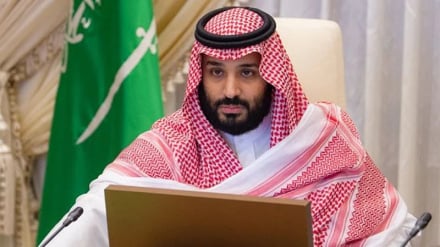
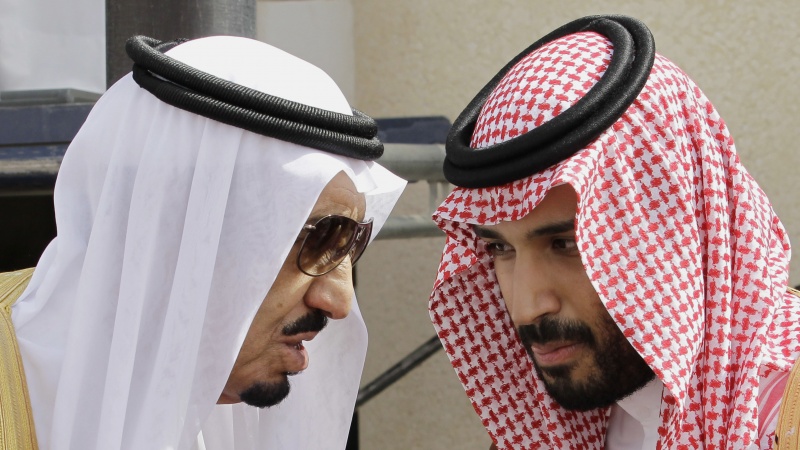
Deputy Heir Apparent Mohammad bin Salman has accumulated a lot of power, prompting some analysts to speculate about an upcoming "soft coup d'etat" in Saudi Arabia. It seems that the Saudis will remember King Abdullah's reign as the period of guaranteed stability, while the rule of King Salman will be apparently associated with political turbulence, economic instability and sectarian violence. However, it is not actually Salman bin Abdul-Aziz who has contributed to the current political "fluidity." Actually, it is rather the king's favourite son Mohammad bin Salman, whose window of opportunity could be closing. Remarkably, the Saudi "game of thrones" is more about gambling, than cold calculating.
In his May opinion piece for “The Vineyard of the Saker”, Syrian political analyst Ghassan Kadi noted that "the thirty year old Mohammad…, has risen to prominence by way of mere chance." Kadi recalled that the once powerful Bandar bin Sultan had made every effort to assume the throne. He was very well connected, very influential, and above all, the son of Sultan bin Abdul-Aziz who was meant to become king," the analyst noted. Alas, King Abdullah had outlived both his brother Sultan and his half-brother Nayef. As a result, another half-brother Salman ascended the throne in 2015. However, by then Salman was 79 years old and already suffering from Alzheimer's disease," Kadi underscored.
The Syrian analyst remarked: "It is tipped that Salman is going to soon change his Will and appoint his son Mohammad as the Heir Apparent in placed of his nephew Mohammad bin Nayef. In effect, Mohammad bin Salman is already acting like he is the king. Mohammad bin Salman has witnessed the fall of Bandar and saw his mistakes. He has learned from this that he cannot rely on the US as an equal ally. [He] obviously knows that the golden age of Aal-e Saud is over. He knows that what seemed to be an endless wealth a few decades ago is coming to a sudden end, and sooner than anyone thought… He is totally aware of the early signs of those reality checks, and he wants to do something about them. Whether he is going to be successful or not, is another story."
And still there are obstacles in the way of Mohammad bin Salman's dream. He is still a Deputy Heir Apparent and if his father suddenly dies his cousin, the present Heir Apparent and Interior Minister, Mohammad bin Nayef, twill inherit the kingdom.
Karen Elliott House of the Harvard Kennedy School noted in her report for the Belfer Center for Science and International Affairs that many Saudis believe that after assuming the throne Mohammad bin Nayef "would waste little time" before removing his cousin from power.
So, what are Mohammad bin Salman's options?
According to Shakdam, the ghost of "soft coup d'etat" is prowling around the palace. She calls attention to a report published on June 1 by Press TV citing Manar online that reads: "Saudi Defense Minister and Deputy Heir Apparent Mohammad bin Salman has issued orders to the Saudi court banning any manner of meeting with the king due to his 'brain damage,' said an informed source. The denial of visiting rights encompasses all members of the ruling family and foreign dignitaries.
Shakdam believes that it means Mohammad bin Salman has "quite loudly" staked his claim on the throne. And still "a young, inexperienced, and belligerent Mohammad bin Salman is not everyone's choice — not in the kingdom, not across the region, and not throughout the international community; he may even face resistance from the kingdom's Wahhabi clerics.”
She emphasizes that even if Mohammad bin Salman comes to power, the future of the Saudi kingdom is murky.
Kadi echoes Shakdam, saying: "Mohammad bin Salman is trying to portray himself, especially to Saudi youth, as a national reformist and saviour. But little does he realize that nation-builders need to perform… For him to perform, he needs not only leadership substance, but also popular support. The support he is receiving is a little more than well wishes, and the performance he is exhibiting, is little more than failed gambles."
The question of who stands to inherit the throne from King Salman bin Abdul-Aziz isn't a trivial one; while some analysts believe that Deputy Heir Apparent Mohammad bin Salman is the most likely successor to his father, King Salman, present Heir Apparent Mohammad bin Nayef has got a trump card up his sleeve.
Karen Elliott House says that not everything is rosy in the garden of the Aal Saud family: the ongoing recession is shaking the pillars of the kingdom's economic stability, while members of the powerful Saudi clan are involved in a covert struggle for power. House goes on to say: "After more than two decades of domestic drift under geriatric rulers and overdependence on US protection in a dangerous region, the Kingdom of Saudi Arabia is facing challenges from within the ruling family.
It is no secret that King Salman's son, Mohammad, has recently consolidated power in his hands with the tacit approval of his father. The 30-year old is the present minister of defense, economic "czar" and the man in charge of Saudi Aramco, the state-owned oil giant. However, not all Saudis are happy about Mohammad bin Salman's "shaking up the sclerotic Saudi system."
Generally, older Saudis remain skeptical about Riyadh's ability to sustain two concurrent wars and to carry out ambitious economic reforms. Moreover, Mohammad bin Salman’s aggressive foreign policy toward Yemen and Syria is triggering concerns among the Saudi rulers.
In his February interview with Atlantico, French political and military analyst Alain Rodier stressed that some Saudi officials fear that Mohammad bin Salman's reckless actions in the Middle East might drag the country into chaos. Rodier underscored: "Mohammad bin Salman's bullying is beginning to irritate many other members of Saudi royal family."
And here enters King Salman's 56-year old nephew Heir Apparent Mohammad bin Nayef, who is seemingly more experienced, more cautious, and more reliable than the impulsive young Deputy Heir Apparent. Mohammad bin Nayef was appointed assistant interior minister for security affairs in 1999. He has worked closely with Washington and "is widely admired" by US officials.
So, who will be the heir to the throne?
And here is the rub: no matter how much King Salman loves his son Mohammad, the Deputy Heir Apparent will not be able to assume the throne if the 83-year-old king doesn't name his son Heir Apparent before his death. Remarkably, the king still hesitates to name Mohammad bin Salman his successor, and here is the intrigue. As of yet, according to the Saudi rules, Mohammad bin Nayef is first in line to the throne of Saudi Arabia. Many Saudis believe that after assuming the throne he "would waste little time" before removing Mohammad bin Salman from power.
AS/EA
Tags