Saudi Arabia: Problems, problems again and more problems
Jul 31, 2016 04:59 UTC
As the current Saudi King Salman Bin Abdul-Aziz Al Saud ages, the complex problem regarding selection of his successor becomes increasingly serious.
Who will be the next Saudi ruler, what policy will he choose, and which stormy waves of world politics will he lead the Kingdom into? Viktor Mikhin, corresponding member of the Russian Academy of Natural Sciences, has studied the story of throne and its claimers in Saudi Arabia. What follows is from an article written by Viktor Mikhin. Do follow the story.
Until recently, all issues related to the succession were solved quite simply. The fact is Abdul Aziz ibn Abdurrahman ibn Saud, founder of the Kingdom of Saudi Arabia in 1932, left a testament to his sons, according to which the power should be transferred from one child to another. Ibn Saud was an incredibly loving Bedouin. He was married to 19 official wives, not counting his so-called temporary, brief marriages. His official wives gave birth to 21 daughters and 45 sons, or perhaps more, as the special hard-working committee that was created to find the heirs of Ibn Saud is always giving different figures. In other words, there are a great number of contenders to the royal throne, but Ibn Saud, who died in 1953, apparently did not anticipate that the issue of succession would be very relevant after 60 years.
Up to a certain time when there were plenty of direct heirs, the issue was solved rather simply and was recorded in the relevant laws. The current state structure in Saudi Arabia is determined by the Basic Law of the Kingdom entitled “The Basic Law of Governance of Saudi Arabia”, which was adopted in 1992. According to this law, Saudi Arabia is an absolute monarchy, which is governed by the sons and grandsons of the first King, Ibn Saud. The power of the King is theoretically only limited by their so-called self-styled "Sharia Law". The heir to the throne is appointed by the King after his selection by the Allegiance Council established in accordance with the law of 2006. In this case, the succession to the throne passes from brother to brother, among the sons of King Ibn Saud. If there are no more brothers, only then the eldest of the next generation is considered to be the heir. Women are not eligible to become ruling monarchs.
It is in this way that the archaic structure of the Saudi state astounds with its incredible structural fragility. The head of state is the King, and all branches of government are subordinate to him. The heir to the throne is appointed by the King. The Prime Minister and ministers are also appointed by the King, and what is more, the potential candidates are all relatives of the King. The legislative power represented by 150 members of the Consultative Assembly is also appointed by the King. Political parties are banned. Finally, even the judiciary presented by the system of religious courts is determined by the King: he appoints judges upon the recommendation of the Supreme Judicial Council. The system is clearly tough, but is tied to one person – the King. While he remains firmly as the head of the House of Saud, in other words, his “big” family, the power is reasonably reliable, since the disputes are settled within this tight group.
But now, all the power that Ibn Saud once built up could collapse, burying the state itself under its ruins. There is a number of background facts. Currently, the heir to the throne is Muhammad ibn Nayef Al Saud. He is the nephew of the reigning King, and his mother Al Jawhara bint Abdulaziz bin Musaed bin Jiluwi is from a highly influential al-Jiluwi branch of the House of Saud. In other words, from the dynastic point of view, he fits the bill. He firmly maintains friendly relations with the current U.S. administration and President Obama. This comes as no surprise seeing as he studied in the USA and even completed FBI security courses. In Saudi Arabia, he works in internal affairs, currently being the Minister of Internal Affairs.
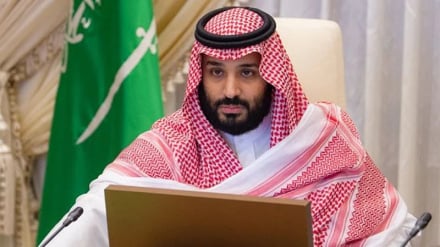
Recently, however, the King’s son Mohammad ibn Salman Al Saud is gaining support. He has been appointed to a number of important positions by his father and, in particular, is Deputy Crown Prince. The increasing role of the King’s son can be seen from the results of the failed meeting on oil in Doha, Qatar, where the ministers of the leading producers of the “black gold” came together. It seemed that everything had been agreed, and it remained only to adopt a series of documents aimed at increasing oil prices. Suddenly, however, at the last minute Prince Mohammad called Doha and withdrew the Saudi delegation. What does this mean? On the one hand, it is a sign that the King’s son is increasingly interfering in the foreign and economic affairs of Saudi Arabia, and it is quite obvious that he has the full consent of the King, who has left the scene in terms of specific cases due to his advanced age. On the other hand, this unexpected Saudi maneuver forced many world leaders to think long and hard: whether to do business with Saudi Arabia and Prince Mohammad who do not keep their promises.
A number of the world media, in particular, the Arab press, have recently been writing about the possibility of the fact that the position of the Crown Prince will be reshuffled when the incumbent King dies. Many experts believe that his son Mohammad bin Salman Al Saud will be selected as the new King, and Muhammad ibn Nayef Al Saud will remain the Crown Prince. Perhaps in the old days, when Saudi Arabia was swimming in petrodollars, and the population was more than satisfied and paid little attention to the dynastic affairs, it was possible to execute a reshuffle of this kind. But the current, relatively difficult, domestic and external economic affairs would make it rather tricky.
But, nevertheless, the news website Middle East Eye publicly announced that “the Deputy Crown Prince of Saudi Arabia Mohammad bin Salman intends to take up a position of the King of Saudi Arabia by the end of 2016”. Citing two anonymous sources, the publication reported that Prince Mohammad was cooperating and consulting with the Crown Prince of Abu Dhabi Mohammed bin Zayed Al Nahyan on all issues related to the possibility to taking up a position of future King of Saudi Arabia. The Middle East Eye pointed out that the functions of the ruler were currently undertaken by King Salman. However, Prince Mohammed, his beloved son, is increasingly taking responsibility in areas that are of relative importance for Saudi Arabia. Moreover, Prince Mohammed is seeking the U.S. support, which he believes will give him the opportunity to “take up a position of the King by the end of the year.” Over the last year, Prince Mohammad has had the greatest media presence in the West out of anyone in the royal family. He often gave interviews to publications, such as The Economist and Bloomberg. It was part of a strategy aimed at trying to make Saudi Arabia more transparent to the Western world and demonstrate his importance. The world media highlights, in particular, that the key point of his program is the desire to put an end to the so-called Wahhabism – the ultraconservative so-called "Islamic" movement that is practiced in Saudi Arabia. According to experts, this could ensure considerable support from the United States.
Many factors point to greater complexity in Saudi criteria of socio-political situation in the Kingdom. Despite the fact that the Saudi dynasty has long ruled unchallenged, it does have serious opponents, and they have increased in number in recent years. Its primary opponents are the Muslim Shiites who live mostly in the Eastern Province on the coast of the Persian Gulf where there is a high concentration of oil fields. The Shiites are unfortunately subjected to direct and overt discrimination, and in any case, they do not share the same rights as others in Saudi Arabia. It also seems apparent that this Muslim Shiite factor may come to play a decisive role in the future of the Kingdom.
Moreover, Prince Mohammed, who has his eyes on the royal throne, made a number of serious and unforgivable mistakes, which casts doubt on his claim to the royal throne. It bears remembering that he was the initiator of the war in Yemen where Riyadh has not achieved any tangible success. He also failed to achieve any success when pursuing the previous policy of removing the elected, popular Syrian President Bashar al-Assad from power. His only achievement was squandering huge sums of money. He is also responsible for the policy that governed the sharp decline in oil prices, which led not only to a deficit of the Saudi budget, but also to the worsening position of many Saudis. All this poses a rather complex problem both before the incumbent King Salman and his son Prince Mohammed, which may go on to lead to a number of difficulties for Saudi Arabia.
EA/ME
Tags