Inside story of the Saudi night of long knives
Nov 11, 2017 05:13 UTC
The recent arrest of some 500 senior officials in Saudi Arabia including members of the ruling family indicate the power struggle in the Wahhabi entity created in 1932 by Britain for its agent, the desert brigand from Najd, Abdul-Aziz ibn Saud. No we have an article in this regard written by Pepe Escobar for Asia Times titled: “Inside story of the Saudi night of long knives.”
Princes, ministers and a billionaire are 'imprisoned' in the Riyadh Ritz-Carlton while the Saudi Arabian Army is said to be in an uproar
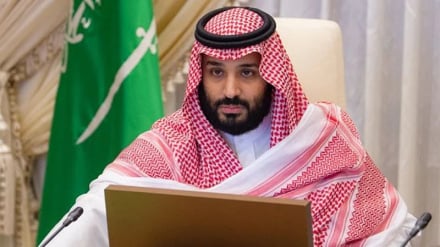
The House of Saud’s King Salman devises what it calls a high-powered “anti-corruption” commission and appoints his son, Heir Apparent Mohammad bin Salman, a.k.a. MBS, as chairman.
Right on cue, the commission detains 11 House of Saud princes, four current ministers and dozens of former princes/cabinet secretaries – all charged with corruption. Hefty bank accounts are frozen, private jets are grounded. The high-profile accused lot is “jailed” at the Riyadh Ritz-Carlton.
War breaks out within the House of Saud, as Asia Times had anticipated back in July. Rumors have been swirling for months about a coup against MBS in the making. Instead, what just happened is yet another MBS pre-emptive coup.
A top Middle East business/investment source who has been doing deals for decades with the opaque House of Saud offers much-needed perspective: “This is more serious than it appears. The arrest of the two sons of previous King Abdullah, Princes Mutaeb and Turki, was a fatal mistake. This now endangers the King himself. It was only the regard for the King that protected MBS. There are many left in the army against MBS and they are enraged at the arrest of their commanders.”
To say the Saudi Arabian Army is in uproar is an understatement. “He’d have to arrest the whole army before he could feel secure.”
Prince Miteb until recently was a serious contender to the Saudi throne. But the highest profile among the detainees belongs to billionaire Prince al-Waleed Bin Talal, owner of Kingdom Holdings, major shareholder in Twitter, CitiBank, Four Seasons, Lyft and, until recently, Rupert Murdoch’s Newscorp.
Al-Waleed’s arrest ties up with a key angle; total information control. There’s no freedom of information in Saudi Arabia. MBS already controls all the internal media (as well as the appointment of governorships). But then there’s Saudi media at large. MBS aims to “hold the keys to all the large media empires and relocate them to Saudi Arabia.”
So how did we get here?
The story starts with secret deliberations in 2014 about a possible “removal” of then King Abdullah. But “the dissolution of the ruling family would lead to the breaking apart of tribal loyalties and the country splitting into three parts. It would be more difficult to secure the oil, and the broken institutions whatever they were should be maintained to avoid chaos.”
Instead, a decision was reached to get rid of Prince Bandar bin Sultan – then actively coddling Salafi-Takfiris in Syria – and replace the control of the security apparatus with Mohammad bin Nayef.
The succession of Abdullah proceeded smoothly. “Power was shared between three main clans: King Salman (and his beloved 5th son Mohammed); Mohammad the son of Prince Nayef, and finally the son of the dead king Prince Mutaeb, commander of the National Guard).
In practice, Salman let MBS run the show. And, in practice, blunders also followed.
The House of Saud lost its lethal regime-change drive in Syria and is bogged down in an unwinnable war on Yemen, which on top of it prevents MBS from exploiting the Empty Quarter – the desert straddling both nations.
The Saudi Treasury was forced to borrow on the international markets. Austerity ruled – with news of MBS buying a yacht for almost half a billion dollars while lazing about the Cote d’Azur not going down particularly well. Hardcore political repression is epitomized by the shocking beheading of Shi’ite Muslim leader Sheikh Baqer Nimr an-Nimr.
As a result, not only the Shi’ite Muslims in the Eastern province are rebelling, but also Sunni provinces in the west.
As the Wahhabi regime’s popularity radically tumbled down, MBS came up with Vision 2030. Theoretically, it was shift away from oil; selling off part of Aramco; and an attempt to bring in new industries. Cooling off dissatisfaction was covered by royal payoffs to key princes to stay loyal and retroactive payments on back wages to the unruly masses.
Yet Vision 2030 cannot possibly work when the majority of productive jobs in Saudi Arabia are held by expats. Bringing in new jobs raises the question of where are the new (skilled) workers to come from.
Throughout these developments, aversion to MBS never ceased to grow; “There are three major rule family groups aligning against the present rulers: the family of former King Abdullah, the family of former King Fahd, and the family of former Heir Apparent Prince Nayef.”
Mohammad bin Nayef – who replaced Bandar – was close to Washington and extremely popular in Langley due to his counter-terrorism activities. His arrest earlier this year angered the CIA and quite a few factions of the House of Saud – as it was interpreted as MBS forcing his hand in the power struggle.
According to the source, “he might have gotten away with the arrest of CIA favorite Mohammad bin Nayef if he smoothed it over but MBS has now crossed the Rubicon though he is no Caesar. The CIA regards him as totally worthless.”
Some sort of stability could eventually be found in a return to the previous power- sharing between the Sudairis (without MBS) and the Chamars (the tribe of deceased King Abdullah’s mother). After the death of King Salman, the source would see it as “MBS isolated from power, which would be entrusted to the other Prince Mohammad (the son of Nayef). And Prince Mutaeb would conserve his position.”
MBS acted exactly to prevent this outcome. The source, though, is adamant; “There will be regime change in the near future, and the only reason that it has not happened already is because the old King is liked among his family. It is possible that there may be a struggle emanating from the military as during the days of King Farouk of Egypt, and we may have a ruler arise that is not friendly to the United States.”
Before the purge, the House of Saud’s incessant spin centered on a $500 billion zone straddling Saudi Arabia, Jordan and Egypt, on the Red Sea coast, a sort of Dubai replica to be theoretically completed by 2025, powered by wind and solar energy, and financed by its sovereign wealth fund and proceeds from the Aramco IPO.
In parallel, MBS pulled another rabbit from his hat swearing the future of Saudi Arabia is a matter of “simply reverting to what we followed – a moderate Islam open to the world and all religions.”
In a nutshell: a state that happens to be the private property of a ruling family inimical to all principles of freedom of expression and religion, as well as the ideological matrix of all forms of Salafi-Takfirism simply cannot metastasize into a “moderate” state just because MBS says so.
Meanwhile, a pile-up of purges, coups and countercoups shall be the norm.
On the same topic of power struggle in Saudi Arabia, Moon of Alabama, writing for Global Research says: “The ruling Salman clan in Saudi Arabia executed a Night of the Long Knives cleansing the state of all potential competition. The Saudi King Salman and his son Clown Prince Mohammad bin Salman initiated a large arrest wave and purge of high ranking princes and officials. Part of this internal coup was the confiscation of huge financial estates to the advantage of the Salman clan.
The earlier forced resignation of the Lebanese Prime Minister Saad al-Hariri is probably related to the last night’s events. The Israeli Prime Minister Netanyahou endorsed the resignation. This guarantees that Hariri will never again be accepted in a leading role in Lebanon.
The Salman branch of the current king and clown prince has now eliminated all of potential internal competition. This goes against the consensus model that had been the foundation of the Saudi family rule over the last century. Tens of thousands of clans and people depended on the patronage of the removed princes and officials. They will not just sit back as their fortunes evaporate.
One effect of the purges will be the concentration of Saudi wealth in the hands of the Salmans.
One of the arrested persons is the allegedly sixth richest man of the world, Prince Al-Waleed Bin Talal. He has (had?) an estimated net-worth between $18 and $32 billion. Al-Waleed had publicly clashed with U.S. President Donald Trump. (Al-Waleed is (was?) the largest shareholder of Citygroup which selected Barack Obama’s cabinet before receiving a huge government bailout.) Another casualty is Bakr bin Laden, brother of Osama Bin Laden, chairman of the Saudi Binladin Group and fifth richest man of the country.
Official pretext for the purge are corruption allegations going back to 2009. This financial subterfuge will allow the ruling Salmans to confiscate the wealth of the accused. The total haul of this raid will amount to dozens of billions of dollars. A new anti-corruption committee was installed under Clown Prince Mohammad bin Salman. It has dictatorial powers and can freeze and confiscate whatever financial assets it deems worth its attention:
It may take whatever measures it deems necessary to deal with those involved in public corruption cases and take what it considers to be the right of persons, entities, funds, fixed and movable assets, at home and abroad, return funds to the state treasury and register property and assets in the name of state property.
The events in Lebanon and Riyadh would have been impossible without US approval and support. In late October Trump’s son in law and senior adviser Jared Kushner made an unannounced visit to Saudi Arabia. In a tweet yesterday Donald Trump, sworn to the Wahhabi orb, named the price for his consent and cooperation:
Would very much appreciate Saudi Arabia doing their IPO of Aramco with the New York Stock Exchange. Important to the United States!
A primary listing of Aramco oil conglomerate at the NYSE will give the US government regulatory and legal authority over the most valuable company of the world.
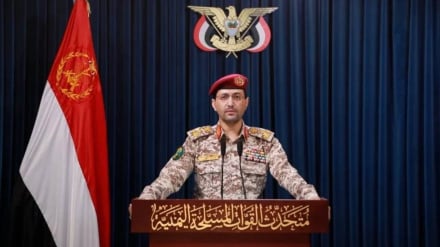
Also last night Yemeni forces fired a medium range missile from north Yemen towards Riyadh airport. The well targeted 1,000 kilometer (660 miles) shot is impressive and unprecedented. The Saudi air-defense near the airport, US Patriot systems manned by contractors, launched four interceptor missiles (video) towards the incoming Yemeni projectile. The Saudis claim that one of the interceptors hit the target. An uprising smoke column was seen from the airport (video). It is not possible to say if it was the result of the original missile or of an interception.
That the Saudi capital can be hit will come as another shock to many Saudis. It discourages investment in Saudi Arabia.
The missile launch is unlikely to be related to the Hariri resignation or to the purge in Riyadh. It takes days for the Yemenis to prepare such a missile and its launch. It is presumably in retaliation for Wednesday’s devastating Saudi air attack on an open market in the northern Sa’ada province of Yemen. According to Yemeni sources more than 60 people were killed. After the missile launch on Riyadh Saudi jets again bombed the Yemeni capital Sanaa.
Since the incapacitated King Salman took the throne in Riyadh his ruthless 32 year old son Mohammad bin Salman has taken control of all branches of Saudi Arabia. The Saudis launched a war on a defenseless Yemen and supported al-Qaeda, ISIS and other “rebels” against the Iraqi and Syrian governments. He split the Persian Gulf Cooperation Council by attacking Qatar. After a stalemate in Yemen and Qatar and losing in Iraq and Syria he has now initiated a war against Hizbullah in Lebanon. None of these bloody initiatives has achieved its aim of weakening the influence of the perceived enemy Iran. All of them helped Iran to consolidate its position.
The financial position of the Saudi state is in disarray. To the applause of the western claque Bin Salman announced the economic, social and religious liberation of Saudi Arabia. But little, if any, of the grand promises have been delivered.
Monday’s purge can be perceived as a panic-fueled move. All of Bin Salman’s endeavors have failed. The successful targeting of Riyadh’s airport only underscores this. He is under pressure but unable to deliver. The internal resistance to him is growing.
When Hitler initiated the Night of Long Knives against the socialist part of his party he was on an upward trend of his political power. The country was at peace, its international standing was growing, the economy surged and the majority of the people endorsed him. Bin Salman’s remake of that night comes while his initiatives fail. It is doubtful that the consolidation he seeks will be equally successful.
AS/ME
Tags