Saudi Arabia’s March towards Civil War
Nov 15, 2017 06:45 UTC
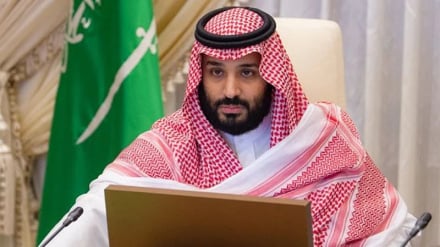
In addition to funding of terrorist groups throughout the Islamic world by the regime in Riyadh, the recent arrest of at least forty leading officials in Saudi Arabia including 11 princes of the ruling family, is indicative of power struggle between self-installed Heir Apparent Mohammad bin Salman and the rest of the Wahhabi clan for whom the British had created the present kingdom in 1932 by installing their sire, the desert brigand from Najd, Abdul-Aziz Aal-e Saud as king.
Stay with us for an interesting analysis by William Craddick titled “Saudi Arabia’s March towards Civil War” that appeared on the Global Research Website.
Saudi Arabia’s brinkmanship and heavy-handed policies of intervention in various countries are coming back to haunt the desert kingdom.
After decades of playing the role of middle man between foreign states and establishing itself as a regional power, Saudi Arabia’s policies of meddling in the affairs of neighbor states and support for terror appear to have finally exacerbated issues in the country which could threaten to plunge it into chaos.
Growing anger over attempted austerity cutbacks, economic issues due to the fluctuating price of oil and tell-tale signs of royal disagreement over the successor to King Salman bin Abdul-Aziz mean that Saudi adventures abroad are preparing a perfect storm for civil conflict which could lead to further instability in West Asia.
The disruption comes as other states such as Iran and Turkey are positioning themselves as potential competitors to the de facto leadership of the Muslim world.
It is clear that Saudi Arabia is experiencing increasing signs of instability. Saudi Arabia has experienced a number of issues which contribute to internal destabilization.
In April 2017, Bloomberg reported that King Salman was forced to restore bonuses and allowances for state employees, reversing attempts to reform Saudi Arabia’s generous austerity programs. The Saudi government insisted that the move was due to “higher than expected revenue” despite the fact that observers were noting in March that Saudi Arabia’s foreign reserves were plunging by one-third. As a matter of fact, all member states of 6-nation Persian Gulf Cooperation Council (PGCC) made up of the United Arab Emirates, Bahrain, Saudi Arabia, Oman, Qatar and Kuwait have seen their credit ratings slashed and have increasingly disagreed on common foreign policy.
Saudi Arabia’s increasing financial problems are due in part to the falling price of oil. In January 2016, The British daily Independent noted that the dropping value of oil would put Saudi Arabia’s main spending programs in jeopardy and that a third of 15 to 24-year-olds in the country are out of work.
The Journal of Petroleum Science and Engineering estimates that Saudi Arabia will experience a peak in its oil production by 2028, but this may be an incredible underestimation.
The Middle East Eye has noted that experts in the United States who state that Saudi Arabia’s net oil exports began to decrease in 2006, has continued to drop annually by 1.4% each year.
Citigroup has estimated that Saudi Arabia may run out of oil to export entirely by 2030. The end of Saudi Arabia’s cash cow is likely to cause problems in a nation that The Atlantic has accused of running itself like a “sophisticated criminal enterprise.”
It is also evident that there are increasing Signs of internal conflict in Saudi Arabia. There are a number of indications that Saudi Arabia’s ruling family is also experiencing a significant amount of internal strife. King Salman has caused significant upheaval by taking the controversial step of totally overhauling Saudi Arabia’s line of succession and appointing his son, Mohammad bin Salman, as Heir Apparent. The move is a dangerous one given that it has caused division in the ruling family. Foreign Policy has noted that Saudi Arabia’s security forces are not under a single command authority, meaning that the military runs the risk of becoming fractured in the event of an internal conflict.
In 2015, the Independent spoke with a Saudi prince who revealed that eight of Salman’s 11 brothers were dissatisfied with his leadership and were contemplating removing him from office, replacing him with former Interior Minister Prince Ahmed bin Abdul-Aziz.
NBC News revealed that the promotion of Salman’s son to the position of Heir Apparent has also angered Prince Muhammad bin Nayef, who was previously in line for the throne and is known for his hardline stance towards Iran. On June 28th, 2017, the New York Times reported that Bin Nayef had been barred from leaving Saudi Arabia and was confined to his palace in Jeddah with his guards replaced by others loyal to Mohammad bin Salman.
Nayef had long ruled as governor over the Eastern Region, which is described as one of the provinces most likely to rebel in the event of civil conflict due to the region’s overwhelmingly large population of Shi’a Muslims. Mohammad bin Nayef is generally believed to be one of the leading advocates for the 2016 execution of Shi’a cleric Nimr an-Nimr, a move which caused serious anger amongst Muslims, especially Shi’as throughout the world, including Iran.
Bin Nayef’s family also has historic ties to insurgent groups used by Saudi Arabia as a foreign policy tool. His father, Nayef bin Abdul-Aziz, served as Interior Minister and controlled Saudi Arabia’s internal intelligence services, police, special forces, and the drug enforcement agency.
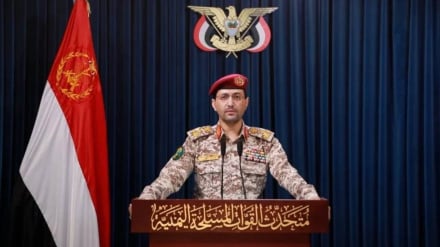
King Salman has used the war in Yemen to counteract elite dissatisfaction by causing what the Washington Post describes as a surge in nationalist sentiment among citizens. The move also served as an attempt to take proactive steps against the popular Ansarallah Movement of Yemen. But while intervention may have provided Saudi Arabia with short term benefits, it has also contributed to further fracturing of the Middle East and allowed neighbor states to take steps to replace Saudi Arabia as the region’s dominant power.
At the same time, geopolitical changes increase the likelihood of conflict. It is not merely Yemen that causes the Saudis concern. Years of meddling now mean that the kingdom is increasingly conducting its foreign affairs with the goal of avoiding internal destabilization and balancing a regional house of cards.
Wikileaks releases of diplomatic cables from Saudi Arabia’s Ministry of Foreign Affairs show that officials are committed to continuing to destroy Syria out of fear that President Bashar al-Assad’s government might engage in reprisals for the destructive spate of Saudi-financed terrorism there. Saudi Arabia has helped fuel the war through their support of terror groups.
State Department cables released by Wikileaks show that Saudi Arabia is considered to be the most significant funder of terror groups internationally. But like foreign intervention, terrorism as a foreign policy tool serves as a means of directing destructive energy at best.
There have long been fears that the method could grow out of hand and create problems for the benefactors of terror. Saudi security forces have routinely had issues with infiltration by terror groups.
In 2001, Stratfor noted the ruling family’s growing concern over the increase in terror sympathizers amongst the military due to fears that some of the insurgent groups were not friendly towards the kingdom. Terror groups such as ISIS have in the past several years engaged in a number of attacks against Saudi targets, including suicide attacks which targeted the holy Islamic city of Medina and the Grand Mosque in Mecca.
Traditionally, power in the Middle East has been split between the Israeli and Saudi governments. This regional order may be starting to shift however, due to a combination of changing US strategy and attempts by other Middle Eastern states to become more important players in the region. In March 2016, Julian Assange noted to the New Internationalist that US strategists such as John Brennan increasingly viewed the Israeli-Saudi nexus as getting in the way of broader American strategic interests, especially with regards to Iran.
This political shift is now playing out with the current crisis in Qatar. Qatar has historically positioned itself as a diplomatic center in the Middle East, staying friendly with Iran and providing multiple insurgent groups such as the Taliban with a venue for negotiation. Emails from John Podesta reveal that Qatar has supported terror groups such as Daesh alongside Saudi Arabia, but does so with the intent of vying for influence with terror groups. Factions in Qatar have also lent support to al-Qa’eda, an-Nusra, and the Taliban. Additionally, Qatar’s Al-Jazeera outlet has also provoked Saudi Arabia by providing hard hitting coverage of previously unacknowledged issues in the Middle East (though critical coverage of Qatari politics has been off limits). NPR has also noted that Qatar openly competed with Saudi Arabia during the Arab Spring, when the two sides supported opposing factions in nations such as Egypt. The conflict with Qatar creates a very real risk that hostilities could spill into Saudi Arabia, given both sides’ support of terror groups.
The recent flare up has also revealed the emergence of a new order in the Middle East: states which stand behind the old, Saudi-Israeli nexus and those who wish to redraw the balance of power. Saudi Arabia is supported by Egypt, the United Arab Emirates, Bahrain, Kuwait and the Maldives. Qatar has been supported by Saudi Arabia’s regional opponent Iran and Turkey. Turkey has been steadily increasing its role in the Middle East in recent years, and is seen by the United States as a suitable player to balance Saudi influence in nations like Pakistan. Turkey and Iran now are actively posturing to challenge Saudi Arabia, as Turkey deploys troops to Qatar and Iran supports the small Persian Gulf state with food aid. Should the two states survive the destabilization of coups and terrorism, they are well positioned to benefit from any future reduction in Saudi influence.
It all points to dangers of a Saudi civil conflict in the offing. A civil war or internal conflict in Saudi Arabia would quickly become international in nature. Defense contractors are being increasingly courted by Saudi cash as part of an effort to overhaul the military, part of which includes the recent $100 billion arms deal with the United States. Saudi Arabia has also increasingly used private military corporations such as Blackwater, which currently provides personnel to the Saudi-led coalition in Yemen.
The specter of nuclear proliferation in the Middle East also raises concerns that weapons could fall into the wrong hands or be used indiscriminately. Julian Assange has repeated 2010 claims from the head of Al-Jazeera that Qatar is in possession of a nuclear weapon. Saudi Arabia itself also is suspected of possessing nuclear arms. In 2013, BBC News reported that Saudi Arabia had nuclear weapons “on order” from Pakistan, whose nuclear program was bankrolled by the Saudis. In 2012, the Saudis also entered into an Atomic Collaboration Deal with China which projects that Riyadh will construct 16 nuclear reactors in the country by no later than 2030. Arab acquisitions of weapons of mass destruction have created concern among Israeli intelligence officials, who fear that the countries acquiring these weapons systems will not use them effectively.
Should the conflict with Qatar (or any of the multiple regions where Saudi Arabia has intervened) spiral out of control, the potential proliferation of nuclear arms systems poses a serious danger. International conflicts, regional interventions and terror operations all create the risk that these weapons, whether intentionally or inadvertently, might be used. A Saudi civil war also creates risk for the international community, as there would be widespread unrest should the holy cities of Mecca and Medina be damaged during a conflict.
Falling currency reserves, a dwindling supply of oil, conflict within the ruling family and the ever present threat that terror networks will cause backlash for their benefactors all indicate that Saudi Arabia is on a crash course for a crisis. With the Qatari conflict continuing to heat up, the real questions should not be about the potential end of terrorism or the ethics of further weapons sales to Arab nations, but what the world hopes that the Middle East will look like once the dust clears.
AS/MG
Tags