Saudi Arabia: Wellspring of regional instability
Nov 29, 2017 07:05 UTC
The family enterprise known as the Kingdom of Saudi Arabia has long been politically fragile. In some respects, it is remarkable that this entity has endured into the twenty-first century.
A clan of royals lives on rake-offs from the country’s petroleum wealth, while using more of that wealth to buy off a fast-growing population. The Saudis have had to play that game through the vicissitudes of the oil market on which the Saudi economy depends. The potential for breakdown has always been present. Now a king and his favorite—and ambitious and inexperienced—son are bringing the potential closer to reality.
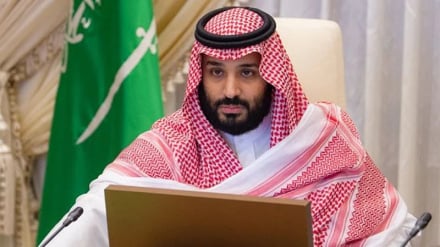
The power plays by that son, Crown Prince Mohammad bin Salman (MbS), include the latest spectacular purge, which extends to senior princes in the regime as well as leading private sector figures. The power plays flout some of the principal conventions through which the Saudi royals have held their enterprise together so far. Although only one man can be king at a time, the system of rule to date has involved a distribution of power among different branches of the royal family. With the latest purge and the concentration of power in the young hands of MbS, that system is destroyed.
Another feature of the Saudi political scene over the past few decades has been a certain ambiguity about where the royal succession, which had been working its way through sons of kingdom founder Abd al-Aziz, would go once the succession reached the grandsons of Abd al-Aziz. There is no evident reason why MbS’s father Salman—the sixth Saudi king since the death of Abd al-Aziz in 1953—should have had the prerogative of giving the nod to his favorite son as the holder of power in the following generation. Salman himself was already showing signs of losing his faculties when he assumed the throne two years ago at age 79. Not only are there some other sons of Abd al-Aziz still around, there are also grandsons who would rank ahead of MbS in experience and demonstrated ability. Some of those grandsons are themselves sons of kings—such as the longtime intelligence chief and former ambassador to the United States and to Britain, Prince Turki bin Faisal.
No matter how smooth has been the purge and how much window dressing about family approval adorned the king’s earlier naming of MbS as crown prince, there is bound to be significant resentment and opposition within the royal family over MbS’s power grab. Discontented royals can seek common cause with sources of discontent outside the royal family. That is a prescription for even greater internal instability in the kingdom.
The internal Saudi instability is important for outsiders, including the United States, to recognize when they choose to embrace a ruler such as MbS. In addition, there are external implications. MbS’s internal machinations are related to the export of instability from Saudi Arabia to the rest of the region. This is partly a matter of how the concentration of power in MbS’s young hands amplifies the effects of rashness and inexperience. It also is a matter of external conflicts helping rulers solidify internal power, by providing a distraction from internal problems and drawing on nationalist sentiment.
Saudi Arabia was already, even before the rise of MbS, a source of instability and a practitioner of throwing weight around elsewhere in the region. Its moves have included the use of armed force to suppress Muslims in Bahrain and the stoking of civil war in Syria in collusion with terrorists of the al-Qaeda stripe.
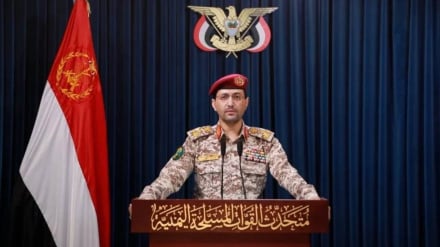
MbS is moving faster and farther along this trajectory of regional destabilization. The prime exhibit is the disastrous war in Yemen, with the Saudi and Emirati offensive turning an internal conflict about tribal disaffection from the Yemeni government into an international humanitarian catastrophe. The emboldened prince will make the situation even more catastrophic. Shortly after his purge in Riyadh he announced that he was making the partial blockade of Yemen a total blockade of all ground, air, and sea ports, thereby further extending collective punishment of the Yemeni people in a vain effort to salvage some kind of win.
No more successful has been the attempt to bring Qatar to heel. All that this effort has accomplished so far is an increase in tensions and animosity in the Persian Gulf region.
Now, also coincident with the purge, is a new Saudi move to politically destabilize Lebanon. The Saudi regime patently managed the announcement by Lebanese Prime Minister Saad Hariri that he is resigning. The Saudi intention is to stir the Lebanese pot in a way that somehow would be disadvantageous to Hezbollah, which is a partner in the governing Lebanese coalition.
A major theme in MbS’s regional maneuvers is hostility toward Hezbollah’s ally Iran. An irony in this mess, given how “Iran’s destabilizing behavior” is a favorite theme of the forces hostile to Iran, is that the destabilization and the seeking of crisis and confrontation and even war are coming predominantly from MbS’s Saudi Arabia, with an assist from the Zionist Prime Criminal Benjamin Netanyahu.
The contrived nature of the Saudi maneuver in Lebanon is illustrated by a statement from the Saudi minister for Persian Gulf affairs. Using a chain of reasoning that with Hariri gone, there is “no more distinction between Hezbollah and the Lebanese government,” the minister proclaimed that Saudi Arabia will treat the Lebanese as “a government declaring war.” This is in response to a political crisis that Saudi Arabia intentionally initiated. There is no indication that Iran lifted a finger to bring about any of it.
The Trump administration is worse than oblivious to all this; it is stoking it. Although the president tweets about which stock exchange should be used for an initial public offering of shares in Aramco, at least as important a figure is another princeling. That would be the president’s son-in-law, Jared Kushner, who reportedly has hit it off with his fellow thirty-something MbS and visited the Saudi crown prince just days before the purge.
This relationship is part of a mutual admiration society that also includes the United Arab Emirates’ de facto leader and Abu Dhabi crown prince, Mohammed bin Zayed, and the Emirati ambassador in Washington. With everyone swaying to the same tune of seeking confrontation with Iran, it is hard to gauge exactly how much each party is influencing the others. But if the current U.S. policies toward the Persian Gulf players continue, then the United States will be complicit in the increased regional instability that the young autocrat in Riyadh is bringing about.
What you heard and read were excerpts of a piece authored by Paul R. Pillar. He is Non-resident Senior Fellow at the Center for Security Studies of Georgetown University and an Associate Fellow of the Geneva Center for Security Policy.
RM/ME
Tags