Libya – the new stronghold of the Daesh
Apr 26, 2016 10:01 UTC
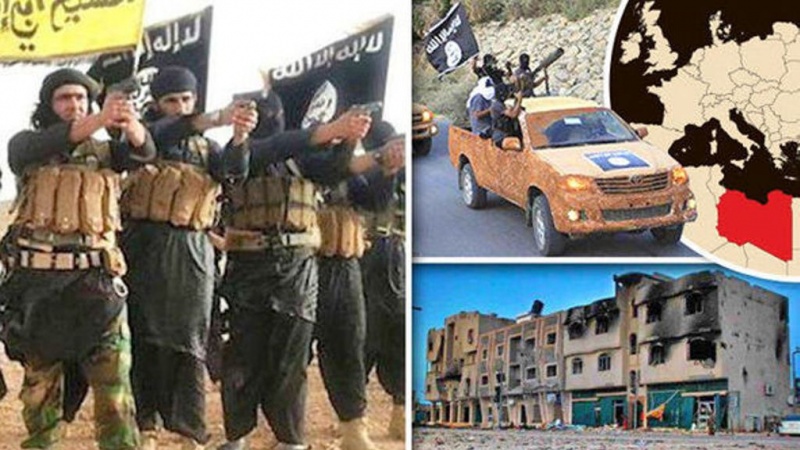
The news reports of the last couple of months have clearly shown what was predicted long ago – that Libya is rapidly becoming the key stronghold of the so-called Deash.
It is a stronghold that is in the immediate vicinity of Europe’s southern coastlines. Martin Berger, a freelance journalist and geopolitical analyst, has written an informative article on the new stronghold of Daesh, Libya.
The stalled Western diplomatic efforts to form a functional government in Libya has greatly contributed to the strengthening of Daesh positions across the country. The successful anti-terrorist operations that Russia has been carrying out in Syria and the operations ongoing in Iraq led many Daesh terrorists, along with their leadership, to the conclusion that they would be better off if they sought refuge in Libya. The fact that the Daesh has already relocated its command center to Libya is the best testimony to this statement. This move was followed by the escape of a dozen high-profile Daesh leaders who fled together with their families to the north of the African continent.
Today, Daesh terrorists are engaged in the transformation of the city of Sirte into a citadel much like that they have already established in the Iraqi city of Mosul and Syria’s eastern city of Al-Raqqah.
The Libyan government “recognized” by the West enjoys no control over the capital of Libya – Tripoli, while numerous regional and international terrorist groups together with local militants have established full control over entire governorates. UN attempts last year to form a national unity government re-uniting the country have so far failed.
Terrorists have also established a strong foothold in the second largest city in Libya – Benghazi. They are now creating an extensive network of terrorist cells in the capital to organize massive terrorist attacks in the western parts of the country. For instance, a major terrorist attack in the city of Zliten was carried out in January 2016 claiming the lives of 60 people. At the same time there’s no combat-capable forces in Libya that could in any way resist the continued expansion of Daesh terrorists. Experts point out that militant forces that used to fight against the Libyan military led by Muammar Gaddafi have tried to avoid direct military confrontation with the Takfiri Daesh terrorists out of fear that the terrorists would target and exterminate their tribe in retaliation.
The main objective of the Daesh in Libya is to establish dominance over the whole country and then over the whole of North Africa. That is why any rival terrorist groups are forced to join the ranks of Daesh or are violently suppressed as much as possible.
The initial stage of the transformation of Libya into a new stronghold of Daesh was launched in 2014, when a group of 300 Libyan terrorists led by former Iraqi Brigadier General Abu Nabil al-Anbari was sent from Iraq to Libya. Millions and millions of dollars that were allocated to this operation allowed the creation of a 10,000 strong Daesh terrorists in Libya. The pace of Daesh expansion in Libya has been a major concern for a number of experts and intelligent services, since it’s taking place much faster than anyone predicted. Libya has provided the Daesh with access to a potentially unlimited number of weapons and human resources from across the African continent, the poorest on the planet. This is why, above all other considerations, Daesh decided to use Libya as an alternative base.
In Libya, the Daesh is employing the tested and proven tactics that were first used in Iraq: a combination of propaganda and brutal massacres that are aimed at striking fear into the hearts of Libyans. The decisive role in achieving a major success in this country was played by the decision to work in cooperation with a number of local tribes, who in recent years have been fighting for their own survival amid the chaos in Libya. Additionally, there’s no ethnic conflict in Libya, which has been stalling Daesh progress in the Middle East, therefore the group can fully concentrate on the achievement of its notorious objectives.
Fox News would note in one of its articles that US President Barack Obama has been discussing the Libyan crisis quite often recently:
This is not the first time in recent weeks he has talked about Libya and the NATO-led intervention. In a profile published in The Atlantic, the US President told author Jeffrey Goldberg that British Prime Minister David Cameron became “distracted by a range of other things” after the operation. Cameron, along with former French President Nicolas Sarkozy, took the brunt of Obama’s criticism.
The US president also said that the PM’s attention was not held by the conflict for long. President Obama has accused UK Prime Minister David Cameron of being “distracted “in the aftermath of the invasion of Libya – contributing to the current deadly” mess “in the North African country.
It’s clear that the US and British intervention was not a part of a comprehensive plan, and instead, was a violent act of uncontrolled aggression. This fact can be seen in President Obama’s own words, since he stated that the worst mistake of his presidency was a lack of planning for the aftermath of the 2011 toppling of Libyan “dictator” Muammar Gadhafi.
Yet, the American Conservative pointed out that:
It was not an oversight by the intervening governments when they left Libya to its own devices. That was part of the plan, such as it was, from the very beginning. They made that decision because they wanted a low-risk intervention on the cheap, and they certainly were not prepared to make a long-term commitment to police and rebuild Libya. But they were willing to help throw the country into chaos and to destabilize the surrounding region and declare victory when the regime change they supposedly were not seeking had been achieved.
Moreover, in an interview with The Independent, UK Prime Minister David Cameron acknowledged that attempts “to stop Libya from sliding into chaos” in 2011 after the toppling of Muammar Gaddafi have “not been sufficient.”
It must be pointed out that at this point the West suffers from extremely limited capabilities in influencing the situation on the ground in Libya. Weeks after Western politicians discussed a massive air campaign against Daesh in Libya have failed to materialize any action. It’s clear that President Obama doesn’t want the US to get stuck in yet another war, while he thinks that the responsibility for the Libyan crisis resides on European shoulders.
The goal to fight Daesh in Libya is further aggravated by the reluctance of Libya’s warring parties to seek compromise, and without a comprehensive amount of support “on the ground” one could hardly dream of any military success to speak of. In the absence of a coherent strategy, the West has focused on encouraging certain Libyan forces to fight Daesh on their own with the US and UK working with groups in Misrata, while the French coordinate with forces in Benghazi.
As for Daesh, it has every possible tool to further inflame the internal conflict in Libya, starting from the ever increasing number of attacks on influential groups and oil infrastructure, to the killing of key political figures. Additionally, the Takfiri terrorist group of Daesh can pursue the goal of making this conflict a regional one by attempting to destabilize the situation in Tunisia and Algeria, which is an extremely possible course of action.
Under these circumstances, the West and, above all, Europe should not wait for the black plague of Daesh to cross the Mediterranean Sea and entrench itself in France, Spain, Italy, Germany and others. It should forget about Washington’s propaganda and turn to Russia and revolutionary, popular anti-Daesh forces for help in a bid to make the fight against Deash a common effort; not being entrapped in another US-made quagmire.
EA
Tags