The politics behind Donald Trump’s empty threats on Mexico border
Apr 21, 2019 10:05 UTC
The incumbent in the White House in Washington is a quixotic character whose irrational policies have destabilized the US itself.
Stay with us for an article in this regard for the Common Dreams site, by Reverent Jesse Jackson, an Afro-American civil rights activist who was a candidate for the Democratic presidential nomination in 1984 and 1988, titled: “The Politics behind Donald Trump’s Empty Threats on Mexico Border”.
It’s increasingly clear Trump wants a crisis that he can use politically, not a solution that can ease human suffering.
Donald Trump’s flailing on immigration and the Mexican border continue to spiral into chaos. First, he threatened to close the border with Mexico. One week later, he walked that back. He declares a national emergency about the “invasion” of people seeking asylum from Central American countries, and then says he’s stopped all aid to those countries, which can only worsen the conditions that cause people to leave. He says he’s already building a wall. That isn’t true. He torpedoes bipartisan measures that might begin to make things better.
It’s increasingly clear Trump wants a crisis that he can use politically, not a solution that can ease human suffering.
Some weeks ago, Trump’s threat was clear: “If Mexico doesn’t immediately stop ALL illegal immigration coming into the United States through our Southern Border,” he tweeted, “I will be CLOSING…the Border, or large sections of the Border, next week.”
His aides said he was deadly serious. Trump’s leading mouthpiece, Chief of Staff Mick Mulvaney, told ABC News that it would take “something dramatic” to stop him from doing it.
Less than a week later, Trump reversed himself. He suddenly praised Mexico as being “very nice,” claiming that Mexico had changed its policy toward the asylum seekers, which a befuddled Mexican government quickly denied. He retreated by issuing new bluster: “We’re going to give them a one-year warning, and if the drugs don’t stop, or largely stop, we’re going to put tariffs on Mexico and products, in particular cars. And if that doesn’t work, we’re going to close the border. You know I will do it. I don’t play games.”
It is, however, obvious that Trump is playing games with his threats.
What was the “something dramatic” that convinced him president to take back his threat? He was mugged by reality.
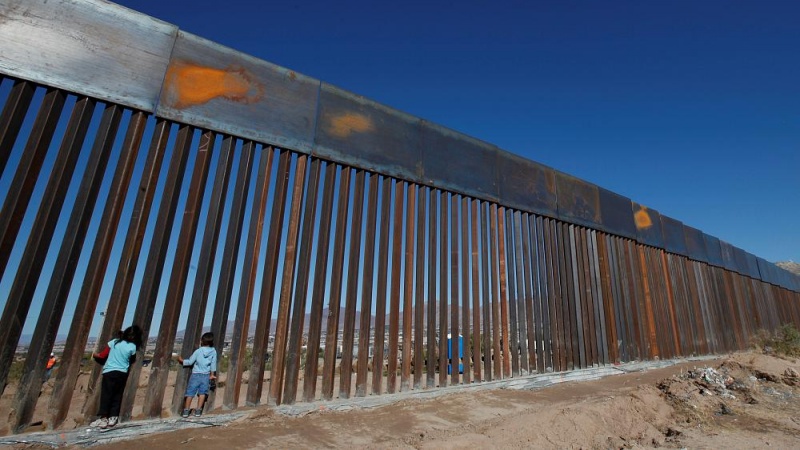
Closing the US’ 2,000-mile border with Mexico would be an economic catastrophe, a moral blight, inconceivably inane and literally impossible. A combined 15 million people live along the border. Some $1.7 billion of two-way trade and hundreds of thousands of legal travelers cross the border each day. Mexico is the second-largest market for US-made products (Canada is first).
Mexico is the US’ third-largest trading partner (after Canada and China). It is the fourth-largest supplier of foreign crude oil to the United States. It is the top destination for US travelers.
Trump lives in a universe that he shares only with rabid Fox News commentators, but, in this case, he was forcibly reminded of reality by Republican business leaders and by the conservative US Chamber of Commerce, which warned that closing the border would “inflict severe economic harm on American families.” Even Republican Senate Majority Leader Mitch McConnell, who usually wags his tail at whatever the president tweets, warned of “potentially catastrophic economic damage.”
Trump’s threats are just posturing, but his policy is a chaotic calamity. He declares a national emergency to claim money for his wall (largely from the military) against the will of the bipartisan majority in both houses of Congress. He rails about the import of drugs, ignoring the reality that virtually all of the hard drugs come in through legal ports of entry that his “wall” won’t address. He describes the rising number of people seeking asylum as “an invasion,” scorning both international and US law and basic morals, then directs his State Department to cut off $450 million in aid to Guatemala, Honduras and El Salvador, which will surely worsen the conditions that are driving people to seek asylum. He traveled to the California border to celebrate the building of a new section of his promised border wall, when no new building had taken place, only a routine upgrade of old fencing.
He cut off protections for the Dreamers, young people who have grown up in the US, and torpedoed the bipartisan agreement that would have protected them and added to border security after he said he’d sign it. He scaled back protections for asylum seekers, helping to create the backlog at the border. Then his administration cruelly separated parents and children at the border, creating a shameful human horror that continues to this day.
Clearly Trump wants an issue to run on politically, not a solution to a humanitarian tragedy. Steve Bannon, Trump’s 2016 campaign strategist, argued that as long as the debate is over immigrants, Trump benefits. Trump uses attacks on immigrants as the centerpiece of his white nationalist appeal. His railing about the crimes of Latin American gang members is simply the updated version of the Willie Horton ad that George Bush used against Mike Dukakis.
So don’t worry about Trump closing the border. Even his administration won’t be that self-destructive. And don’t expect him to make progress with the humanitarian crisis at the border. Trump is fanning the flames, not putting out the fires.
A sensible border policy and humane and effective immigration reform will have to wait for the next president.
AS/MG
Tags